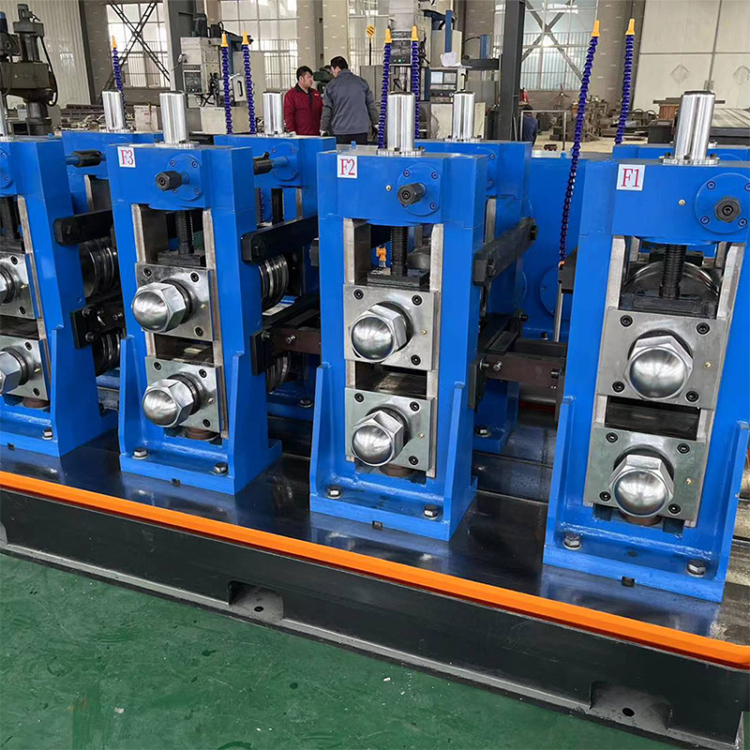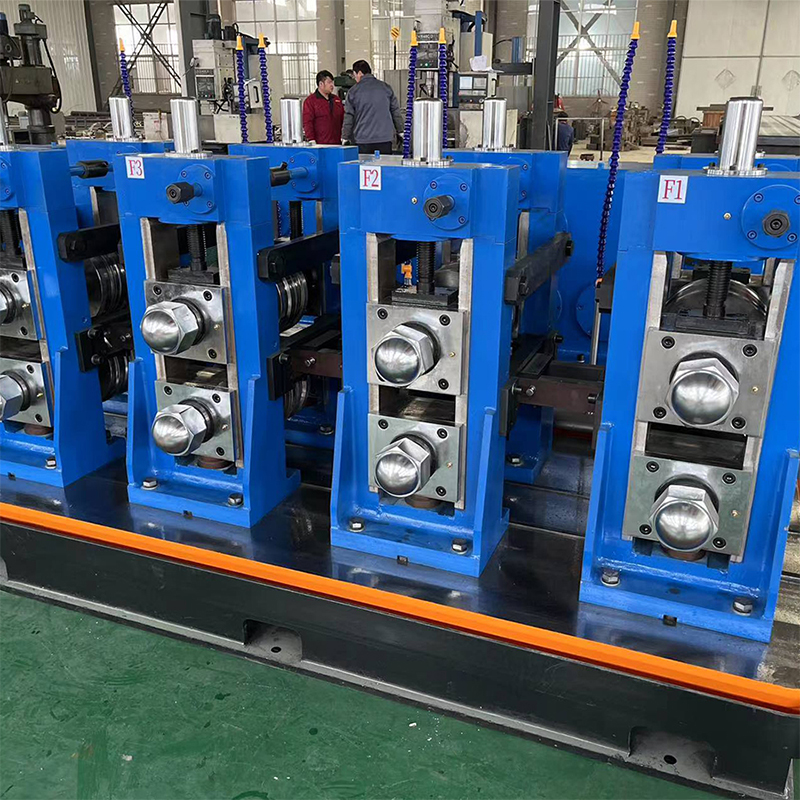
Yield strength is the amount of stress a material can take before it permanently deforms. A machine designed to form 2.0mm mild steel (like Q235) will likely stall or break if you try to run 2.0mm high-strength steel (like Q345 or Q460). High-yield steel requires significantly more force to bend. If the main motor doesn't have the horsepower, the machine will trip its overload protection, slip the drive belts, or even twist the main shafts.
Compare this to forming an Aluminum Tube. Aluminum is much softer and has a lower yield strength, meaning it requires far less motor power and a lighter machine frame. If you process mostly aluminum, over-speccing the motor wastes energy. If you process heavy structural steel, under-speccing is a disaster.
The force of the motor is eventually transferred to the tooling. When forming high-strength steel, a standard Pipe Roller must be upgraded. It has to withstand massive reaction forces while maintaining a smooth surface. Weak roller bearings will crush under the load, causing scratches or complete seizure.
Before you finalize a purchase order, give your supplier the specific yield strength of your material—not just the thickness. A professional manufacturer will calculate the actual deformation force required and match the motor power, gearbox, and roller bearings accordingly. Buying a machine that is just "big enough" for thickness is the fastest way to a production bottleneck.