
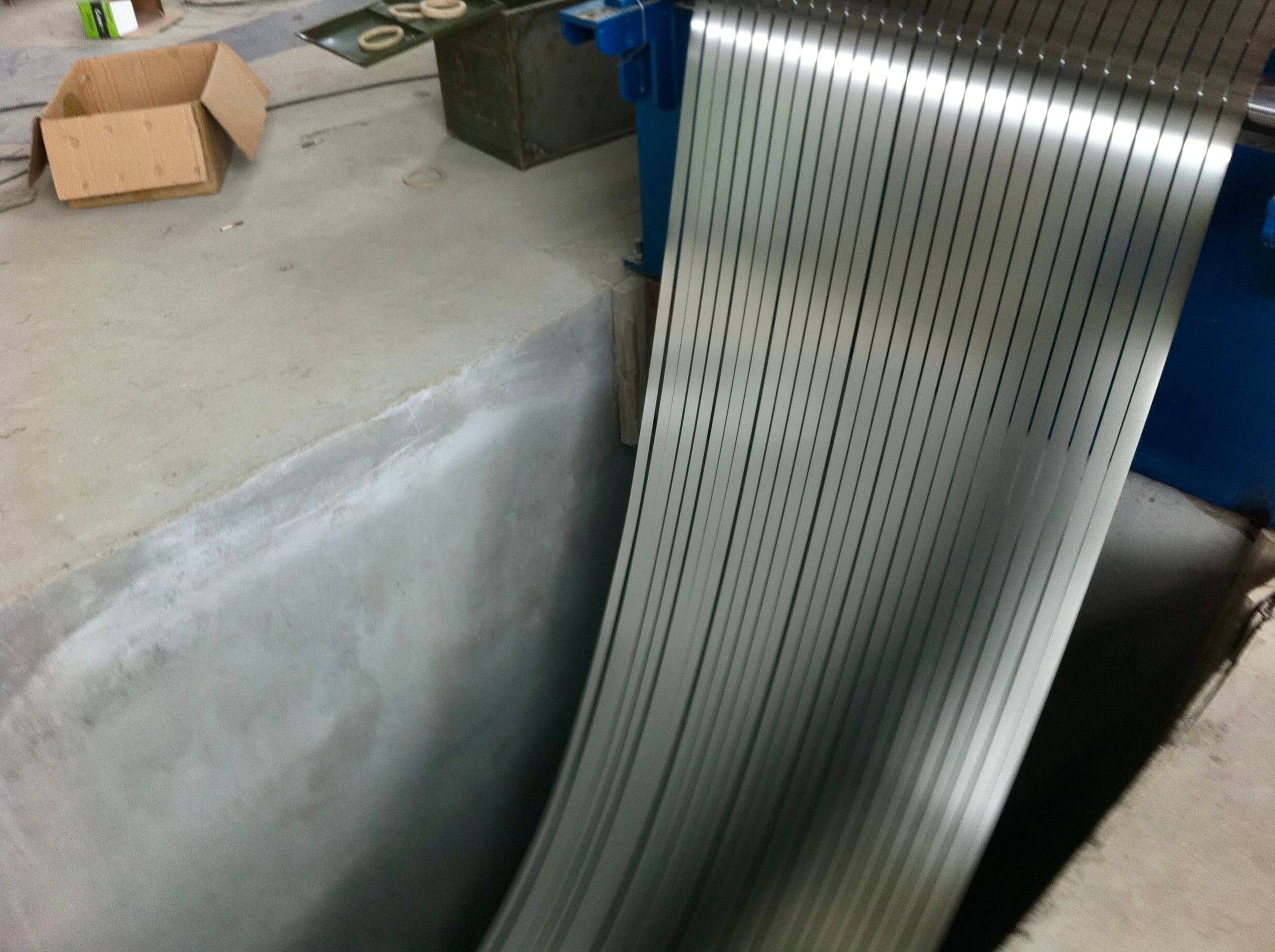
A coil that telescopes (inner wraps slide sideways) or comes out loose and springs open is a rejected product, even if every slit width was perfect. On a slitting line, recoiling quality is set by three things: tension, strip shape, and alignment. When one of them drifts, the coil looks wrong at the customer's uncoiler.
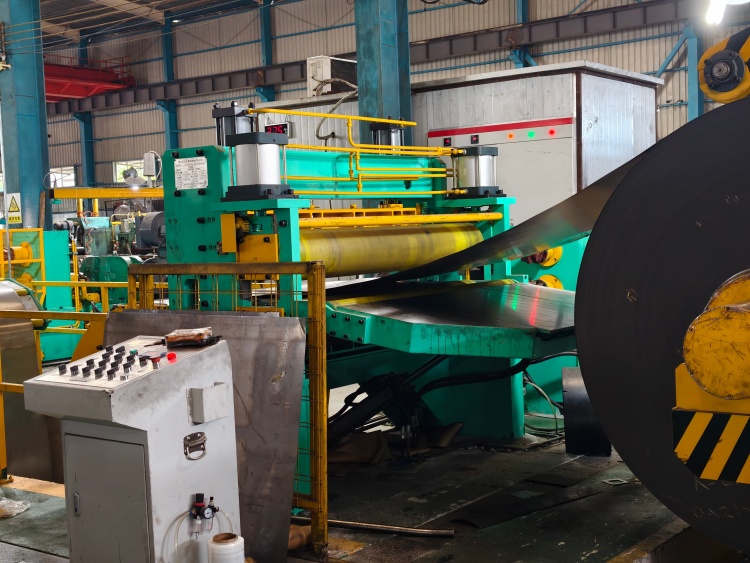
Cause 1 — tension too low, or tension that varies
Tension is what holds the wraps together. If recoiling tension is low, or drops as the coil builds, the outer wraps are loose and the coil will telescope in handling.
- Check that tension is held constant as coil diameter grows (diameter-compensating tension control).
- Verify the tension signal against a measured strip pull, not just the HMI setpoint.
- Watch for tension collapse at the start of a new coil — that is the wrap that usually telescopes.
Cause 2 — strip crown and bad flatness
A strip with centre crown or edge wave cannot be wound flat. It builds a coil with soft shoulders or a soft centre, and the soft zone slides.
- Fix flatness upstream: pinch roll, pre-leveler and correct entry tension.
- If crown comes from the mother coil, no recoiler setting will fully hide it — sort or downgrade the coil instead of fighting it.
Cause 3 — alignment and side guide drift
If the strip walks even a few millimetres across the coil width, the wraps stack off-centre and telescope.
- Check side guide parallelism and wear on the guide liners.
- Confirm the recoiler mandrel is centred with the slitting shaft, not just visually aligned.
- On expanding mandrels, check segment wear: a worn segment lets the coil sit off-centre.
Cause 4 — scrap winder pulling unevenly
Scrap winders that pull harder on one side tilt the strip before it reaches the recoiler. That tilt shows up as a tapered coil.
- Balance scrap winder tension left and right.
- Check scrap width and that the winder is not grabbing the strip edge.
Cause 5 — mandrel and separator condition
Worn mandrel segments, missing separators, or separator plates that are too small allow wraps to slip inward — the classic telescope.
- Inspect mandrel segments for flat spots.
- Replace worn separators; they are consumables, not permanent parts.
A quick diagnostic order
- Look at the coil: soft shoulders, soft centre, or a taper tells you which cause to chase.
- Check tension constancy first — it is the most common and easiest to fix.
- Check flatness of the incoming strip.
- Check alignment and mandrel wear.
- Only then look at the slitting head.
If edge quality is also off, work the two problems separately — our guide on improving stainless slitting accuracy and reducing burrs covers the cutting side.
About FOT
FOT Machinery builds slitting lines with diameter-compensating tension control, balanced scrap winders and inspected mandrel assemblies, and supports existing lines with alignment checks and spare separators. For coil-to-sheet work, the same tension discipline applies on a cut-to-length line.
Getting telescoped or loose coils?
Send us a photo of the coil end and your tension settings — FOT will help you narrow it to tension, flatness, or alignment.