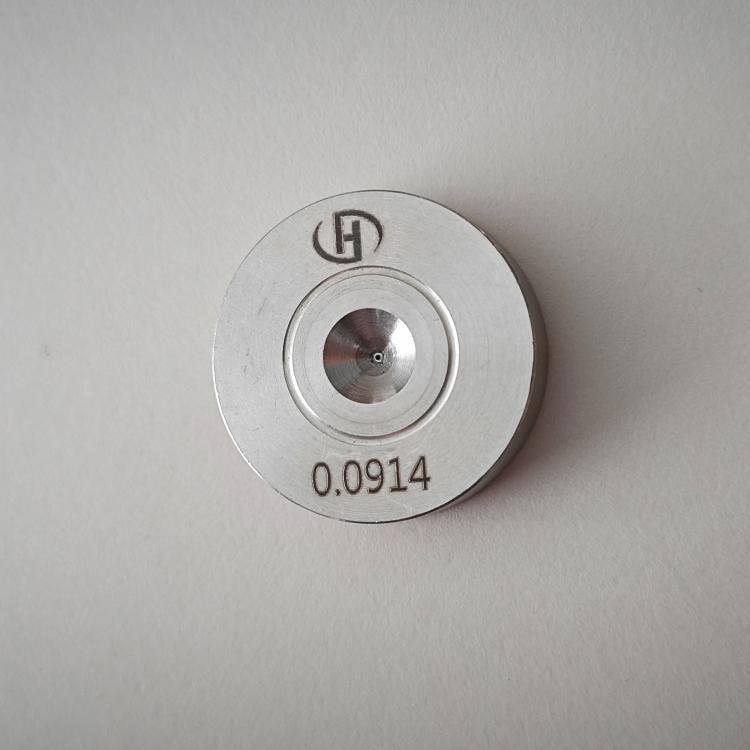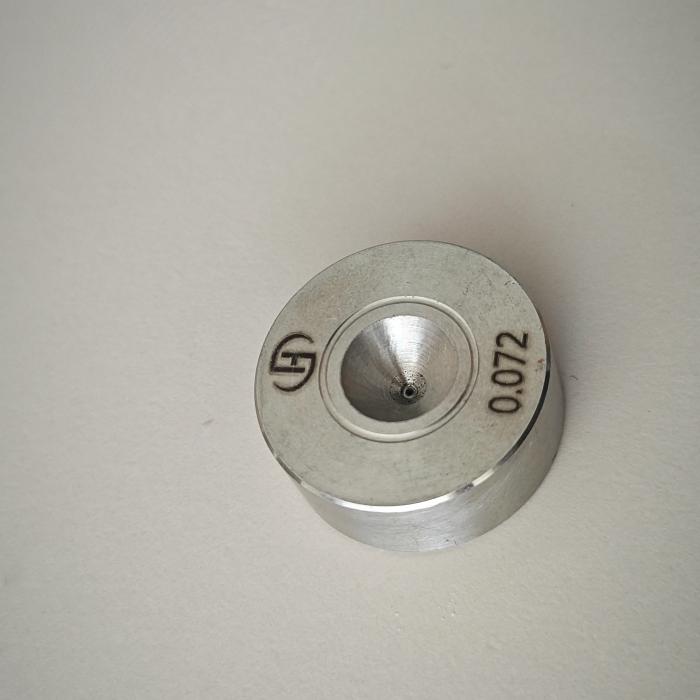
PCD is not a solid block of diamond; it is a composite made of microscopic diamond crystals sintered together. The size of those crystals—the grain size—dictates the surface quality of your finished wire.
If you are producing ultra-fine or highly critical wire, you need sub-micron grain sizes. When you use Nano Wire Drawing Dies for micro-electronics or medical wire, the goal is a flawless mirror finish. Sub-micron PCD allows the die manufacturer to polish the bore to an extreme level (Ra < 0.01μm). If you try to use a coarse-grain PCD here, the microscopic grain boundaries will act like a rasp, leaving invisible scratches that ruin electrical conductivity.
However, sub-micron PCD is more brittle. In some applications, a coarser grain structure is actually the right choice. For example, when running Galvanized Wire Drawing Dies, the soft zinc coating is highly sensitive to friction. You need a die that maintains a very smooth bearing length to prevent the zinc from flaking off, but you also need a grain structure tough enough to withstand the heavy pressure without micro-chipping at the edges.
The rule for buyers is simple: stop asking suppliers for just a "PCD die." Tell them exactly what material you are drawing. Sub-micron for mirror-finish nano wire; optimized grain sizes for heavy-duty or coated wire. The microscopic structure dictates your macroscopic yield.