
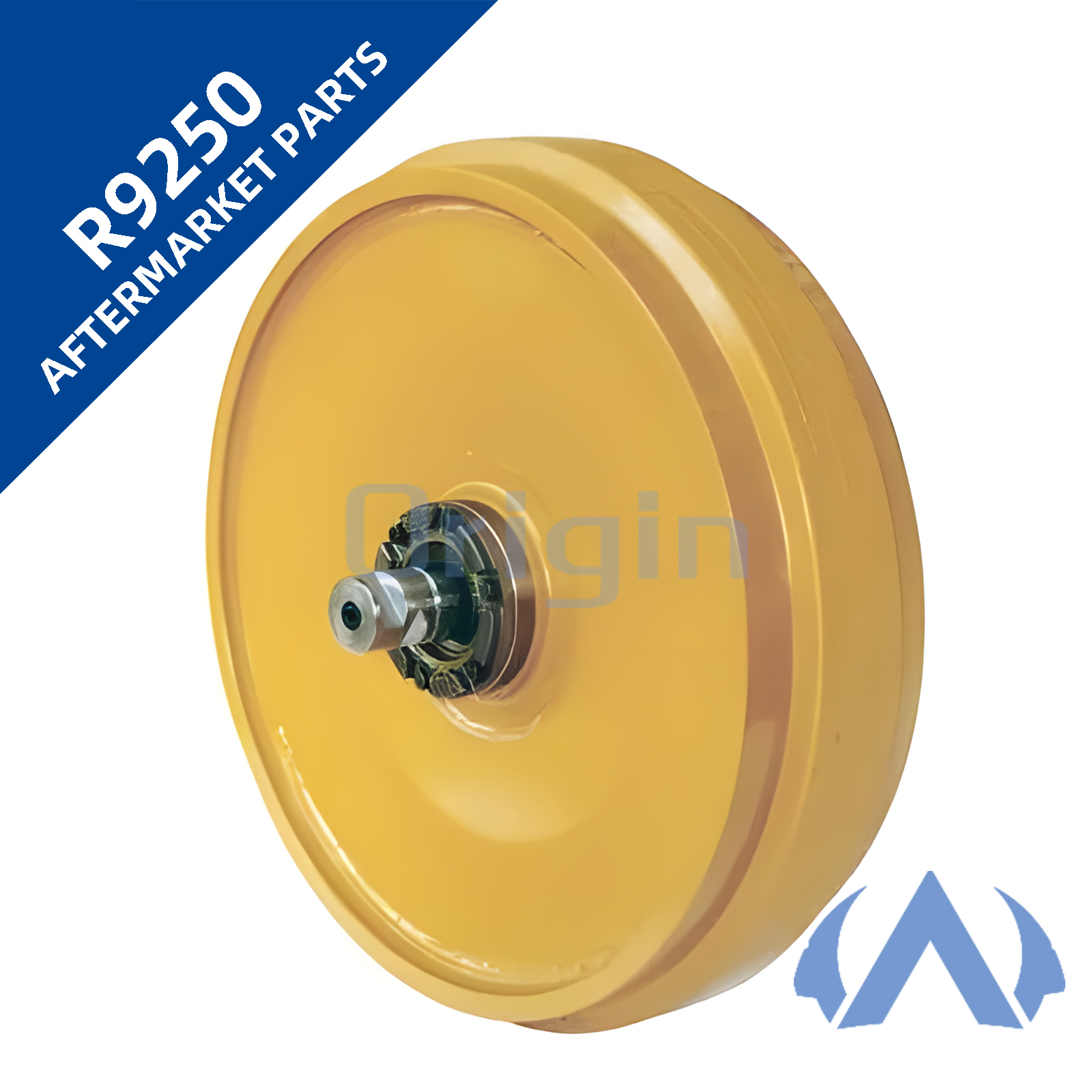
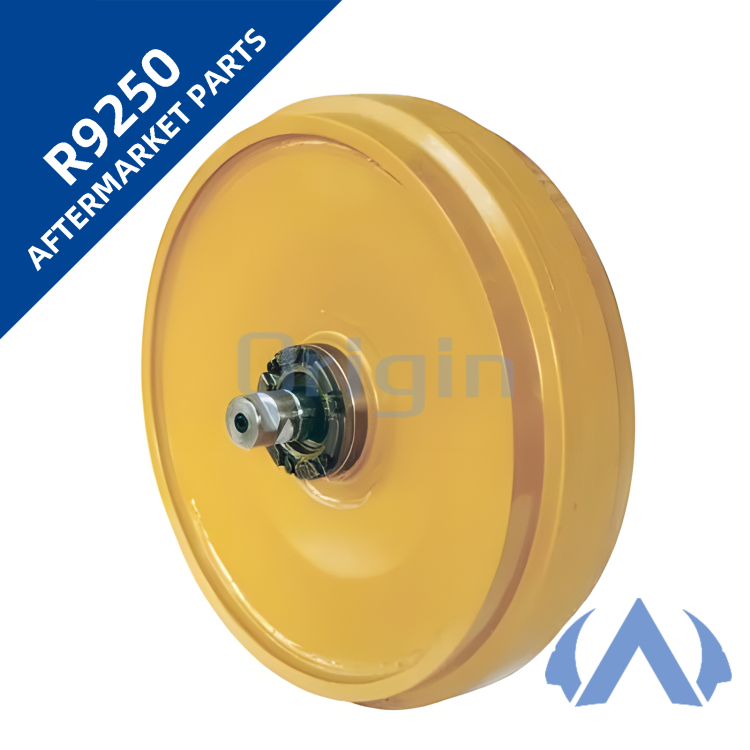
The front idler is the least watched wheel in a mining undercarriage. It does not drive the machine, it does not carry the full working load, and it rarely makes the maintenance report unless something has already gone wrong. Yet when an idler seizes, leaks or comes apart, it takes the track chain with it and stops the machine just as effectively as a failed sprocket. The root cause is almost never the wheel shell. It is the seal and the bearing living inside it.
This article looks at the idler as a sealed bearing system rather than a steel wheel. It explains how contamination gets in, how to read the early warning signs before a weep becomes a seizure, and how to turn those observations into a replacement decision that protects the chain. That is the difference between mining front idlers treated as a stock item and treated as a condition-monitored asset.
The Idler Is a Sealed Bearing, Not a Wheel
Strip an idler down and the working parts are simple: a hub on a shaft, a bearing stack, a cavity of gear oil or grease, and a pair of floating face seals at each end keeping it all contained. The wheel shell only provides a running surface and a place to guide the chain. Everything that determines idler life happens behind that shell.
In mining duty, seal failure and contamination ingress account for the large majority of idler and roller failures — commonly cited at seventy to eighty percent of premature cases. Abrasive quartz, with a Mohs hardness around seven, and silicate dust are the enemies. Once fine grit passes the seal face, it scores the hardened ring, opens a leakage path, and turns the lubricant into a grinding paste. The bearing then wears from the inside out. This is the same failure physics behind roller bearing and seal technology in bottom rollers and carrier rollers; the idler simply sees it in a more exposed position at the front of the frame.
Read the Weep Before It Becomes a Seizure
A failing seal announces itself. The first sign is usually a dark, damp patch around the hub end — oil weeping past the seal face and trapping dust into a thin slurry. Operators often wipe it off and carry on, but a weep means the lubricant is leaving and the contamination is entering through the same path. Once the oil level drops, the bearing runs hotter and the remaining oil degrades faster.
Temperature is the second signal, and it is measurable. On a healthy machine the idler runs close to ambient plus the friction baseline. A rise of roughly ten to twenty degrees Celsius above the comparable roller on the same side, measured with an infrared gun after a steady hour of work, points to increasing internal friction. Rotate the idler with the track lifted and listen: roughness, a rumble, or a grinding note that was not there before means the lubricant is already contaminated. Rising drag and a slight shudder in the track at low speed are the end of that sequence, just ahead of a locked wheel.
Keep a simple log. Record the weep condition, the surface temperature relative to a reference roller, and the rotation feel at every two-hundred-and-fifty-hour service in heavy dust — weekly in continuous mining. Trending those three together catches a failing seal weeks before it fails the chain.
Why the Oil Tells the Real Story
Where an idler can be sampled, the lubricant condition is more honest than the outside appearance. Fresh oil is clear to pale amber with even viscosity. Oil that has turned black and carries fine metallic particles is being cut by wear debris — the bearing is already scoring. A milky, emulsified colour means water has entered, which points straight to a compromised seal rather than simple wear.
The most expensive mistake in the field is topping up instead of changing. Adding fresh oil to a cavity that already holds grit and water dilutes the problem but never removes it; the suspended abrasive keeps working on the bearing and the new oil simply carries it around. When a seal is weeping and the sample is dirty, the correct action is to drain, flush and refill with the specified grade, and to replace the seal — not to pour in another litre. Synthetic gear oils flow better at cold start and tolerate higher temperatures, but synthetic and mineral oils should never be mixed, because incompatible additive packages can form deposits and swell the seal elastomer.
Seal Quality Is Decided at the Factory
Not all idlers that look identical on the shelf will survive the same bench. The floating seal works because two hardened steel rings are pressed face to face by an elastomer ring, forming a thin oil film between them. If the face pressure is too high, the oil film collapses and the rings run dry, heat up and wear. If it is too low, the seal opens and lets grit in. Getting that pressure into a narrow band depends on machining tolerances, the groove angle and the compression set of the elastomer.
This is why the elastomer compound matters. Nitrile rubber hardens under sustained high temperature and loses the elasticity that maintains face pressure; fluoroelastomer or high-temperature silicone keeps its compensation ability far longer. It is also why the assembly dimensions matter — the gap between hub and shell controls seal compression, and out-of-tolerance machining can ruin an otherwise good seal. When specifying mining excavator idlers, ask for the seal ring material, the face hardness and the accepted mating-gap tolerance, not just the part number and a price.
Match the Idler to the Chain You Are Protecting
An idler does not fail alone, and it should not be replaced alone. A worn idler with a dished or scuffed tread has already been abrading the chain, and a new chain fitted against that surface will wear out of true. Conversely, a stretched chain with hot spots will hammer a new idler and destroy the fresh seal in a fraction of its intended life. Treat the idler, the chain and the adjacent rollers as one load path.
Replacement should be by condition, not by calendar. A wheel that weeps, runs more than twenty degrees hot, feels rough by hand, or shows flange thinning and a grooved tread belongs on the change list now. Fit the new idler against a healthy chain and healthy rollers, set the track tension to the machine specification — too tight multiplies side load on the idler bearing, too loose lets the chain slap — and record the install date and hour. Then watch the new wheel's temperature and weep signature at the next service so you have a baseline for its replacement life. This matched-set discipline is the same thinking behind mining track rollers and the rest of the undercarriage: renew by load path, measure by hour, and never let one worn part quietly consume its neighbours.
Learn More
A failing front idler is a readable failure, and reading it early is cheap. Watch the weep, measure the temperature, sample the oil, and replace on condition against a healthy chain. Do that and the idler stops being a surprise downtime event and becomes another measured input in your cost-per-hour. For more detail on related components, see the plain-text references below and the linked reading list on our site.