
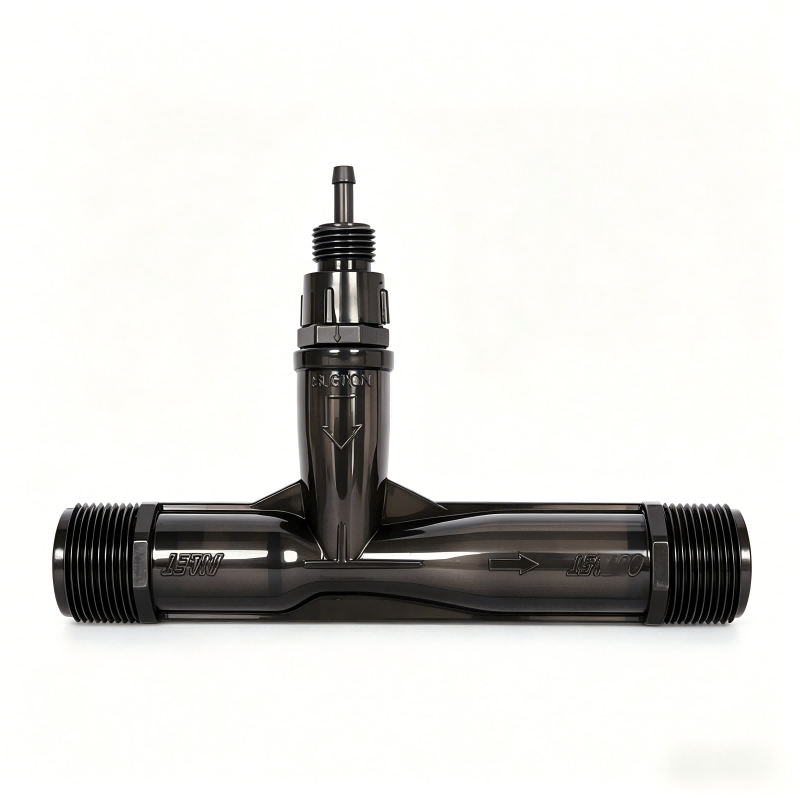
An ozone injector can be correctly connected and still fail to draw the expected amount of gas. Weak suction often points to a mismatch between the injector and the hydraulic conditions around it. Before replacing the unit, check the pressure difference, water flow and suction line. These factors determine whether the Venturi effect can generate enough vacuum for stable ozone injection.
Start With Inlet and Outlet Pressure
A Venturi injector accelerates flowing water through a narrowed section, reducing static pressure at the suction port. The pressure downstream must be sufficiently lower than the pressure upstream. Technical installation guidance for commercial injectors commonly identifies a differential of approximately 25–30% as a point at which significant suction begins, although the exact requirement varies by model and operating conditions.
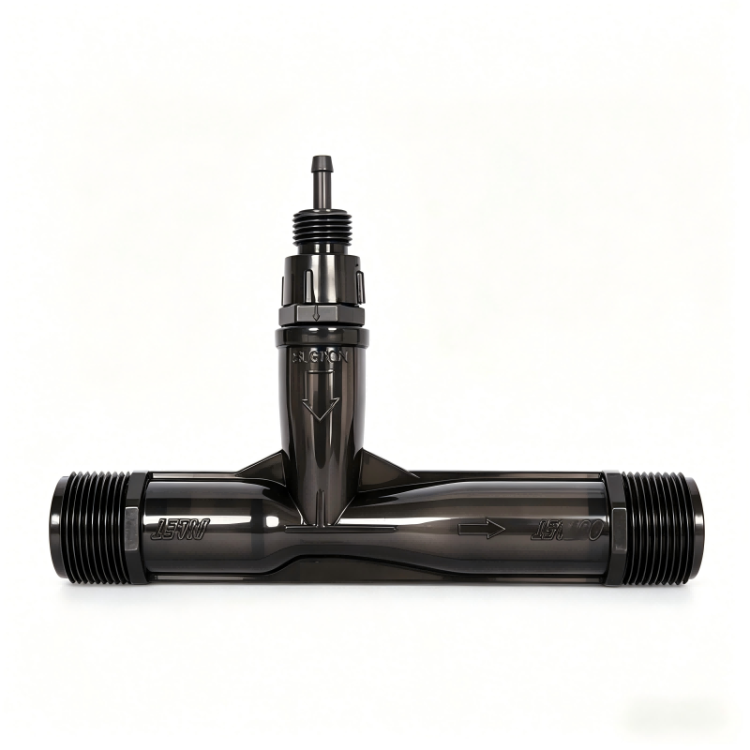
This is why checking only the pump's rated pressure is not enough. Install pressure gauges close to both injector connections and compare the actual readings while water is flowing. Excessive downstream pressure, an incorrectly adjusted bypass valve or an unsuitable pipe layout can reduce the pressure differential and cause a venturi injector suction problem.
Four Checks Before Replacing the Injector
- Water flow: Confirm that the pump supplies the flow required by the injector's performance data. An undersized or worn pump may not provide sufficient motive flow.
- Pipe restrictions: Inspect strainers, valves, reducers and fittings for blockage or undersized connections.
- Suction tubing: Check for kinks, leaks, deposits or a blocked check valve between the ozone source and suction port.
- Internal fouling: Mineral deposits, iron, manganese and biological buildup can restrict the internal passage and reduce suction.
Injector troubleshooting guidance also warns that selecting an injector that is too large for the available water flow can lead to weak or completely lost suction. The model should therefore be matched to measured flow and inlet/outlet pressure, rather than selected only by pipe diameter.
Check the Installation Layout
A common installation mistake is placing the injector in a line where the outlet has almost the same pressure as the inlet. A bypass arrangement with a suitable restriction or pressure-control valve can help create the required differential. Where the existing water supply cannot provide enough pressure difference, a properly sized booster pump may be considered after hydraulic assessment.
The injector should also be installed in the orientation specified by its manufacturer. Avoid unnecessary reducers and sharp restrictions near the inlet or outlet. Pressure gauges and an accessible suction-line flow indicator make future troubleshooting much easier.
Match the Injector to the Ozone System
A correctly selected Ozone Venturi Injector must handle the required gas flow while remaining compatible with the water flow, pressure and operating range. In an ozone application, material compatibility is also important because ozone is a strong oxidant. The injector, seals, tubing and check valves should be suitable for the gas concentration and service conditions.
When specifying Venturi Injectors or Venturi Injectors for Ozone, provide the supplier with water flow, inlet pressure, outlet pressure, required ozone gas flow and installation layout. These details allow the supplier to check the operating point instead of relying on a nominal size alone. A complete Ozone Venturi Mixers configuration should also consider downstream mixing and contact requirements.
For larger treatment projects, the injector is only one part of the gas-liquid transfer arrangement. Pump selection, bypass control, non-return protection and monitoring all influence stable operation. Properly integrated Venturi Ozone Systems are designed around the actual hydraulic conditions, not just the generator's rated ozone output.
Diagnose the System Before Changing Parts
Weak suction is usually easier to resolve when pressure and flow are measured under operating conditions. A qualified ozone injector manufacturer supplier should be able to review the injector's performance curve, material compatibility and installation data. This makes it possible to distinguish a blocked suction line from insufficient hydraulic pressure or an incorrectly sized injector, reducing unnecessary replacement and downtime.