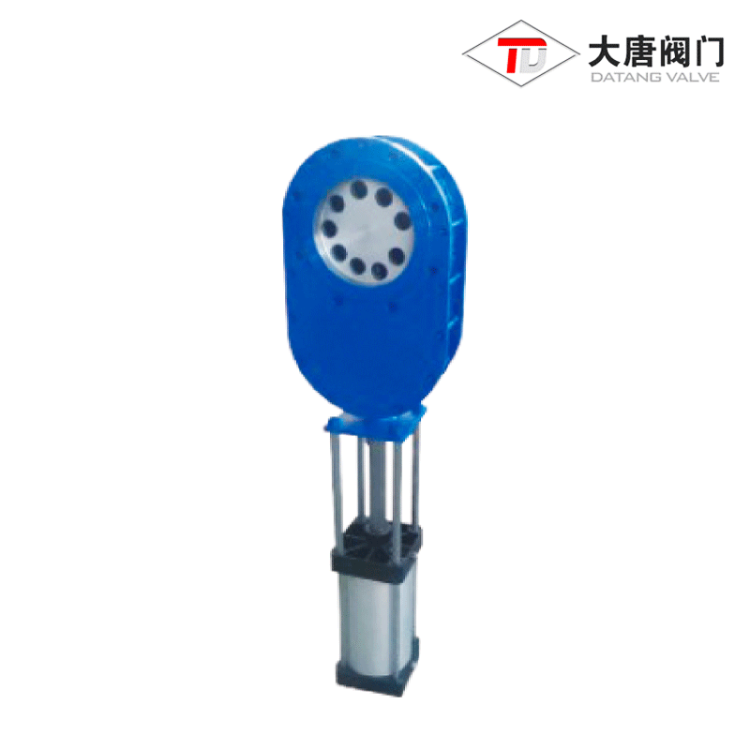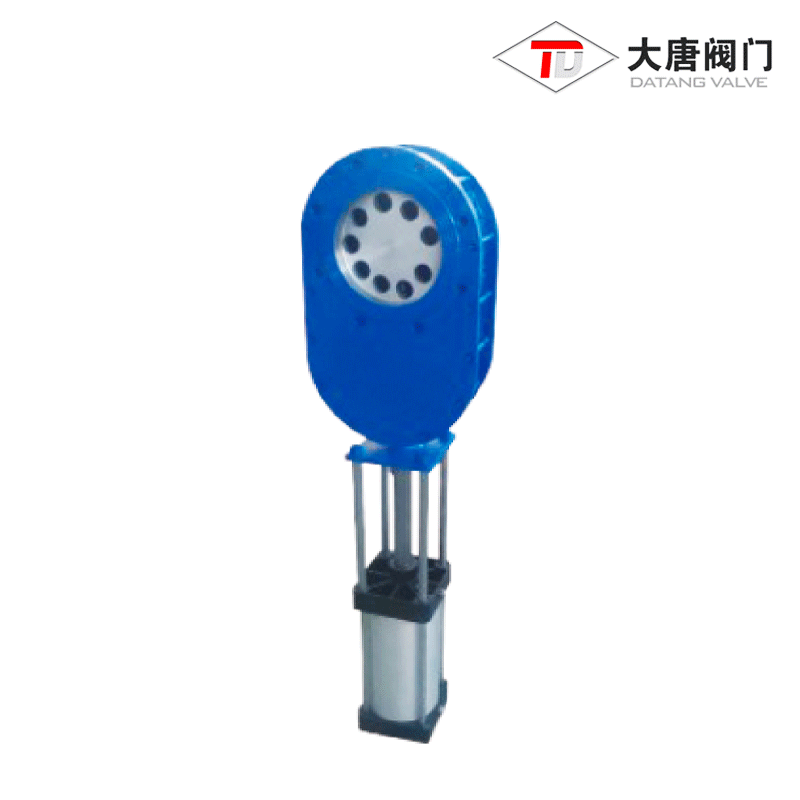
An upgraded trim package pays back only when the avoided change-outs, labour and downtime exceed the price premium, and that threshold is calculable before you order. Most business cases fail because they quote a life multiplier without naming its denominator: cycles, operating hours or tonnes handled. Buyers who reduce the decision to one Ceramic Valve line item then compare two unit prices that buy completely different service intervals. As a China manufacturer fielding cost reviews for ash and mineral lines, Datang uses the variable model below. Every figure is illustrative; substitute your own measured replacement frequency and downtime cost.
1. Which cost lines belong in the model?
Six lines, not one: purchase, installation, spares, downtime, labour and inspection. Unit price is usually the smallest of them on a line that stops production. The calculation is a comparison of two three-year totals, not a comparison of two invoices.
| Cost line | Symbol | Illustrative baseline (metal-seated) | Illustrative upgraded (lined) |
| Unit purchase per position | P | 1,000 | 3,200 |
| Change-outs per year | N | 3 | 0.5 |
| Installation + consumables per event | I | 350 | 350 |
| Production loss per event | D | 2,400 | 2,400 |
| Labour hours per event | L | 6 h at 45/h | 6 h at 45/h |
| Inspection / test per event | T | 120 | 120 |
Three-year baseline: 3 × [P + N × 3 × (I + D + 270 + T)] = 3 × [1,000 + 9 × 3,140] ≈ 87,780 (currency units, illustrative). Three-year upgraded: 3 × [3,200 + 1.5 × 3,140] ≈ 23,730. The gap is dominated by event count, not by the purchase premium. If your line never stops production when a position is changed during a planned outage, set D to zero and the result reverses; that is why the model must be run per position, not per plant.
The break-even condition is simple: an upgrade is justified when N_base × (I + D + L + T) − N_up × (I + D + L + T) > (P_up − P_base) / horizon. Rearranged, the minimum avoided events per year is (P_up − P_base) / (horizon × cost per event). With the numbers above, (3,200 − 1,000) / (3 × 3,140) ≈ 0.23 avoided events per year — a very low bar. Where the premium is larger or outages are cheap, the bar rises quickly. Put your own D into the sheet before believing any "five to ten times longer" claim.
A duty summarised as Power Plant Valve service illustrates the spread. A dry-ash branch that cycles 120 times a day and forces a unit derate at each change-out has a high D; a wet slurry branch that can be isolated behind a spare has almost none. Zhejiang Datang Valve Co., Ltd. therefore asks for the outage rule, not just the medium, before quoting. Datang engineers also ask whether the position is bypassed, because a bypass converts an emergency event into a planned one and changes the entire custom calculation.
Two more traps. First, count cycles rather than calendar months: a position that runs 120 cycles a day consumes its seat budget in weeks even if the invoice says "one year". Second, include the first-year spare trim set in the upgraded column; a brittle component that cannot be stocked locally carries a real logistics cost.
✅ Bottom line: Model avoided events multiplied by full event cost; unit price matters far less than replacement frequency and outage rules.
2. How do you make the numbers audit-proof?
Tie every input to a record a finance team can check: a maintenance log for N, an outage report for D, and a test report for the claimed life. A model built on a brochure is a marketing document, not a business case. This is the part procurement teams most often leave out of the approval pack.
| Input | Evidence to file | Common error |
| Change-outs per year | 24 months of work orders with dates and serials | Counting only emergency failures |
| Production loss per event | Shift report or derate log, signed | Using nameplate capacity, not actual margin |
| Labour and consumables | Maintenance job ticket | Omitting crane, scaffolding and flushing |
| Claimed service interval | Cycle-test summary with report revision | Accepting hours without cycle count |
| Purchase premium | Comparable quotes with same scope | Comparing lined to unlined bore |
| Spares and freight | Crating, shock indicator, air-freight quote | Assuming local stock exists |
The evidence chain also covers compliance documents. A site may list quality, environmental and occupational health system certificates, a special-equipment production licence and type-test reports without publishing numbers. Before approving any supplier, request current copies and verify the certificate number, scope, issuing body, validity, report revision and production batch. A certificate describing a management system does not prove a specific seat passed a specific leakage test; keep the product test record separate in the approval file.
If the purchase order says only Wear-Resistant Valve, there is no agreed denominator for the life claim and no basis for a warranty claim when the trim wears early. Write the duty cycle, the accepted test method and the inspection interval into the order instead. Require the shell and seat records, linked to serial numbers, before shipment.
Datang recommends one further control: agree a baseline thickness measurement at three marked bore positions at commissioning, then repeat it at the first planned outage. Two data points turn a forecast into a measured wear rate and let the finance team update the model with real numbers for the next budget cycle.
✅ Bottom line: Every model input needs a dated record; without a denominator for the life claim, a payback calculation cannot be defended.
FAQ
Q: How do we verify a claimed service-life multiplier? A: Ask for the denominator first — cycles, hours or tonnes — and the conditions under which it was measured. Datang supplies cycle-test summaries with report revisions for OEM evaluations, then recommends a baseline thickness check so you can measure your own wear rate.
Q: What if we cannot quantify downtime cost? A: Use a range rather than a single number and run the model three times: zero, half and full margin loss. If the decision flips between those cases, the upgrade is only justified where an outage is expensive, and you should say so explicitly in the approval.
Q: Should the warranty cover brittle internal parts? A: Write the coverage into the contract: define exclusions for impact damage, out-of-range particle size and uncontrolled thermal shock, and state who pays for inspection and freight. Ask for the current certificate pack and verify its numbers before signing.
Get a Free Three-Year Cost Worksheet
Send your change-out log, outage rule and target position list to the Datang engineering team. We will return the worksheet with your own numbers, a proposed inspection interval and a document checklist for your OEM or ODM programme. Zhejiang Datang Valve Co., Ltd. supports custom builds with factory-direct test records, so finance and quality can review the same file before release.
Mobile: +86 13567729018
Email: [email protected]
Website: www.datang-valve.com