
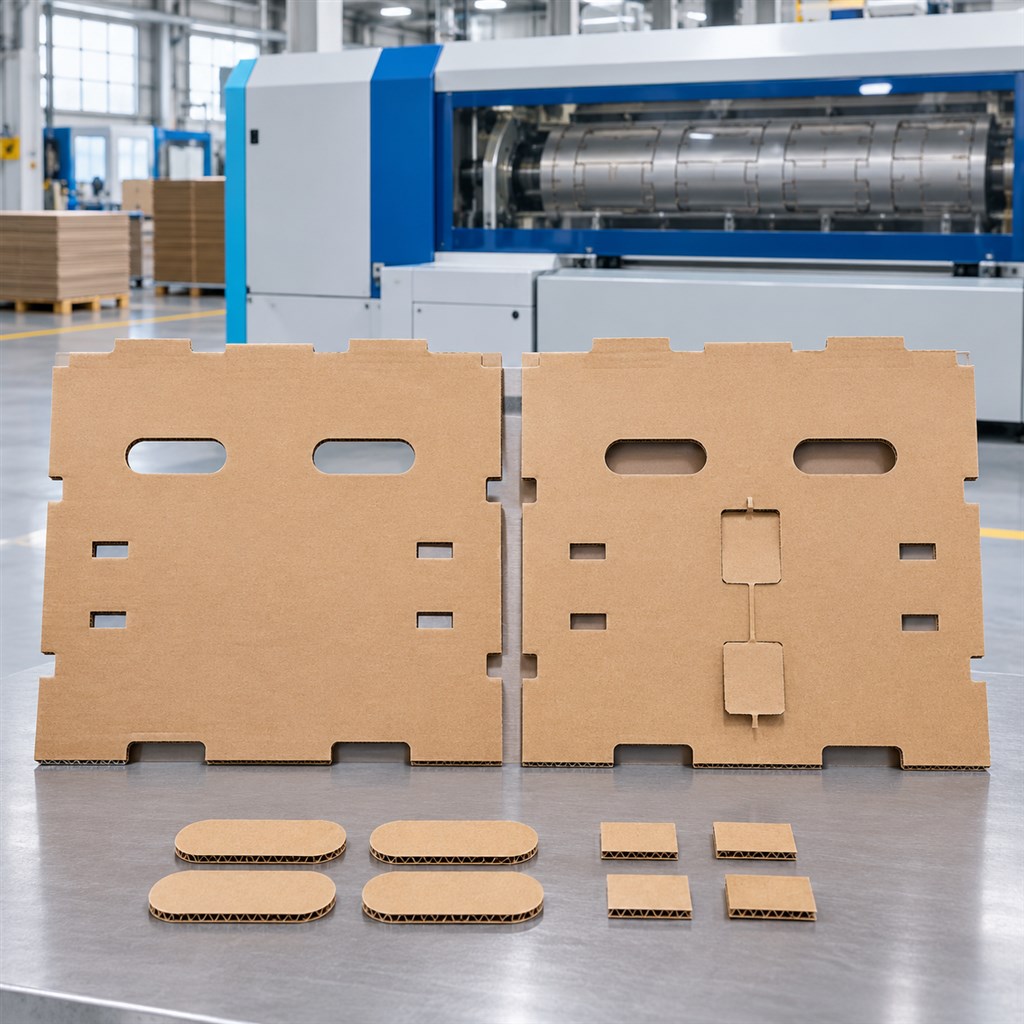
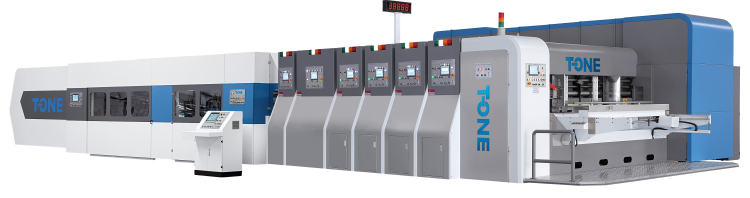
A rotary die cutter can produce a clean outer profile while a hand-hole slug, ventilation opening or narrow internal cutout remains attached. The blank may then jam, require manual sorting or reach the customer with unwanted waste. This article focuses on the full cut-and-eject path and gives buyers and production teams a way to trial difficult corrugated designs.
Quick answer: Use the actual dieline and board grades. Inspect cutting rules, nicks, ejection materials and the anvil condition, then observe waste separation, transfer and delivery across a representative run. Approve finished blanks, not only a clean cut on one sheet.
Waste removal has a different purpose from a general machine speed demonstration. It tests whether a specific box design can pass from die-cutting into the next production step with the required openings clear and the usable blank undamaged.
Choose the difficult designs
Bring the dielines that create real waste-handling problems: small interior holes, long narrow strips, closely spaced cuts and weak bridges. Include the board constructions and flute profiles actually used. Mark where the retained waste appears and whether the defect is constant, intermittent or concentrated on one side of the sheet. Keep samples with the job record.
A simple regular slotted carton may prove basic registration but is a poor substitute for a display box or ventilated package with several internal cutouts. Define the acceptance sample before the trial so the test cannot be narrowed to the easiest design after a failure.
Separate cutting from ejection
First determine whether the rule fully penetrates the board at the problem location. An incomplete cut can leave the waste attached; so can a complete cut followed by weak ejection or a bridge that was intentionally left in the die design. Inspect tool condition, mounting, rule position and the relevant anvil surface under the machine supplier's safe inspection procedure. Do not increase pressure across the whole sheet to solve one local defect without checking the effect on flute crush and tool wear.
Then review the ejection material, nicking design and clearance around each opening with the tooling supplier. The aim is controlled release of the waste while the usable blank stays intact. Any tooling change should be recorded against the approved drawing.
Watch the complete exit path
Observe where each cutout goes after leaving the die nip. Waste can clear the cut and still return to the blank during transfer or stack delivery. Review the approved stripping, air, vibration or conveyor arrangement on the actual machine configuration. Do not assume every T-ONE rotary die cutter has the same removal system; confirm the offered components and operating range with the supplier.
Check the output at normal production conditions, after a stop and restart, and when the board batch changes. Collect sheets from several points in the run. Note whether retained waste aligns with a tool position, a side of the machine, a board condition or a delivery event.
Inspect the usable blank
Successful ejection is not enough if the remaining box panel tears, delaminates or loses dimensional accuracy. Compare the cut edge, crease, opening size, print-to-cut position and stack quality with the approved box specification. If hand holes or ventilation openings are functional features, involve the customer's packaging engineer in the acceptance decision.
Document the sample count and where each sample was taken. Keep the accepted tooling revision with the dieline, board identification and inspection photos. If the design changes, review whether cutout size, bridge location or waste path has changed before repeating the order. That record turns a one-time demonstration into a production reference.
FAQ
Can a single clean sample approve the line?
No. Include different sample positions and a representative run. Intermittent waste retention may appear only after speed, board or tooling conditions change.
Is pressure the only adjustment?
No. Tooling, nicking, ejection, sheet transfer and board condition may be responsible. Follow the machine and tooling suppliers' approved procedures.
See T-ONE's corrugated rotary die cutter range when preparing the machine trial. Send the dieline, representative board and retained-waste samples through the contact page for a configuration review.