
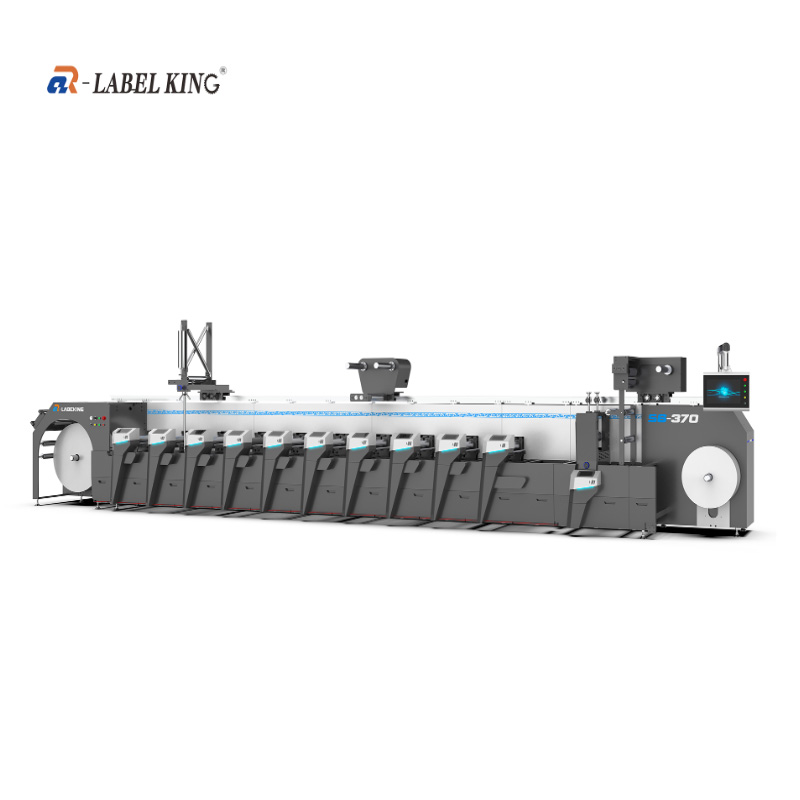
A Flexo Printing Machine, also called a Flexographic Printing Machine, is a rotary printing system that uses flexible relief plates to transfer ink onto a wide range of substrates. These substrates may include plastic films, paper, foil, nonwoven materials, paperboard, and corrugated packaging. In a typical production line, the machine meters ink through an anilox roll, transfers the ink to a flexible plate, and then prints the image onto the moving substrate. The substrate is subsequently dried, inspected, rewound, or sent to an inline converting process.
The terms Flexo Press and Flexographic Press usually describe the same general equipment category. The word “press” places more emphasis on the complete production platform, including the printing units, cylinders, ink delivery system, drying sections, web controls, and rewinding equipment. The term Flexo Printer is a shorter commercial expression that is often used when discussing compact machines, label presses, or a complete printing solution.
Flexographic printing is widely used because the process can combine high production efficiency with broad substrate compatibility. A modern Flexo Press can print on materials that are difficult to handle with some other printing processes, including stretchable films and porous papers. Depending on the machine configuration, ink system, and drying technology, flexographic printing can support water-based, solvent-based, UV-curable, and LED-UV ink systems. The appropriate choice depends on the substrate, required print quality, production speed, packaging structure, and regulatory requirements.
The basic ink-transfer process begins in the ink supply system. Ink is delivered to the anilox roll, whose engraved cells carry a controlled volume of ink. A doctor blade removes excess ink from the surface of the roll so that the remaining ink is primarily held inside the cells. The anilox roll then contacts the raised image areas of the flexible printing plate. The plate receives the ink and transfers it to the substrate when it passes through the impression zone. This controlled sequence allows the machine to reproduce text, graphics, solid areas, and color separations at production speed. The Flexographic Technical Association identifies inks, plates, substrates, and anilox rolls as fundamental elements of the flexographic workflow.
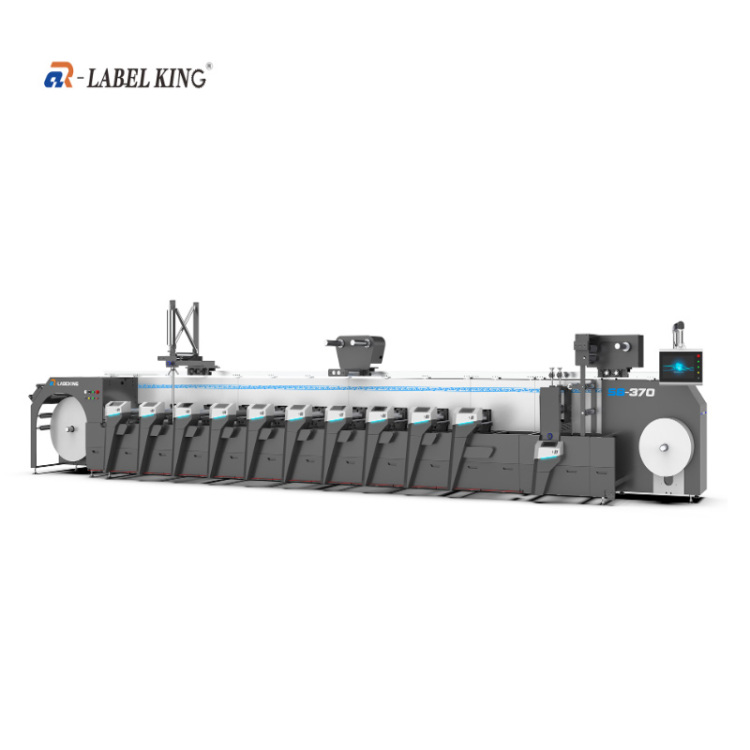
A complete Flexographic Printing Machine normally includes an unwinding system, web tension controls, one or more printing units, an ink circulation system, anilox rolls, doctor blades, plate cylinders or sleeves, impression cylinders, drying or curing sections, registration controls, inspection equipment, and a rewinding system. Some machines also integrate coating, laminating, slitting, die-cutting, or other converting functions. Modern press suppliers increasingly focus on shorter setup times, faster changeovers, reduced downtime, intuitive operation, inspection, and energy efficiency.
Don't select the right machine based on speed alone. A press with a high rated speed may not achieve that speed on every substrate or job. Ink coverage, drying capacity, plate design, registration tolerance, material stability, order length, and operator experience all affect practical output. For this reason, buyers should evaluate a Flexo Printer according to the complete production requirements rather than relying on one specification.
In short, a Flexo Printing Machine is more than a device that transfers ink. It is an integrated production system that connects prepress preparation, plate technology, ink control, material handling, drying, inspection, and post-press converting. Understanding how these systems work together is the first step toward choosing the right Flexographic Press and achieving stable, repeatable print quality.