
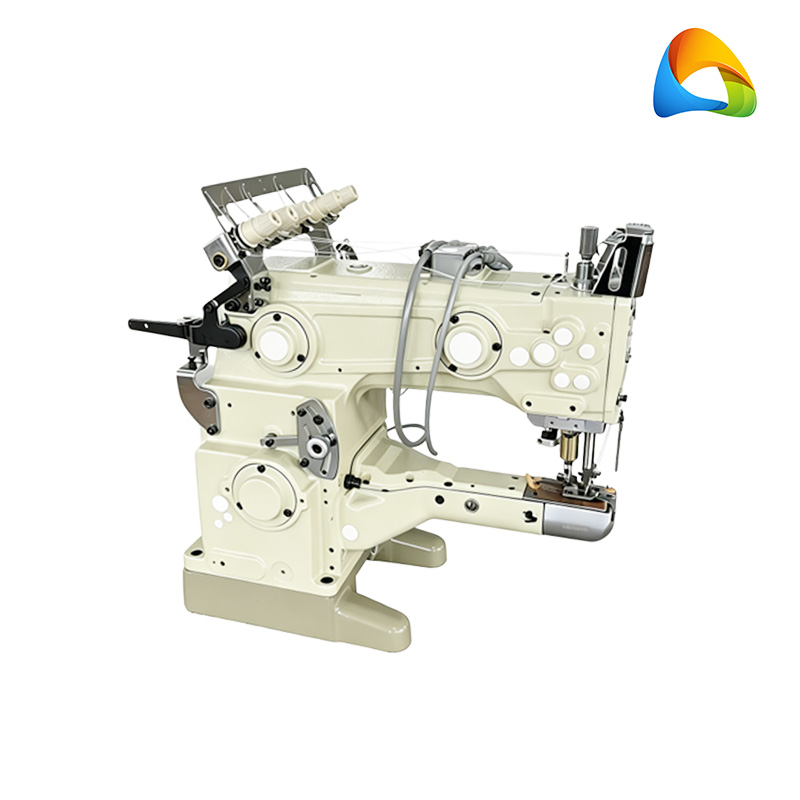
Bottom line: A knit underwear line runs on 5 machine groups — cylinder-bed flatlock, interlock, coverstitch, elastic-attach and bartack/button — with 60–70% of positions on chainstitch-family heads. A 40-worker line costs $15,000–38,000 in 2026, and Anwei quotations bundle the folders and metering attachments that generic lists forget.
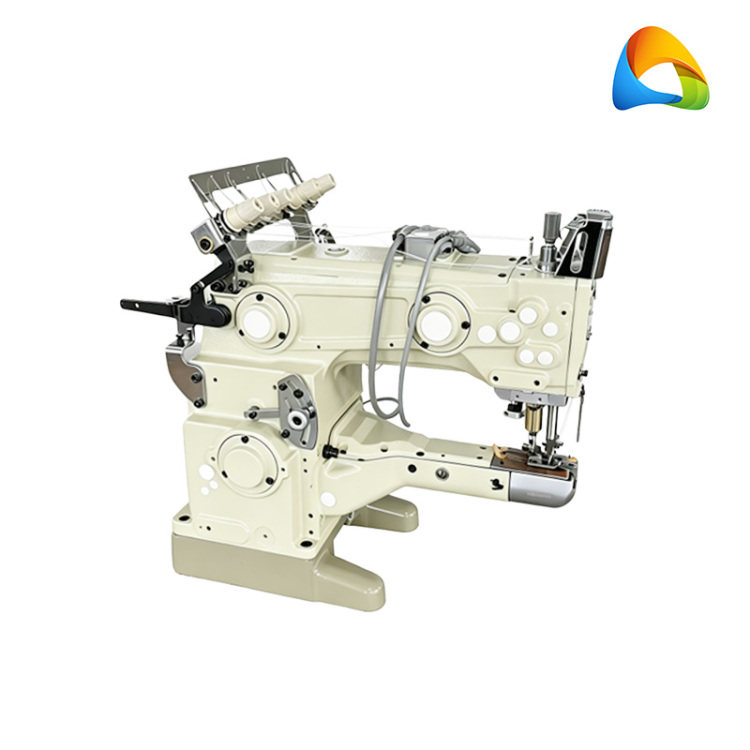
Flatlock vs Interlock vs Coverstitch: What Each One Actually Does
These three terms get used interchangeably by suppliers, but they describe different machines and different seams:
- Flatlock (lap-felled chainstitch). Two-thread or three-thread chainstitch that joins two fabric edges flat, then the seam is opened and taped. It produces the flat, chafe-free butt seam that buyers feel inside premium underwear — the reason a four needle six thread flatlock machine for swimwear commands its price premium: four parallel rows hold swim lycra through chlorine and stretch cycles without a raised ridge.
- Interlock. A 406-class coverstitch on a cylinder bed, used for neck rib attachment and lap shoulder necklines. It looks like two rows of straight stitching on top with a loop underneath — stretchy, secure, and forgiving on curled jersey edges.
- Coverstitch. The generic family (2-needle, 3-needle, 5-thread variants) that hems and top-covers in one pass. On knit underwear it is the workhorse for leg openings and shirttail hems; with a folder attachment it binds edges at 4,000+ SPM.
Rule of thumb for buyers: flatlock joins, interlock attaches, coverstitch hems. A quotation that lists three flatlock heads and no interlock positions is a swimwear list, not an underwear list.
Machine Configuration for a 40-Worker Underwear Line
|
# |
Operation |
Machine Class |
Key Spec |
Units |
Budget/Unit |
|
1 |
Cutting & bundling |
End cutter, band knife (optional) |
8" blade |
2 |
$300–800 |
|
2 |
Side seams & crotch join |
Cylinder-bed flatlock |
4-needle 6-thread, tape folder |
10–12 |
$900–1,600 |
|
3 |
Waistband attach |
Elastic-attaching interlock |
Metric mechanism, elastic metering |
6–8 |
$800–1,300 |
|
4 |
Leg openings & hems |
Coverstitch |
3-needle, differential feed |
8–10 |
$600–1,000 |
|
5 |
Neckline & lap shoulder |
Interlock |
406 class, cylinder bed |
5–6 |
$700–1,100 |
|
6 |
Fly, label, bartack |
Compact bartack + button machine |
42-stitch, 2,200 SPM |
3–4 |
$800–1,400 |
|
7 |
Final trim & pack |
— |
— |
— |
— |
Three decisions separate a profitable knit line from a struggling one:
- The waistband position is where comfort is won or lost. A dedicated sewing machine for elastic waistband underwear production pairs a 406-class interlock head with a metric gauge and an elastic metering device — the meter feeds elastic at exact tension while the head stitches, eliminating the stretch-wave defect that flat non-metered setups produce on 40% of waistbands. Note the contrast with woven-garment floors: a knit line's industrial sewing machine inventory deliberately skews to chainstitch-family heads, because stretch fabrics demand seams that elongate with the cloth rather than resist it.
- Cylinder beds, not flat beds. Briefs, bras and babywear are tubular garments; a cylinder-bed flatlock sews the crotch seam in one continuous pass instead of forcing operators to stop, rotate and restart three times. Check this spec on every quotation — Anwei configures knit lines cylinder-bed-first as standard.
- Automate the fixed-pattern positions first. Bartack, button-sew and (on men's lines) keyhole buttonholes are pattern-locked operations where automatic sewing equipment delivers ±0 tolerance at 2,000+ SPM — a Buttonhole Sewing Machine processes 1,500–2,000 holes per shift, which is why one automated position replaces two manual heads on any line above 800 garments daily.
Budget Breakdown for a 40-Worker Knit Line
- Machine heads (35–40 units): $17,000–26,000; cylinder-bed flatlock heads drive the spread
- Folders, tape attachments, elastic metering devices: $1,500–2,800 — on knit lines attachments matter more than on any other product category
- Tables, stands, servo motors: bundled in China factory-direct quotes, or $180–260 per position separately
- Spare needles, loopers and parts (6 months): 3–5% of machine value — order extra loopers, since a bent looper stops a flatlock head entirely
- Freight and commissioning: 10–15%
Anwei configures knit underwear and swimwear lines for buyers across the Middle East and Africa, drawing on automated production line engineering since 2005. Shanghai Anwei Building Materials Technology Co., Ltd. manufactures behind every package — 60+ patents, ISO-certified quality systems — and wholesale line pricing with consolidated freight typically lands 15–25% below distributor stacking.
FAQ
Q1: Can a coverstitch machine do flatlock work? No. Flatlock requires a lap-felled chainstitch with a spreader and folding attachment; a coverstitch head cannot form the interlooped butt seam, and substituting it produces ridged, chafing seams that fail retail comfort tests.
Q2: How many elastic waistband positions does a mid-size underwear factory need? Plan one dedicated elastic-attach position per 5–6 sewing operators. A 40-worker line attaching waistbands on 1,000+ garments daily needs 6–8 metered positions; reducing this count bottlenecks the entire line at operation 3. Anwei ships the metering gauges pre-mounted on the sewing machine for elastic waistband underwear production, so operators do not retrofit attachments on the floor.
Q3: Do I need a four needle six thread flatlock machine if I only make briefs? Not necessarily — briefs run well on 3-thread cylinder-bed flatlock. The four needle six thread flatlock machine for swimwear configuration earns its cost on lycra products where four parallel rows distribute stretch load; swim, performance underwear and seamless-style products justify it, basic brief lines do not.
Building or upgrading a knit underwear, swimwear or babywear line? Anwei engineers stitch-by-stitch machine configurations matched to your fabric weight and daily output — send your garment samples and target production volume, and receive a station-by-station equipment list with factory-direct quotation within 48 hours. OEM branding and lifetime parts support included.