
|
|
|
|
*Published: November 2026 |
By RUNFENG Engineering Team* |
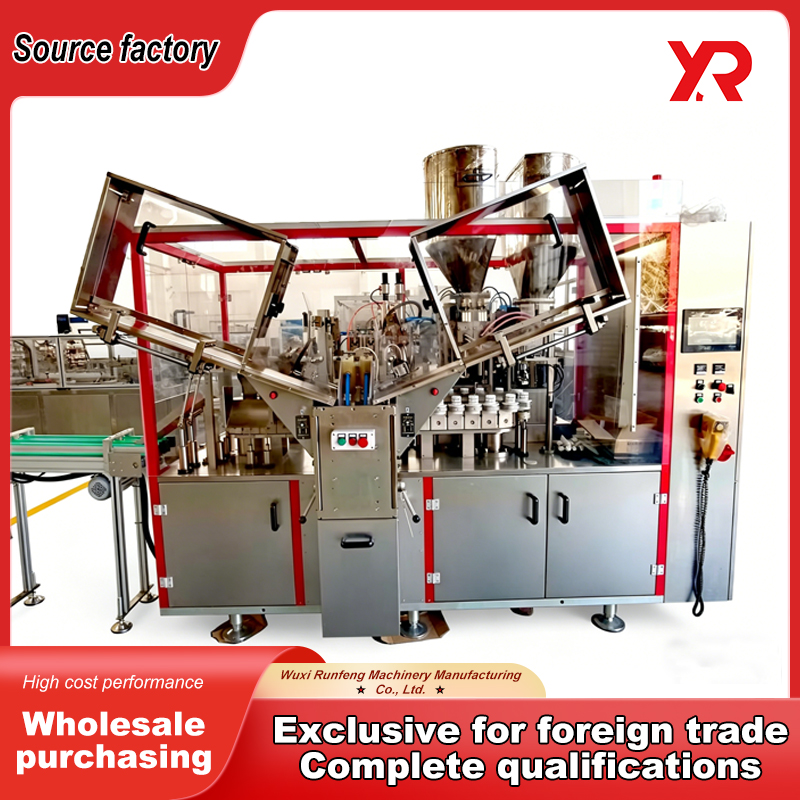
104 tubes per minute is arithmetic; 130–156 tubes per minute is a purchase specification. The first number comes from dividing 30 million tubes by the minutes available in a year. The second is what survives OEE, changeovers and a growth margin — and it is what decides whether you buy a small filler or a high-speed rotary. The honest answer to tube filling machine speed for 30 million toothpaste tubes per year is therefore a range, not a single figure. This article shows the calculation chain, where the capacity actually disappears, and why the rotary-versus-linear decision can move the answer more than the nameplate does.
1. From 104 to 156: The Calculation Chain
Divide by available minutes, divide again by OEE, then add headroom. Start with the 300-day, two-shift calendar used in our earlier line-sizing guide: 300 days × 2 shifts × 8 hours × 60 = 288,000 available minutes. Thirty million tubes divided by 288,000 gives 104 tubes per minute — a theoretical average with no allowances at all.
|
Calculation step |
Formula |
Result |
|
Theoretical average |
30,000,000 ÷ 288,000 min |
104 tubes/min |
|
Buffer only (simplified sizing) |
104 × 1.20 |
125 tubes/min |
|
OEE-adjusted, 80% plant |
104 ÷ 0.80 |
130 tubes/min |
|
OEE-adjusted + 20% growth |
130 × 1.20 |
156 tubes/min |
The 125 tubes per minute figure is not wrong — it is just a simplified first pass that adds a buffer without subtracting losses. A real tubes per minute calculation for tube filling line capacity must do both. Published benchmarks put sustained output at roughly 60–85% of nameplate; a line rated 150 tubes/min commonly delivers 90–110 on the floor. Use 70% for a new, still-optimising line, 80% for a stable integrated line and 85% only for a genuinely world-class operation.
This is why a 30-million-tube plant does not buy a 100-tube-per-minute machine and hope. At 80% OEE it needs a rated ceiling near 130 tubes/min before growth, and about 156 tubes/min if volume is expected to rise. RUNFENG's GF120-class and GF180-class rotary platforms sit in that band; smaller machines do not, no matter how favourable the brochure looks.
✅ Bottom line: 104 is the arithmetic minimum, 125 is a first-pass buffer, and 130–156 is the range you take to a supplier. Skipping the OEE step is the most common sizing error.
2. Changeovers, Not Top Speed, Eat the Capacity
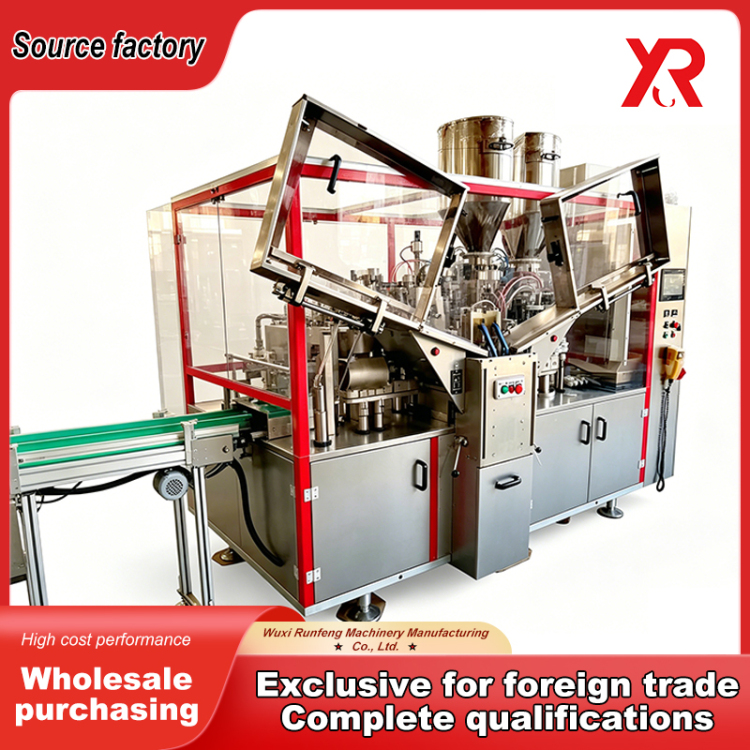
In multi-SKU plants, format changes are usually the single largest loss. OEE is availability × performance × quality, and availability is where changeovers, cleaning, material staging and line clearance land. One published line example is instructive: a 60-tube-per-minute filler with 450 planned minutes per shift lost 140 minutes to three changeovers and another 25 to other stops. Availability fell to 63.3%, performance to 90%, quality to 98% — and OEE to 55.9%. The line could theoretically have made 27,000 tubes; it produced 15,080 good ones. Changeovers accounted for about 70% of the loss.
Two practical consequences. First, a faster machine does not fix a changeover problem: if your line loses two hours a shift to tube-diameter and shade changes, buying 150 tubes/min instead of 100 adds capacity you can never reach. Second, ask suppliers for good tubes per shift under your actual SKU schedule, not tubes per minute under ideal conditions. Ask for a timed changeover record with your tube, paste and sealing method; a RUNFENG trial reports good tubes per shift, not just TPM.
|
Shifts per day (300 days) |
OEE 70% |
OEE 80% |
OEE 85% |
|
2 × 8 hours |
~179 tubes/min |
~156 tubes/min |
~147 tubes/min |
|
3 × 8 hours |
~119 tubes/min |
~104 tubes/min |
~98 tubes/min |
The table answers a question capacity planners often ask late: adding a third shift can cut the required machine speed from about 156 to about 104 tubes/min at 80% OEE — potentially avoiding a larger, more expensive machine. Whether that saves money depends on shift labour and overtime cost, so compare both scenarios before signing. What you should not do is assume a second or third shift will run at the same OEE as your best crew.
✅ Bottom line: Model losses in minutes, not percentages alone. If changeovers dominate, reduce SKU switching before upgrading speed.
3. Rotary or Linear? The Answer Changes With Your SKU Count
The web is full of comparisons framed as rotary vs linear tube filling machine which is better — the honest answer is that the question is incomplete. The right framing is: how many formats do you run, and how often do you switch?
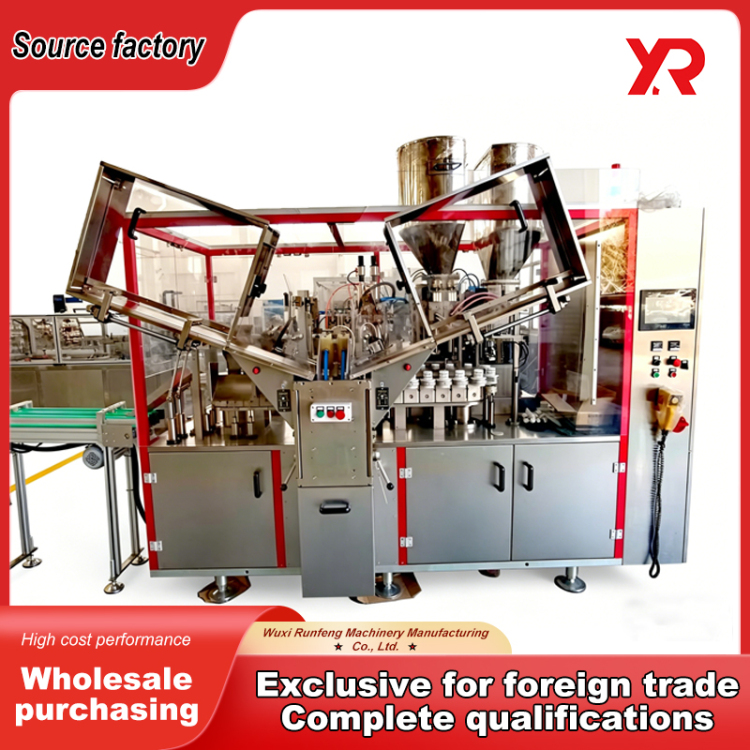
Rotary machines work continuously around a carousel. They typically deliver 120–180 tubes per minute, hold fill weight and seal quality consistently across long runs, and use floor space efficiently relative to output. The price is changeover: holders, nozzle position and sealing settings sit around the whole table, and many designs require swapping complete pocket sets. Budget 45–90 minutes for a tube-size change, more when sealing stations must be converted.
Linear machines index station by station. They typically sustain 40–100 tubes per minute, but each station is independently accessible, so adjustments touch only the affected point. Complete tube-size changes commonly take 20–40 minutes, and purchase cost is generally 20–30% lower. A private-label oral-care producer running eight tube sizes across twelve brands, switching three or four times a week, chose a linear machine precisely because a 20-minute changeover removed the need to pay for a second shift.
So the decision rule is simple. One or two formats, long campaigns, high annual volume — rotary wins on cost per tube. Many formats, short runs, frequent contract-packaging changes — linear wins on effective output, because the time saved between batches outweighs the lower top speed. If your 30-million-tube plan is actually 30 million spread over forty SKUs, recalculate before assuming rotary.
RUNFENG builds rotary GF-series platforms — the GF180 holds 130–150 tubes/min with dosing within ±0.5 g and tooling for tubes up to 50 mm — and supports line layout, change parts and commissioning as one scope. Send the SKU matrix, not just the annual total: that is what determines whether speed or flexibility is the binding constraint.
✅ Bottom line: Choose rotary for volume per format, linear for the number of formats. Any tube filling machine speed for 30 million toothpaste tubes per year estimate that ignores format count is incomplete.
FAQ
Q: What tube filling machine speed for 30 million toothpaste tubes per year should I specify?
A: Roughly 130 tubes/min at 80% OEE, rising to about 156 tubes/min if you want 20% growth headroom. The 104 tubes/min arithmetic average assumes zero losses. State your shift pattern, OEE assumption and SKU count in the enquiry so the supplier can convert the figure into good tubes per shift.
Q: How do I do a tubes per minute calculation for tube filling line capacity myself?
A: Annual volume ÷ (days × shifts × hours × 60) gives the theoretical average; divide by realistic OEE, then multiply by 1.15–1.25 for growth. For 30 million tubes on 300 days and two shifts: 104 ÷ 0.80 × 1.20 ≈ 156 tubes/min.
Q: Which is better for a 30-million-tube plant — rotary or linear?
A: It depends on formats. The useful answer to rotary vs linear tube filling machine which is better comparisons is that rotary suits one or two high-volume formats (120–180 tubes/min), while linear suits frequent format changes (20–40 minute changeovers). A multi-SKU plant may get more good tubes per shift from a slower linear machine.
CTA: Get a Capacity Model Built on Your SKU Matrix
Send the RUNFENG engineering team your annual volume, shift calendar, SKU list, tube diameters, sealing method and expected changeover frequency. Within 48 hours you will receive a capacity model with OEE assumptions stated explicitly, a comparison of rotary and linear configurations against your real format count, and a machine recommendation sized in tubes per minute calculation for tube filling line capacity terms — good tubes per shift, not brochure peaks. Wuxi Runfeng Machinery Manufacturing Co., Ltd. quotes capacity in saleable tubes, with every OEE assumption stated in writing.