
1. How much height do you actually save, and what do you give back?
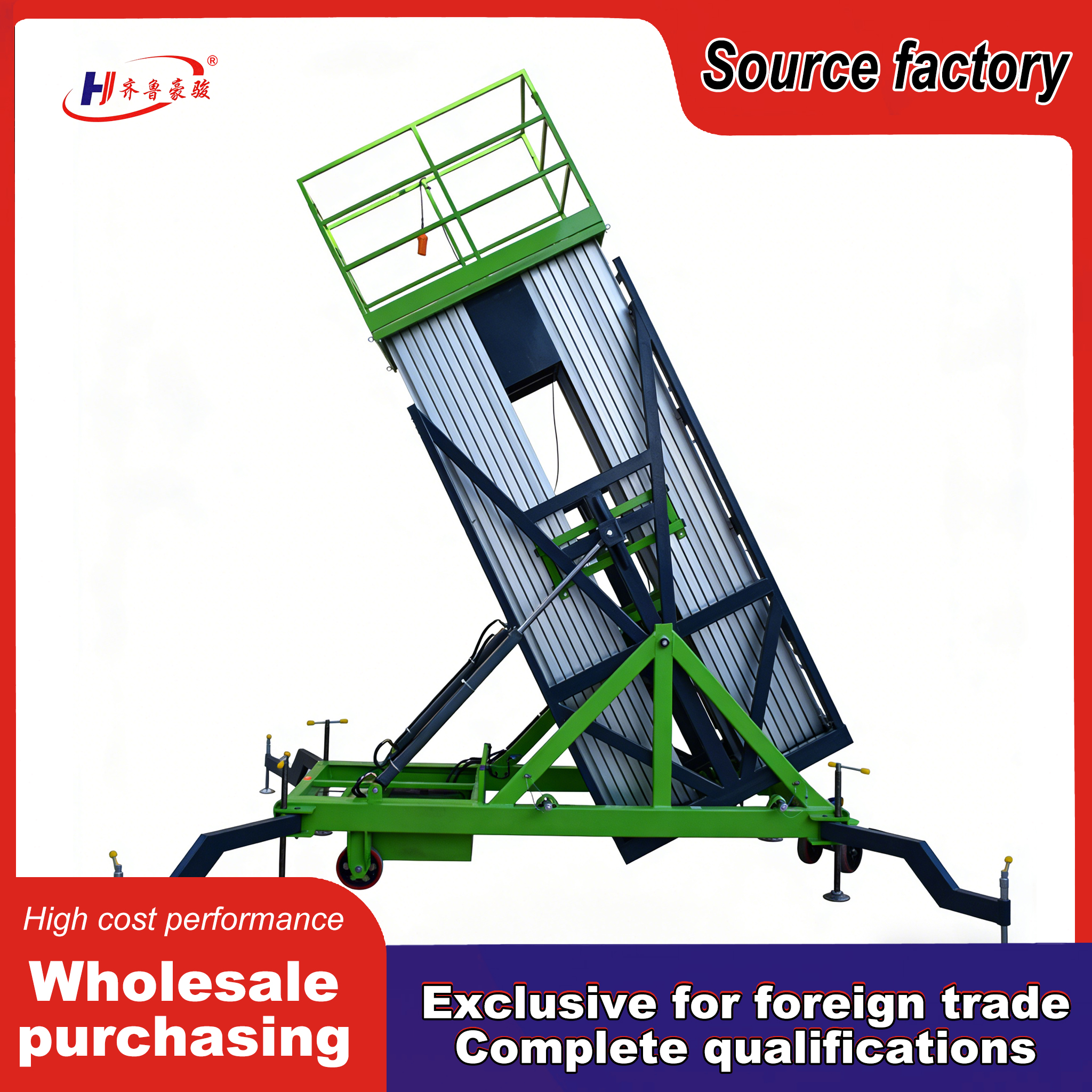
Folding the mast trades vertical clearance for horizontal length. The Mantall AMP40 is the clearest published example because the manufacturer states both configurations instead of quoting a single "stowed" number.
|
Machine |
Transport configuration |
Height |
Length |
Width |
|
Mantall AMP40 (12 m platform) |
Upright |
2.76 m |
1.46 m |
0.78 m |
|
Mantall AMP40 |
Tilted back |
1.98 m |
2.87 m |
0.78 m |
|
Haulotte Star 10 |
Upright |
from 1.80 m |
— |
0.77 m |
|
Compact electric scissor |
Upright |
from 1.90 m |
— |
0.76 m |
|
Heshan TFMA18-4 (18 m platform) |
Tilted |
2.20 m |
3.10 m |
1.40 m |
|
Heshan TFMA24-4 (24 m platform) |
Tilted |
2.30 m |
4.30 m |
1.40 m |
Two things in that table decide most orders.
First, the 20 mm margin. A 1.98 m folded height clears a nominal 2.00 m opening, but a threshold strip, an uneven floor or a door closer mounted low can consume it. If the measured clear height on site is 1.95 m — common in older buildings — the tilt-back machine does not fit either. The mast lift stowed height to fit through a 2 meter doorway should always be checked against the minimum reading along the route, taken at the lowest point of each threshold, not against the architect's nominal dimension.
Second, the length. Tilting takes the AMP40 from 1.46 m to 2.87 m — a 96% increase. A doorway may offer enough height after tilting while the corridor outside it cannot accommodate the longer machine through a 90° turn. That is the same turning-envelope problem that decides scissor versus mast: width at the door is not the constraint, swept length at the corner is. Facility managers should walk the route with a 2.9 m tape measure held at floor level before ordering.
The bigger tilt-back machines make the point even more sharply. The Heshan TFMA18-4 and TFMA24-4 fold to 2.20 m and 2.30 m respectively — both still above a 2.00 m doorway. Tilting is not a guarantee of access. On 18–24 m machines it is mainly a way to lower the centre of gravity for transport and to fit a container, not to pass through standard internal doors.
There is a capacity cost as well. The AMP40 is rated at 120 kg, below the 159 kg of the lower AMP models, because the 12 m platform needs a smaller load allowance to stay within its stability envelope. Its platform is only 0.69 × 0.68 m, and the published wall-access distances are 0.42 m at the front and 0.65 m at the side. Buyers choosing tilt-back purely for reach often discover they have bought a one-person inspection machine rather than a two-person work platform.
A third option is often overlooked: a HAOJUN standard mast at 8–10 m already stows near 1.90–2.00 m without any folding mechanism. If the work is below 8 m platform height, the tilt back mast lift vs standard mast doorway clearance comparison is moot — a standard machine clears the door and keeps the higher platform rating. Tilt-back earns its cost only where reach above 10 m and a sub-2.10 m route must coexist. Before paying for the mechanism, confirm the job actually needs that reach.
HAOJUN supplies both upright and tilt-back configurations and issues the folded dimension drawing with each quotation, because the mast lift stowed height to fit through a 2 meter doorway cannot be confirmed from the working height or the machine width. HAOJUN has seen more orders delayed by an unmeasured threshold than by any specification error. Send the route drawing and we will mark the tightest point before any deposit is paid.
✅ Bottom line: Measure the lowest threshold and the tightest corner; a 1.98 m folded height is a marginal fit, not a guaranteed one.
2. Is a tilt-back mast better than a scaffold tower for ceiling work?
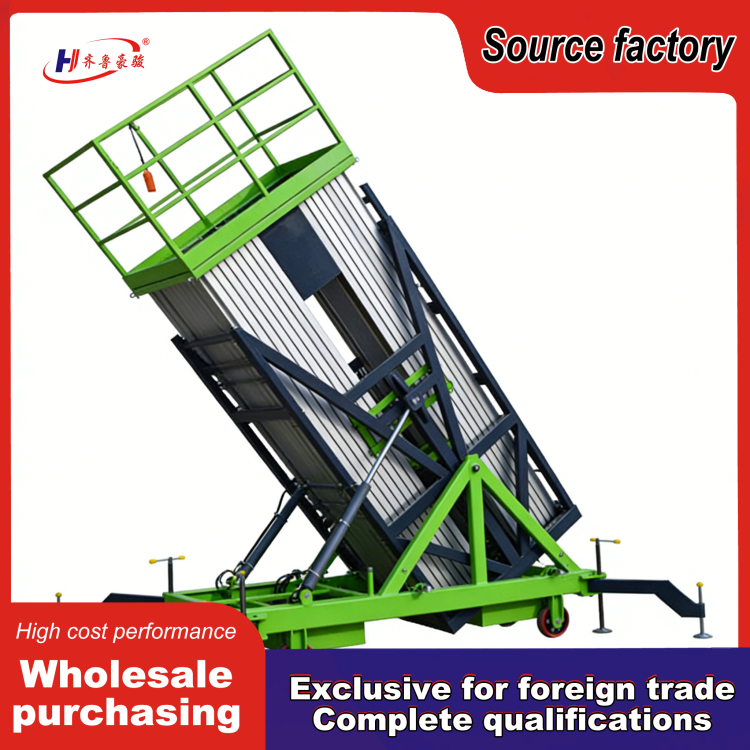
For a single operator and a task under an hour, the mast lift wins by a factor of three in labour. The mast lift vs scaffold tower for ceiling maintenance cost comparison is usually argued on rental rates, which is the wrong unit: the tower is cheaper per day and far more expensive per task.
A published Swedish facility-study gives the full cycle for a 4 m, 60-minute installation job:
|
Phase |
Mobile scaffold, two people |
5 m mast lift, one person |
|
Retrieve equipment |
5–10 min |
1–2 min |
|
Set up at work point |
30–60 min |
1–2 min |
|
Active work |
60 min |
60 min |
|
Dismantle / return |
30–60 min |
1 min |
|
Total elapsed |
125–190 min |
63–65 min |
|
Person-hours |
4.0–6.4 |
1.05–1.08 |
Setup and teardown alone cost €40–110 each at facility-management labour rates — before a single fitting is changed. Moving an erected tower across a room takes 5–15 minutes; moving it through a doorway takes 30–45 minutes because it must be partly dismantled and rebuilt. That is exactly the failure mode the tilt-back mast removes: it folds, rolls through the opening and redeploys in about two minutes.
Rental rates tell a similar story once duty is included. German rental data puts vertical mast lifts from €80/day, compact scissor lifts from €100/day and rolling scaffold from €30/day. The tower looks cheapest until the two-person assembly time is priced. A useful rule of thumb from the same source: required working height equals clear room height minus 2 m (one armed reach plus one metre of margin).
The mast lift vs scaffold tower for ceiling maintenance cost answer flips as soon as the task stops being a single short visit. A facility with fifty LED fittings to replace over three days will amortise one tower setup across the whole job, and a tower lets two electricians work the same span simultaneously. HAOJUN recommends a tower there and says so — the tilt-back mast is a machine for moving between many short work points, not for camping at one.
Scaffolding still wins four specific cases, and a supplier who says otherwise is selling:
- Multi-day work at one point — after the second or third day the setup cost amortises away
- Several trades working at the same elevation simultaneously — a pillar lift is single-operator equipment
- Above 6 m working height — outside the pillar-lift envelope
- Loads above 180 kg — beyond mast-lift platform ratings
Cold-store and clean-room work adds a further consideration. Mast lifts in the 700–1,000 kg class generate roughly 3–8 t/m² through their wheel contacts, so floor capacity must be confirmed before ordering — a detail that applies equally to the tower, but which the tower's larger base distributes differently.
For distributors, this is a custom specification conversation rather than a catalogue sale: folded height, folded length, platform rating and floor pressure are four separate numbers, and an OEM buyer should require all four on the same data sheet. Jinan Haojun Lifting Machinery Co., Ltd. builds tilt-back units alongside standard masts and offers wholesale pricing for China manufacturer direct orders with the folded-state drawing attached.
✅ Bottom line: Charge the tower for its erection labour, not its rental rate; below six metres and one operator, the mast lift is three times more labour-efficient.
Frequently asked questions
Q: Will a 1.98 m tilt-back lift fit through a standard 2 m door?
A: Only if the measured clear height is at least 1.98 m at the lowest point, with no threshold strip or low-mounted closer. The nominal 2.00 m figure leaves 20 mm, which is not a working margin. Check the full route, since the folded machine is also about 2.87 m long.
Q: Why is the tilt-back model rated lower than the same height standard mast?
A: Folding adds structure and shifts the mass distribution, and high-reach platforms are rated conservatively under MEWP stability rules. The 12 m AMP40, for example, carries 120 kg against 159 kg on shorter models. Expect one operator and a light tool kit, not two people and materials.
Q: Can we order a tilt-back unit with a higher platform load?
A: It can be engineered, but raising the rating at 12 m means a wider chassis and longer outriggers, which may defeat the access reason for buying it. Our factory team will quote both the tilt-back and a standard quad option so the trade-off is visible on one sheet. Tell us the measured door height and the working height and HAOJUN will confirm whether a tilt-back frame is needed at all — the tilt back mast lift vs standard mast doorway clearance decision is cheaper when it is made before production.