
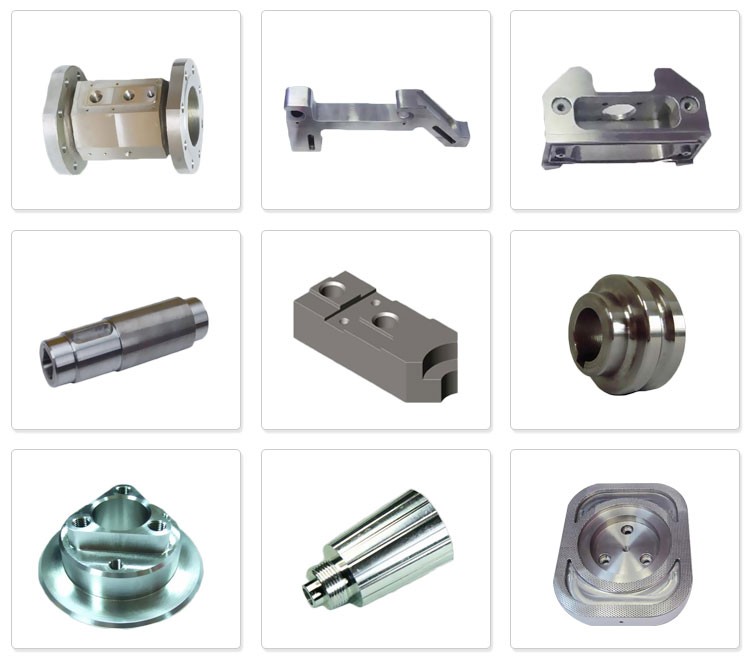
A pilot order of 100 parts, run inside 30 days, tells you more about a supplier than six months of emails — because it tests the five things a quotation cannot show. If you want to know how to qualify a Chinese CNC supplier with one pilot order, the method below costs a few hundred dollars and one month.
A pilot tests five things:
- Response latency — hours, not adjectives.
- Question quality — whether problems surface before production or after scrap.
- Documentation discipline — whether documents arrive with the shipment or on request.
- Measured capability — real parts, measured by you, not promised capability.
- Behaviour under a problem — root cause or discount?
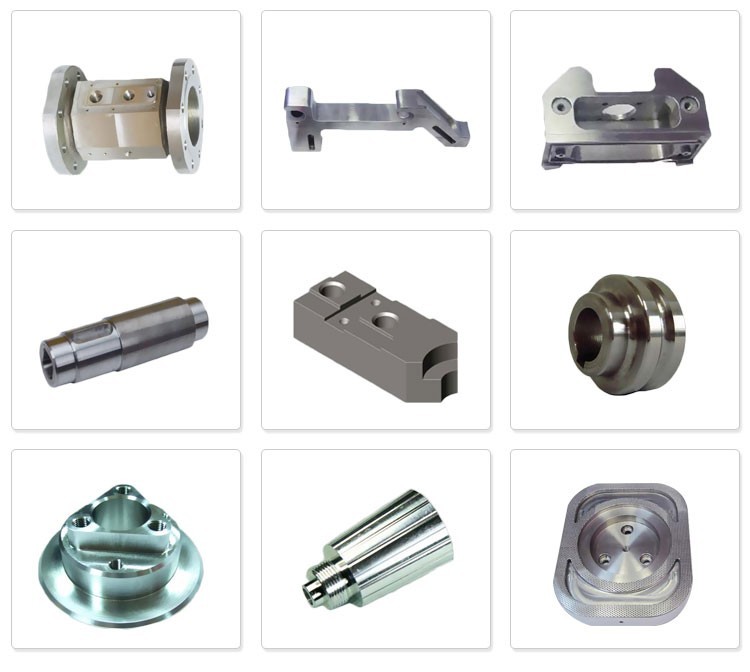
1.What does a 30-day pilot actually test that a quote cannot?
Five signals, each observable in the first month.
Week 1: the quote and the kickoff. Watch two details. Does the quotation reference the drawing revision number — proof someone read the drawing, not a spreadsheet? And do questions come back before production starts? A supplier who asks nothing either understood everything (rare) or is pricing assumptions. One clarification round costs two working days across the time zone; a supplier who spends them in week 1 is protecting your week 4. Weeks 2–3: the questions stop and the parts start. Send one ordinary engineering question mid-run — a tolerance query on a bore. The signal is not the answer but the route: does it reach the machinist with a documented reply, or vanish into the sales team until you ask twice? Response within 24 hours is normal; above 48 hours, repeatedly, is a staffing problem that will not fix itself.
Documents are the cheapest possible audit. The packing list, dimensional report and material certificate should be in the box — or emailed the day it ships. If you have to request them twice, you have learned in week 3 what some buyers learn at their customer's incoming inspection in year 1. Documents that arrive on request are documents somebody had to be reminded to make.
Bottom line: A pilot order turns five promises into five observations — and every one of them is visible in the first 30 days.
2.How do you judge the parts without getting fooled?
Inspect 100% of the pilot — this is the only time in the relationship when that is affordable — and read the result statistically, because "zero defects" on a small batch proves less than buyers assume.
On a pilot of 100 parts, measuring every critical feature yourself (or through a third-party lab) is a day's work. On 20,000 parts it is impossible — the pilot is your one chance to see the whole population instead of a sample.
Then read the number honestly. The rule of three: with zero defects found in n parts, the true defect rate is still below about 3/n at 95% confidence:
|
Pilot size, zero defects found |
What it actually proves (95% confidence) |
|
30 parts |
true defect rate below 10.0% |
|
100 parts |
below 3.0% |
|
200 parts |
below 1.5% |
So "zero defects on 50 parts" is not proof of a capable process — it only bounds the rate under 6%. Size the pilot accordingly: 100 parts is the practical minimum, 200 if unit cost allows.
The behaviour test matters as much as the measurements. If a defect does appear, the pass is not a discount — discounts bury problems; root causes fix them. The fail-safe supplier sends an explanation of why the defect occurred and what changed on the line, even when the fix costs them money. And watch price stability: a second-order quote that differs from the first without explanation means nobody inside the factory controls its costs.
These are the pilot order acceptance criteria for CNC machined parts that survive contact with reality — anything a supplier fails here fails louder at volume.
Bottom line: Judge the pilot statistically — 100 parts measured, zero defects proves below 3% — and judge behaviour harder than geometry, because process discipline is what scales.
The 30-day scorecard
A CNC supplier trial order checklist before mass production comes down to five lines, each with a pass and a fail column. Score it in writing — a verdict nobody wrote down is a verdict that gets renegotiated.
|
Signal |
Pass |
Fail |
|
Quote |
cites drawing revision, states assumptions |
generic price, no revision |
|
Communication |
questions in week 1, ≤24 h replies |
questions after scrap, >48 h |
|
Documents |
in the box or shipped-day email |
on request, twice |
|
Parts |
100% measured, zero-to-bound defects |
failures discovered by you first |
|
Behaviour |
root cause and process change |
discount, silence, price drift |
✅ Size the pilot at 100–200 parts, chosen from your real drawings — not a simplified sample part.
✅ State the pilot order acceptance criteria for CNC machined parts in the RFQ, so the supplier knows month 1 is an examination, not a formality.
✅ Write the verdict down — pass or fail on every line — and send it to the supplier either way. Suppliers remember buyers who score.
Bottom line: Five lines, one month, one written verdict — a CNC supplier trial order checklist before mass production that costs less than one bad shipment.
Frequently asked questions
How many parts should a pilot order be?
100 parts minimum, 200 when unit cost allows. Below 50, even a perfect result only proves the defect rate is under 6% — too loose to base a mass-production decision on.
The pilot parts were perfect. Can the third shipment still be bad?
Yes — a pilot qualifies a process at a point in time, not a company forever. A tooling change, a subcontractor swap or a new machinist can shift the process later; put re-qualification triggers in the purchase order from the start.
Why pay for a pilot instead of asking for free samples?
Free samples are usually hand-finished — they prove a machinist can make one good part. A pilot runs the real process with production tooling and normal staff, which is the only thing that resembles your future orders. That is the whole logic of how to qualify a Chinese CNC supplier with one pilot order: pay a little to test the system, not the craftsman.