
1. Telescoping — a Handling Defect the Line Can Manage
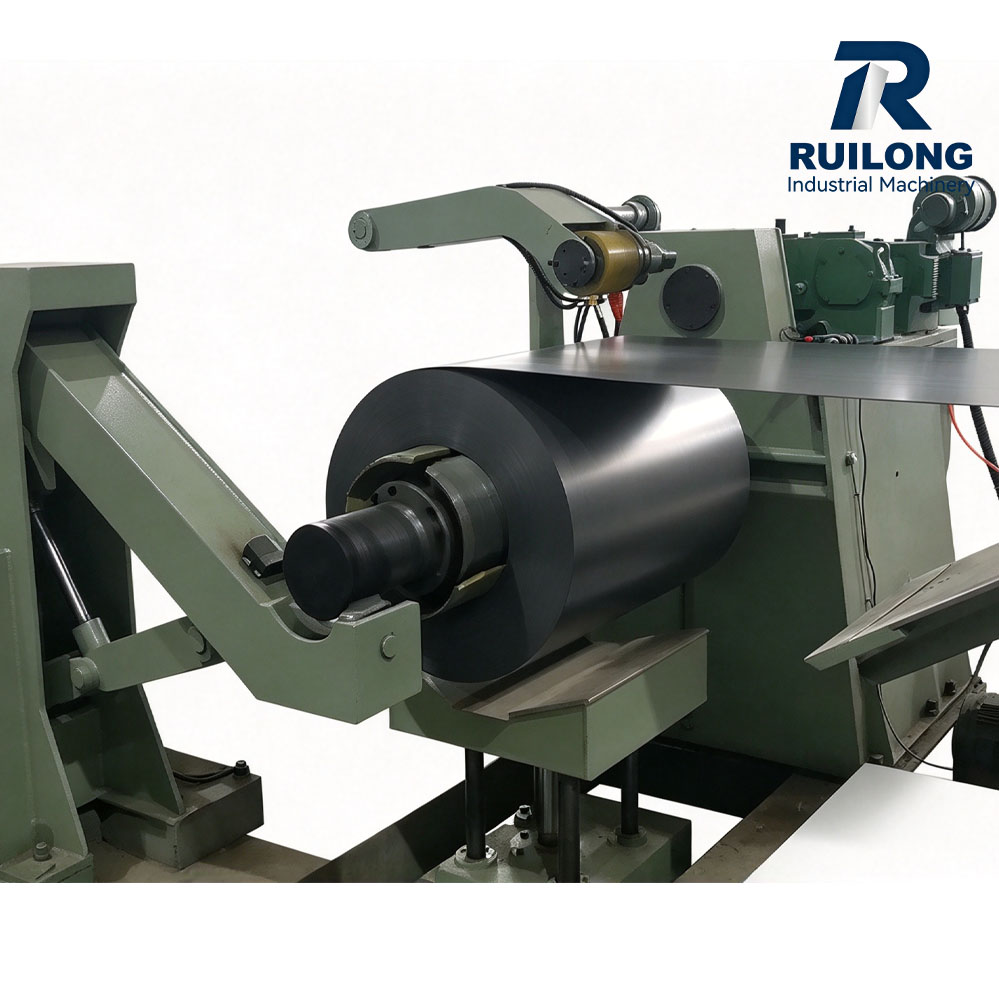
Telescoping is wrap slippage: the coil's inner wraps have shifted axially, and nothing about the steel itself is wrong. The physics are benign — loose coiling tension, a rough transit or a dropped coil lets wraps slide sideways in a lip or a full cone — and because the strip is intact, the line can process a telescoped coil with discipline: thread through the proud lip slowly at reduced speed, build tension before peeling the protruding wraps, and let the first meters of strip run over protective pads where the lip would otherwise drag on fixed guide faces. What telescoping actually costs is time and a little yield — 20–40 extra minutes of careful threading and a few meters of starter scrap — which is the honest accounting, and worth paying on a coil worth tens of thousands of dollars.
The discipline fails only when the lip is treated as a speed problem: yanking the proud wraps through a guide at line speed scores the strip, gouges the guide face, and converts a free fix into scratched sheets and a damaged entry — the same contact mechanics our scratch article addresses after the fact. Severe telescoping has a cutoff too: beyond roughly 15–20mm of lip overhang, or when wraps have folded rather than slipped, the threading risk to guides and rolls exceeds the coil's value, and the coil goes back on the truck. Ruilong writes the slow-thread recipe into the O&M manual with that threshold, so the crew's decision at the decoiler is a lookup, not a negotiation with the schedule.
✅ Bottom line: Telescoping costs minutes and a few meters — thread slow, tension first, and send back only the coils whose lips have folded, not slipped.
2. Camber — Geometry No Leveler Removes, and the Reject List
Camber is an edge-length difference: one edge of the strip is longer than the other, and bending the strip cannot make the edges equal. The leveler equalizes shape — it can take a wave out of a flat strip — but it cannot shorten one edge, so a cambered strip stays cambered after every pass, and the defect simply migrates downstream: the strip enters the shear at an angle (the diagonal mechanism our five-causes article traces), the trim loses width, and wide-format work inherits a permanent arc no setting removes. This is the exact sense in which a cambered coil cannot be fixed by leveler equipment — the honest answer to the buyer who asks why a better leveler did not fix the coil, and a question better settled at receiving than at the shear.
The reject list puts numbers on receiving decisions:
|
Incoming defect |
Threshold |
Verdict |
|
Camber |
>1.5 mm/m on any 3m span |
Reject — geometry, not fixable |
|
Telescoping |
>20mm lip or folded wraps |
Reject — threading risk exceeds coil value |
|
Edge damage |
Cracks or rolled edges on 1m+ |
Reject — propagates through leveler |
|
Water stain / rust |
Visible on inner wraps |
Negotiate — affects surface duty only |
|
Weight/ID mismatch |
Outside decoiler envelope |
Reject — hardware limit (coil-ID article) |
Camber above the threshold fails incoming coil defects you should reject discipline precisely because the mill can measure it before shipping — camber is on every mill inspection certificate, and a coil accepted above threshold at the dock is a dispute the buyer started by signing. Below threshold, the line handles it: the trim takes the width, the schedule takes the minutes, and the five-causes checklist catches the diagonal residue. Ruilong recommends recording camber per coil at receiving — one measurement on a flat table — because the record converts recurring camber complaints from arguments into trend data the mill cannot argue with.
✅ Bottom line: Camber over 1.5mm/m goes back on the truck — measure at receiving, not at the shear, and keep the record to make the next dispute short.
FAQ
Q: Can extra leveler passes remove camber from a strip? A: No — the leveler reshapes, it does not shorten one edge; a cambered coil cannot be fixed by leveler passes no matter the intermesh, and the correct response is a trim-width plan below threshold or a reject above it.
Q: What is the practical cost of running a moderately telescoped coil? A: 20–40 minutes of slow threading and a few meters of starter scrap — telescoped coil problems on cut to length line economics are a schedule cost, not a quality cost, until the lip is forced at speed and damages guides.
Q: Who measures camber — the mill, the buyer, or both? A: Both — it is on the mill certificate and should be re-measured on the flat table at receiving; Ruilong puts the 1.5mm/m line from the incoming coil defects you should reject list into the receiving sheet so the measurement is a checkbox, not a judgment call.
Set the Reject Lines Before the Coils Arrive
Send Ruilong your coil sources and formats, and the engineering team will return the receiving reject table — thresholds per defect, measurement methods included — with the line offer from our China factory: as the manufacturer behind Tai'an Ruilong Machinery Co., Ltd., we quote supplier/OEM-direct with the receiving sheet ready to print, free of charge and without obligation. The custom thresholds match your formats and your mill mix.