

The practical answer for laser wire stripping inside avionics bay without removing harness is a portable, fiber-delivered laser head working through the existing access gap, with the neighboring runs masked and an extraction nozzle clipped a few centimeters from the strip point. Line maintenance crews have done exactly this for years; what has changed in 2026 is that the equipment finally fits through an inspection panel.
XINGHUO builds exactly this class of equipment, and this article covers why blades and heat are the wrong tools in the bay, plus what a realistic in-bay strip looks like step by step — with the times and acceptance limits an MRO quality department will ask for.
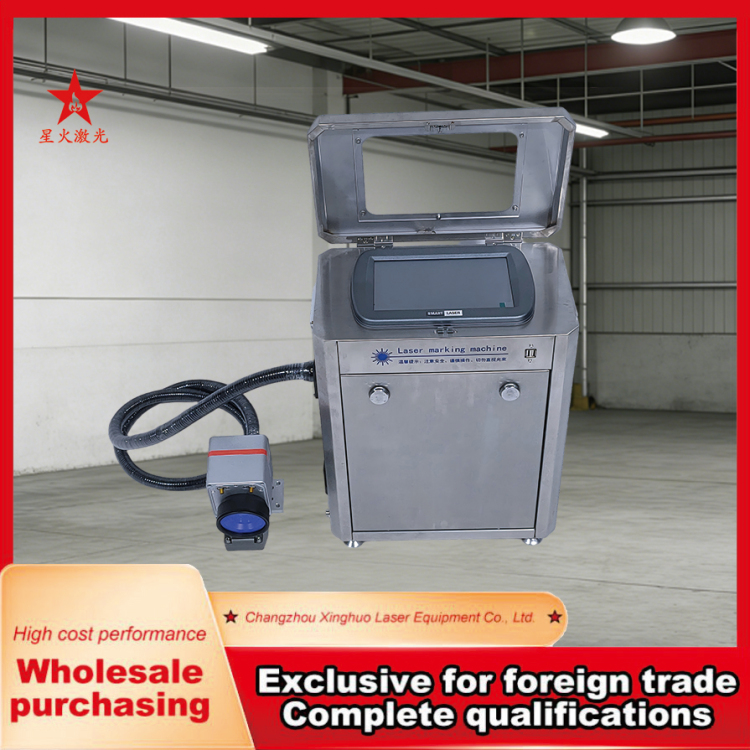
1. Why Can't You Use a Blade or Heat Stripper on an Installed Harness?
Because both tools damage wires you are not looking at, and on an installed bundle the neighbors cannot be replaced without removing the harness. The failure everyone fears in the bay is not the wire being repaired — it is the wire two positions over that gets nicked and passes a visual check today, then chafes through in 400 flight hours.
A rotary or blade stripper needs somewhere to push. Mid-span in a laced bundle, inside a 30–50 mm gap between structure and harness, there is no reaction surface and no swing room. Forced to work in that space, the tool slips or the blade scores the adjacent jacket. A heat stripper is worse: the blade temperature that softens PTFE insulation also travels along the copper conductor, and on an installed wire that heat arrives at the connector seal and backshell that you cannot inspect afterwards.
The laser removes those two failure modes by not touching anything and by confining its energy to a spot a few millimeters wide:
- ✅ Non-contact: no reaction force, so no slip damage to adjacent jackets
- ✅ Energy confined to the strip zone: heat-affected zone under 0.1 mm on the strip edge
- ✅ Works mid-bundle: the beam reaches between conductors where no blade can be positioned
- ❌ Two new obligations: adjacent runs must be masked, and PTFE fumes must be captured at the source
Masking is simple discipline — aluminum foil tape or a blanking tool over every neighboring wire inside the beam path. Extraction is not optional: ablating PTFE releases hydrogen fluoride, and inside an enclosed bay a shop-vac approach is a health hazard, not a shortcut. A nozzle with HEPA and activated-carbon stages, clipped within 5 cm of the strip point, is the minimum any airworthiness engineer will accept. XINGHUO integrates that nozzle into the strip head itself, so the capture discipline does not depend on the technician remembering a separate tool.
✅ Bottom line: Installed-harness repair excludes blades and heat on contact-damage grounds, which leaves laser ablation as the only method that works mid-bundle.
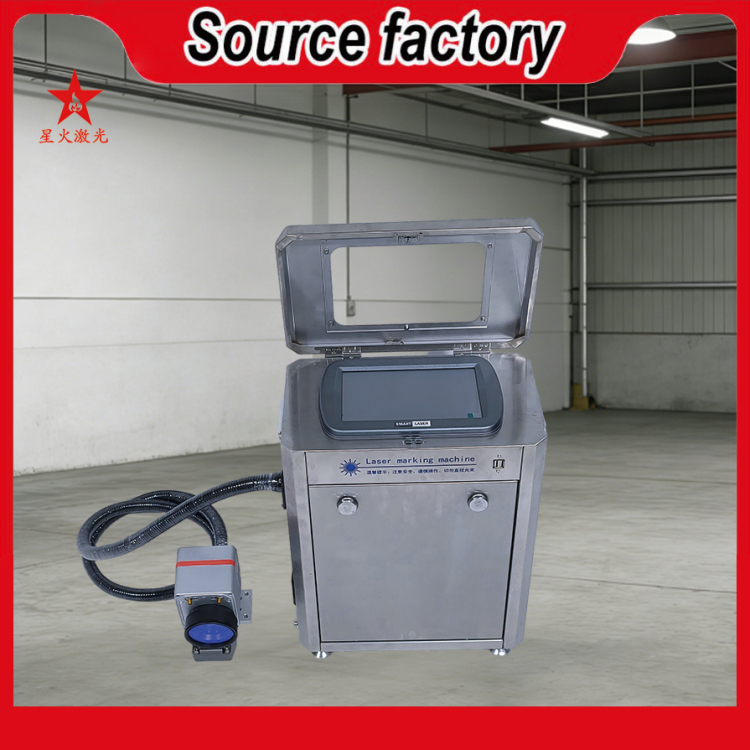
2. What Does an In-Bay Laser Strip Actually Look Like, Step by Step?
A single-wire repair inside the bay runs 45–60 minutes end to end, against four to six hours for pulling the harness out — and most of that time is preparation, not stripping. The strip itself takes seconds. Here is what laser wire stripping inside avionics bay without removing harness looks like as a documented workflow:
|
Step |
Typical time |
Governing reference |
|
Circuit isolation and de-energization verified |
10–15 min |
Maintenance manual chapter 20 |
|
Damage mapping and access check |
5–10 min |
— |
|
Mask adjacent runs inside beam path |
5–10 min |
— |
|
Laser strip, both ends |
6–8 s per end |
SAE AIR6894 practice |
|
Splice: crimp + heat-shrink |
10–15 min |
NASA-STD-8739.4 |
|
Inspect at 10–30x: residue, nicks, HAZ |
5 min |
IPC/WHMA-A-620 Class 3 |
The acceptance numbers at that final step are the same as at the bench: insulation residue no greater than 0.05 mm, conductor nicking no deeper than 5% of strand diameter, strip-edge tilt within 3°, and a heat-affected zone under 0.1 mm — beyond 0.3 mm the wire is scrapped regardless of where it sits.
What the equipment actually needs to do this as a portable laser wire stripper for aircraft line maintenance comes down to five things:
- ✅ A 20–30 W CO₂ source or a 3–5 W UV source, delivered by fiber to a flex-head so the beam can enter through an inspection panel
- ✅ Recipe memory per wire part number, so an AS22759 wire and a MIL-DTL-27500 cable do not get re-dialed in the bay
- ✅ Integrated extraction nozzle with HEPA plus activated carbon, for the hydrogen fluoride question
- ✅ An interlocked Class 1 head enclosure, so no laser safety officer has to shadow every repair
- ✅ Battery or aircraft-power operation, because dragging a generator into a bay defeats the purpose
A genuine aircraft MRO wire repair stripping tool portable enough to pass through a 100 mm inspection port is a custom build, not a catalogue item — which is why most MROs specify it against their own harness types. Changzhou Xinghuo Laser Equipment Co., Ltd. builds such configurations on an OEM basis: fiber delivery, flex head, recipe library set against the customer's wire list, and strip samples tested on the actual insulation before the unit ships.
✅ Bottom line: The repair takes under an hour because stripping takes seconds — masking, isolation and splice work are what fill the time.
FAQ
Q: Can laser wire stripping inside avionics bay without removing harness pass an airworthiness inspection?
A: Yes, when the process is documented like any other repair: isolation record, masking step, strip parameters, splice reference, and the inspection measurements at 10–30x magnification. Acceptance limits are the standard ones — residue ≤0.05 mm, nicks ≤5% of strand diameter, HAZ <0.1 mm — and they are all verifiable on the aircraft with a portable scope.
Q: Is a portable laser safe for the connectors and wires next to the repair?
A: With masking, yes — and that guarantee is the reason a portable laser wire stripper for aircraft line maintenance must ship with an interlocked head rather than an open aperture. The beam spot is a few millimeters wide and the heat-affected zone stays under 0.1 mm, so energy does not reach neighboring jackets. The risk case is an unmasked wire directly in the beam path, which is why masking is a written step rather than a habit.
Q: What does a portable setup cost, and can it be ordered custom?
A: Benchtop laser strippers run $28,000–60,000 from a China manufacturer, factory-direct; a fiber-delivered portable configuration adds the head, extraction and power options on top. In practice an aircraft MRO wire repair stripping tool portable enough to pass a 100 mm inspection port is always specified against the buyer's harness types. XINGHUO quotes these as OEM builds — the price depends on the laser source and delivery head, not a mystery premium, and sample strips on your actual wire come back with the quotation.
CTA: Send the Harness, Get the Repair Plan
Photograph the damage, note the wire part number and the access opening size, and send both to XINGHUO with two samples of the wire if you have them. You will get back a strip-and-splice procedure sheet for your harness type, stripped samples with measurement data, and a factory-direct quotation for a portable configuration sized to your bays. Most responses arrive within seven working days.
|
|
|
|
Published: November 2026 |
By XINGHUO Laser Application Engineering Team |