
In the modern cable manufacturing supply chain, the steel tape armoring machine—a critical piece of equipment that determines a cable’s mechanical protection and service life—is experiencing a surge in both technological innovation and market demand. The rapid growth of sectors such as new energy, smart grids, and rail transit has fueled a sharp rise in the need for armored cables—cables engineered for high strength, compression resistance, protection against rodents and insects, and corrosion resistance. This demand has accelerated the evolution of steel tape armoring machines toward higher speeds, greater intelligence, and increased precision.
I. Industry Background: The Transition from "Basic Wrapping" to "Precision Armoring"
The steel tape armoring process is primarily used to create protective layers for power cables, mining cables, and communication cables. By wrapping one or more layers of galvanized or stainless steel tape around the cable core, the cable’s resistance to compression, tension, and impact is significantly enhanced, enabling it to withstand complex installation environments—such as direct burial, conduit routing, tunnels, or underground mine shafts.
In the past, domestic armoring equipment was often plagued by issues like poor precision, unstable tension, and high scrap rates. In recent years, however, with the successful shift toward domestic alternatives, the industry has moved beyond the "race to the bottom" phase characterized by low-cost, high-volume competition. Industry data indicates that the domestic market for armoring machines reached 6.83 billion RMB in 2025 and is projected to exceed 9.5 billion RMB by 2028, with high-end, intelligent machines accounting for over 60% of the market. Features such as closed-loop servo control, dual-axis electronic synchronization, and intelligent constant-tension systems have now become standard in the latest generation of steel tape armoring machines.
II. Technological Breakthroughs: Constant Tension and High Precision as Core Competitive Advantages
Current technological upgrades for steel tape armoring machines focus primarily on two key challenges: tension control and wrapping precision.
Closed-loop servo constant-tension systems: Fluctuations in tension are the primary cause of issues such as steel tape edge curling, punctures to the inner cable sheath, or a loose, unstable armoring layer. The latest generation of equipment utilizes a digital closed-loop constant-tension system, which automatically provides gradient tension compensation as the reel transitions from empty to full. By keeping tension fluctuations within a range of ±3%—or even within ±1N—this system fundamentally eliminates strip breakage and product defects caused by sudden tension spikes.
Dual-axis electronic synchronization and pitch precision: Through the coordinated control of servo motors and a PLC, the taping head, haul-off unit, and take-up/traversing mechanism are linked in a multi-axis configuration. This allows for pitch error control within ±1mm, ensuring a uniform overlap width for the steel tape (typically maintained at 20%–25% of the tape width) and effectively preventing gaps or excessive overlapping in the armored layer.
Non-stop reel changing and intelligent storage: To meet the demands of continuous production, some high-end models feature automatic dual-reel switching systems and wrap-around hydraulic chucks, enabling rapid raw-material reel changes without halting the line. Furthermore, the equipment supports the one-touch storage of multiple process parameter sets; this eliminates the need for repeated recalibration when switching production runs, reducing the scrap rate during trial runs by over 80%.
III. Market Landscape: Leading Enterprises Expand Their Footprint; Patent Innovation Flourishes
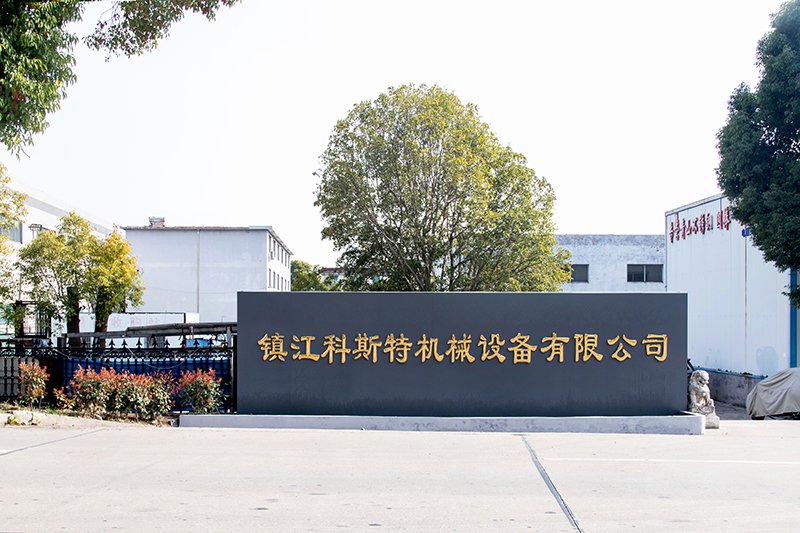
Amidst intense market competition, several companies specializing in R&D for cable-manufacturing equipment have emerged as industry leaders. For instance, Changzhou Handong Electrical Machinery Co., Ltd. has leveraged its technical expertise in digital closed-loop constant-tension systems and nitrided steel core components to achieve an armoring precision deviation of less than 0.2mm, while supporting 24-hour continuous operation. Meanwhile, Zhenjiang Kester Machinery Equipment Co., Ltd. has addressed the challenge of maintaining tension stability during high-speed taping through a proprietary, multi-sensor-fusion adaptive tension control system; its concentric, dual-layer, high-speed steel-tape armoring machine has proven particularly effective in the production of railway signaling cables.
Additionally, major industry players—including publicly listed companies and key enterprises such as Hefei Shenma Technology Group and Shanghai Jindong Cable Equipment—are actively advancing in niche segments, such as steel-tape armoring for extra-large-diameter cables and integrated machines for copper-tape shielding and taping. These efforts are driving the intelligent transformation of complete, factory-wide production solutions. Between the end of 2025 and 2026, companies such as Liaoning Zhongde Cable and Zhenjiang Kester secured patents related to steel-tape armoring machines, further underscoring the industry’s ongoing innovation in technical details like automated reel changing and angle adjustment.
IV. Application Prospects: New Energy and Specialty Cables Drive Growth
With the rapid expansion of emerging markets—including high-voltage cables for new energy vehicles, weather-resistant cables for photovoltaic and wind power installations, and flexible drag-chain cables for robotics—the application scope for steel-tape wrapping machines continues to broaden. These specialty cables demand higher standards for the fit and sealing of the wrapping layer, as well as superior electromagnetic interference (EMI) shielding. This has compelled equipment manufacturers to pursue customized developments in areas such as die design, anti-scratch mechanisms for tape-guiding rollers, and waterproof sealing structures.
Looking ahead, as Industry 4.0 and the Internet of Things (IoT) become more deeply integrated, intelligent steel-tape wrapping machines—featuring remote monitoring, fault early warning, and data traceability—will become the market standard. These advancements will empower cable manufacturers to achieve "intelligent and digital transformation," helping them secure a competitive edge in the intense global marketplace.