

Stack Mold Tooling: A Strategic Blueprint for Higher Output and Lower Unit-Part Cost
Nov 16, 2026
Multi-Level Cavity Balance and Service Access: The Technical Roadmap for Stable High-Volume Plastic Production
As packaging, household products, medical disposables, and consumer components move toward larger annual volumes, buyers are looking for more output without multiplying floor space, operators, or downstream handling steps. A stack mold places aligned cavity levels within one injection-molding system, allowing more parts to be produced during each molding cycle. [Stack Mold Tooling] turns the discussion from nominal cavity count to usable throughput, balanced filling, cycle stability, and the total cost of producing saleable parts.

The engineering priority is [Multi-Level Cavity Balance]. A reliable stack mold must coordinate the central hot-runner arrangement, melt-path symmetry, cavity pressure, mold-opening sequence, parting-line sealing, and cooling performance across every level. Uneven pressure loss or temperature drift can create different filling behavior between the front and rear mold halves, leading to variation in dimensions, gate vestige, warpage, or cosmetic appearance. DFM review should therefore examine the full stack as one system rather than treating each cavity plate as an isolated tool.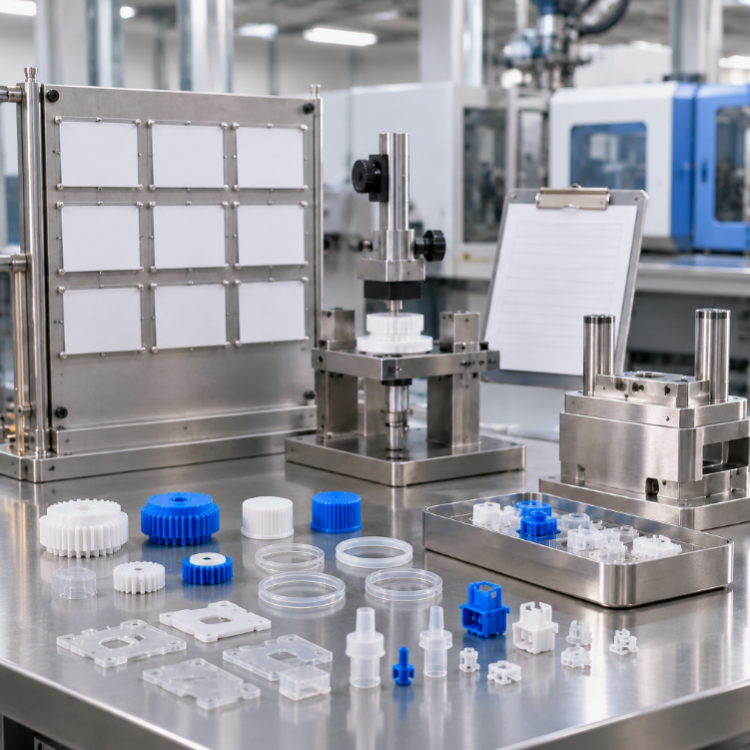
For procurement teams, the business value of [High-Output Injection Molding Systems] is not simply a larger number of parts per cycle. It depends on stable automation access, predictable mold changeover, accessible maintenance points, spare-part strategy, and the ability to validate quality across all cavity levels. Sampling plans should identify cavity and level information, while first-article approval, process records, and retained samples make it easier to distinguish a material issue from a specific level, gate, cooling circuit, or service event. This evidence helps buyers compare the real total cost of ownership instead of comparing tool prices alone.
A stack mold also changes the operating model around the tool. The design must reserve practical access for hot-runner service, cavity inspection, cooling-line cleaning, sealing replacement, and safe lifting or separation of mold sections. Standardized components, clear maintenance documentation, and a defined restart checklist can reduce the risk that a small service issue becomes a long production interruption. When the mold, machine, automation, and quality plan are developed together, high-volume programs gain a more controlled path from qualification to repeatable production.