
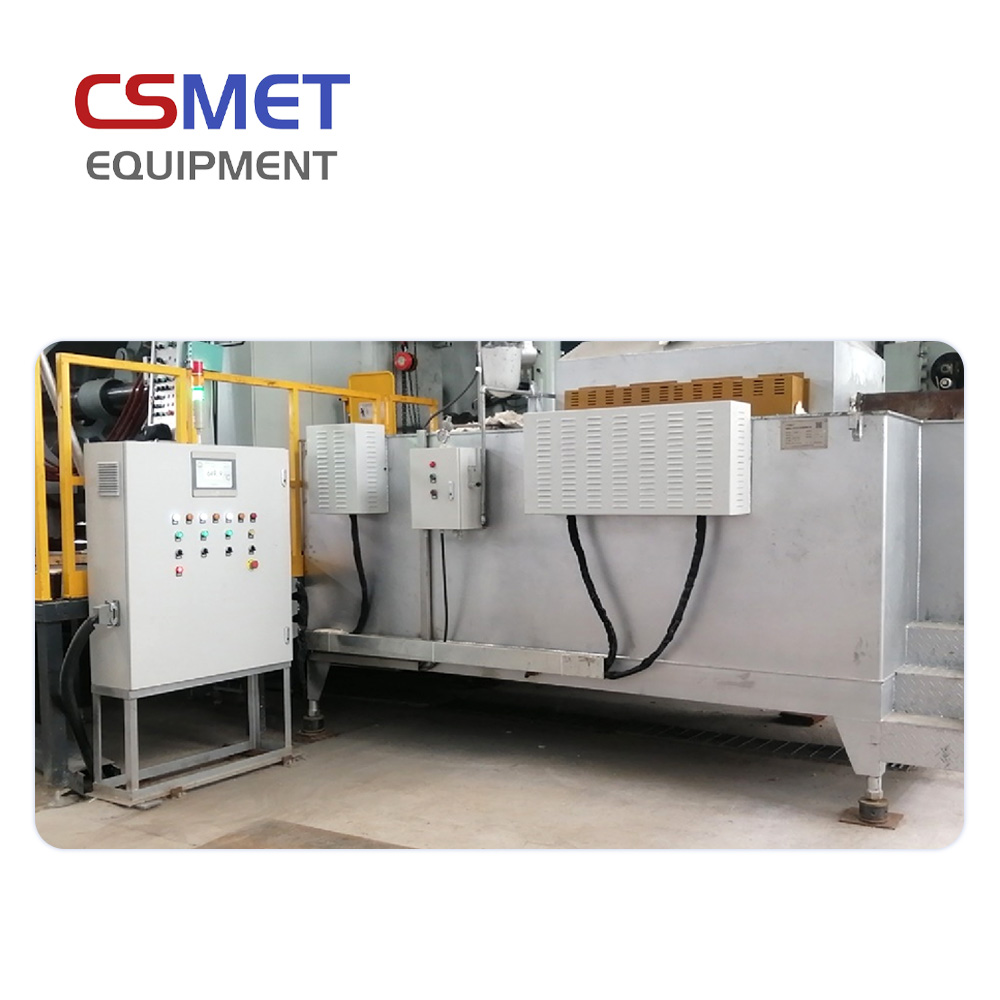
Shuaiyichi (Anhui) Machinery Equipment Co., Ltd. builds Aluminum Melting Furnaces from a 65 kg machine-side unit to a 100-tonne central melter, and sizing is where most of our quotations start. The group behind CSMET has run its own casting plants since 2012, so the figures below are checked against production records rather than catalogue copy.
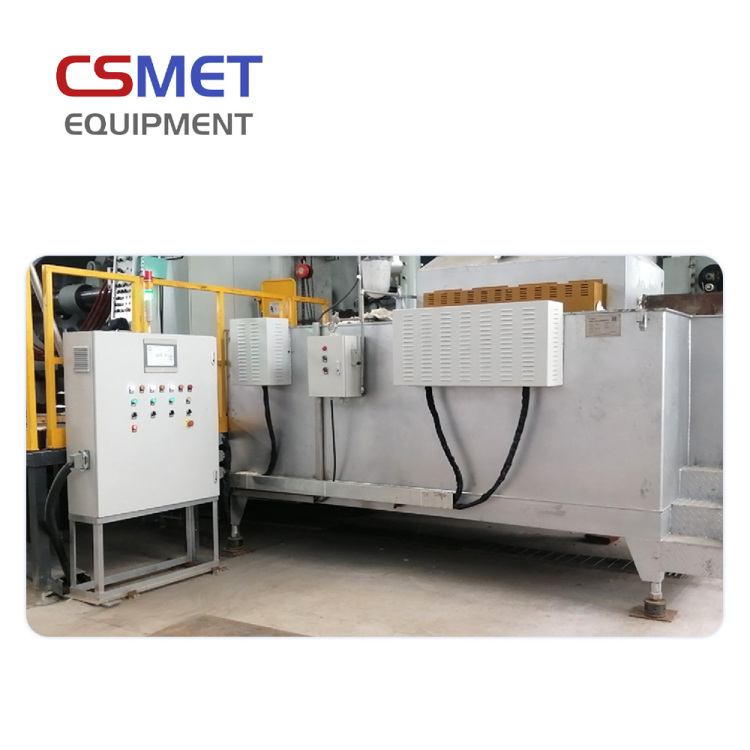
1. What two numbers does a pour schedule actually give you?
One is a batch, the other is a rate. Sizing fails when a buyer uses the batch to answer the rate question.
Write these three lines down before you open any quotation:
- Heaviest single pour (kg). The largest ladle or mould set you must fill without stopping.
- Metal poured per shift (kg). Parts per shift × poured weight, plus runners and biscuits that come back as returns.
- Alloy changes per week. Not a sizing figure, but it decides how much cleaning time you subtract from available hours.
Pass one, the batch. Divide the heaviest pour by 0.80 and you have the nameplate floor — the 20% is freeboard, heel, dross and holding loss. On a Tilting Crucible Furnace this pass is quick and rarely the constraint.
Pass two, the rate. Divide the metal you must melt by the hours the furnace is genuinely available. This is where most specifications fall apart, because available hours are never the shift length.
|
Poured per 8 h shift |
Metal to melt (÷ 0.81) |
Rate needed over 6.8 available h |
|
800 kg |
990 kg |
145 kg/h |
|
1,200 kg |
1,480 kg |
218 kg/h |
|
1,600 kg |
1,975 kg |
290 kg/h |
|
2,000 kg |
2,470 kg |
363 kg/h |
|
3,000 kg |
3,700 kg |
545 kg/h |
6.8 hours is an eight-hour shift after breaks, start-up and a cold first heat. Read the last row: past roughly 3 tonnes a day on one shift no crucible unit keeps up, because published melt rates top out near 500–550 kg/h even at 1,200 kg.
✅ Bottom line: The batch sets the smallest pot you can buy; the rate sets how many of them you need. Answer them in that order, never as one question.
2. How many heats per shift can a 500 kg crucible furnace run?
Two to three full charges — and the number is nearly useless on its own, because a full charge and a half charge deliver the same kilograms per hour.
Makers size the burner or element to the pot, so melt time stays flat across the range: a 300 kg and a 1,000 kg unit both need roughly two hours for a full charge. What changes is how much metal is sitting in the crucible when those two hours are up.
|
Nameplate |
Quoted melt rate (gas) |
Full-charge melt time |
Handling per heat |
Cycle |
Full charges in 6.8 h |
|
300 kg |
120–165 kg/h |
1.8–2.5 h |
25 min |
2.2–2.9 h |
2–3 |
|
500 kg |
200–275 kg/h |
1.8–2.5 h |
30 min |
2.3–3.0 h |
2–3 |
|
750 kg |
300–415 kg/h |
1.8–2.5 h |
35 min |
2.4–3.1 h |
2–3 |
|
1,000 kg |
400–550 kg/h |
1.8–2.5 h |
40 min |
2.5–3.2 h |
2 |
At 240 kg/h on a 500 kg unit, 6.8 hours of melting gives 1,630 kg of liquid, about 1,320 kg poured. You get the same 1,320 kg whether it arrives as two 500 kg charges or four 250 kg ones. Heats per shift describes your batching habit, not your capacity.
That has one consequence worth money. If your pours are smaller than the pot, do not empty it between them. Pour 250 kg, charge 250 kg back onto the hot heel, and keep the burner at melt rate instead of cycling it through heat-up and cool-down. The pot becomes a buffer, and throughput is set by kg/h alone.
✅ Bottom line: Size on kg/h and available hours. Buy the pot that holds your biggest batch with 25% headroom, then check its melt rate against that hourly figure.
3. Why the charge form breaks every number above
Catalogue melt rates assume clean, dense ingot. Baled chips or loose swarf can halve the effective rate and force three or four charging rounds per heat.
A crucible is a volume, and molten aluminium sits at about 2.4 kg/L. The kilograms on the plate assume liquid, so charge anything less dense and you hit the volumetric ceiling long before the weight limit — a 500 kg pot sometimes cannot accept 200 kg in one go.
|
Charge form |
Bulk density |
kg per fill (500 kg / 180 L pot) |
Fills per 400 kg heat |
Metal recovered vs ingot |
|
Ingot, cut to fit |
1.2–1.6 t/m³ |
185–245 kg |
2 |
98%+ |
|
Dense returns, runners |
0.9–1.2 t/m³ |
140–185 kg |
2–3 |
~95% |
|
Briquetted chips |
1.9–2.1 t/m³ |
290–320 kg |
1–2 |
~90% |
|
Baled chips |
0.6–1.0 t/m³ |
90–155 kg |
3–4 |
70–85% |
|
Loose turnings |
0.1–0.2 t/m³ |
15–30 kg |
13–27 |
50% or worse |
Two penalties hide in that last row. Volumetric first: 20 kg a fill means the door opens twenty times for one heat, and every opening is a heat loss and a flame impinging on cold metal. Then oxidation — loose swarf has enormous surface area, and published recovery figures run to 50% loss or worse, most of it dross you pay to dispose of.
Briquetting is the cheap fix and it is usually skipped. Compressing swarf to 1.9–2.1 t/m³ brings the charge inside the volume limit and recovery back to ingot levels, and the machine pays for itself on metal alone. CSMET quotes melt rate against the charge form you will actually run, because the gap between ingot and baled swarf is bigger than the gap between two furnace sizes. Preheat damp or oily scrap to 250–300 °C before it goes in — not for speed, but because moisture under a molten bath is the one failure mode in this trade that injures people.
✅ Bottom line: Convert your charge to bulk density before trusting any melt rate. Below 0.6 t/m³, size on fills per heat rather than kilograms.
4. Sizing for 2 tons of aluminum per day, worked through
Two tonnes a day on one shift needs 363 kg/h of dressed metal. A single 500 kg pot delivers about 240. The answer is a 1,000 kg unit or two 500 kg units — and the choice is about redundancy, not capacity.
A jobbing shop: A356, heaviest pour 300 kg into a 300 kg ladle, 2,000 kg poured a day, one eight-hour shift, 250 days a year — 500 tonnes annually.
- Batch pass: 300 ÷ 0.80 = 375 kg. A 500 kg pot is the smallest honest answer; a 400 kg unit would sit at the freeboard limit on every pour.
- Rate pass: 2,000 ÷ 0.81 = 2,470 kg to melt over 6.8 h = 363 kg/h.
- Against the table: a 500 kg unit covers 1,360–1,870 kg of melt a day. Short by a third.
The schedule has just ruled out the size the batch pass recommended, which is the whole point of running both. Two 500 kg units give 400–550 kg/h combined, with a spare pot during relining and the ability to melt in one while pouring from the other. One 1,000 kg unit gives the same rate with one operator and one burner to maintain, but runs at 66–91% duty and stops the shop when it stops.
Fuel follows the tonnage, not the furnace count: 2,470 kg a day at 0.9–1.2 kWh/kg equivalent is 2,200–2,960 kWh, or 555–740 MWh a year. Keep that figure — it is the input to the next decision.
✅ Bottom line: Run both passes on every project. When they disagree, the rate pass wins and the batch pass only sets the minimum.
5. When the schedule outgrows the pot
Past about 400 kg/h sustained, or a second shift, a bath melter stops being the expensive option and becomes the cheaper one.
Crucible melting is a batch process with a lid that opens: 15–30% thermal efficiency against 30–55% for a bath or tower melter, and total-cost studies that include labour and melt loss put crucible furnaces near 285 €/tonne against 93–97 €/tonne. The gap is not build quality — a pot heating through a wall cannot recover waste heat, and a bath can. At the 500 t/yr volume above that is 200–770 MWh a year depending on utilisation: real money, though rarely decisive on one shift. It becomes decisive on two, where the pot never idles cheaply and labour per tonne starts to dominate.
This is the point where a Reverberatory Melting Furnace feeding holding furnaces replaces the pot rather than supplementing it. CSMET builds both, and will say so when a schedule points that way — it is cheaper to lose a sale than to sell the wrong machine to a plant that tells the next ten buyers about it.
✅ Bottom line: One shift and under 400 kg/h, crucible. Two shifts or sustained demand above 400 kg/h, price a bath melter before you sign.
FAQ
Q: Can I size a furnace from annual tonnage alone? A: No, and it is the most expensive shortcut in the category. Annual tonnage divided by working days gives a daily figure but hides both the batch size and the available hours. Two plants with identical 500 t/yr can need a 500 kg pot and a 3-tonne melter, depending on whether they run one shift or three.
Q: Should the furnace be sized to the heaviest pour or to the daily total? A: Both, in that order. Heaviest pour ÷ 0.80 sets the floor; daily total ÷ available hours sets the rate. When the rate demands a machine far larger than the floor, that is a signal to run two furnaces rather than one oversized pot.
Q: Does a bigger crucible melt faster? A: Not per kilogram. Makers scale the burner with the pot, so melt time stays near two hours across the range. A bigger unit buys a bigger batch and fewer charging rounds, not a shorter cycle — buying up "to be safe" gives you idle capacity and higher standing losses.
Send the schedule, get the arithmetic back
Give CSMET four numbers — heaviest pour, metal per shift, alloys per week, shift pattern — and you will receive a sized proposal with melt rate, cycle time and charge rounds shown explicitly, so you can check the machine against your own schedule instead of a brochure.
As a China-based OEM, Shuaiyichi (Anhui) Machinery Equipment Co., Ltd. builds gas and electric versions on the same frame and matches spout geometry and tilt settings to existing ladle layouts. Every unit ships from a 30,700 m² factory in Ma'anshan with 24 licensed patents behind the design, and factory acceptance testing is available before shipment — ask for a timed melt test on your own charge form, and read the number.
Email: [email protected]
Mobile: +86 13311053827
Website: www.sycmach.com