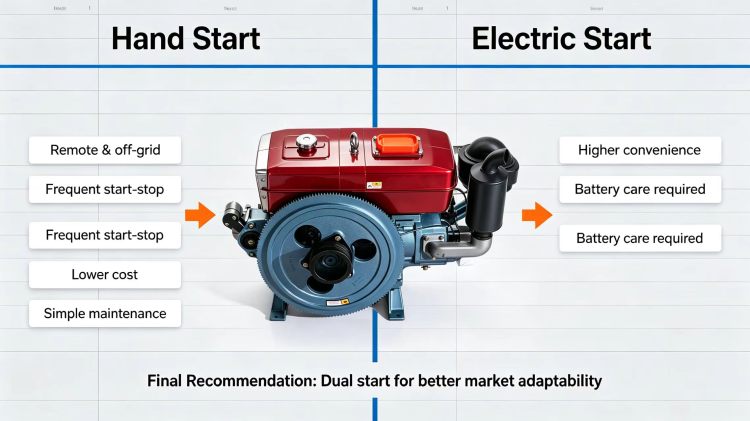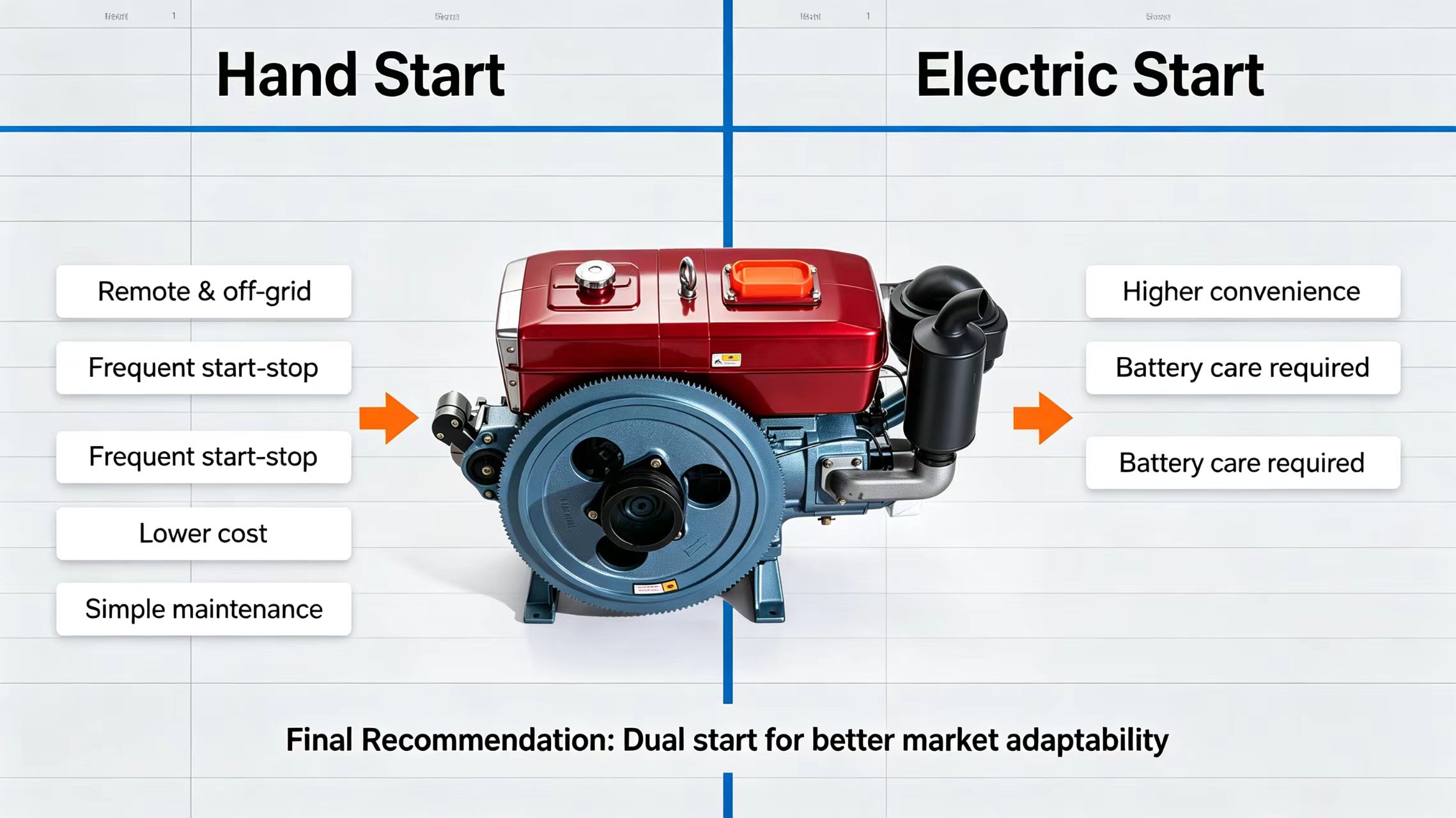
Most single-cylinder diesel engine series provide hand start and electric start options. Dual-start models (electric start with hand crank backup) are also available. Neither option is universally better; each matches different operating environments and end users.
Hand start versions are ideal for remote areas with unstable or no power supply, and for experienced operators. Electric start targets commercial farms, marine motor assemblers, generator buyers and new operators without hand-cranking experience.
Hand-crank engines have simple mechanical construction, no battery, starter motor or wiring harness. They are widely used for field irrigation, mobile grain processing and backup power in off-grid zones. They can start without electricity, but require physical strength and operating skills. Cold weather and narrow installation space on boats will bring extra difficulty.
Electric start engines feature key or push-button ignition, labor-saving and user-friendly. They are the preferred choice for marine outboards, fixed water pumps and standby generators with frequent start-stop cycles. The limitation is battery dependence. Batteries are consumables and need replacement every 2–3 years. Regular charging is required for long-term storage. The dual-start design (electric + backup hand crank) is highly recommended by the industry for balanced convenience and reliability.
In terms of cost, hand start units have lower ex-factory price and suit budget-focused markets. Electric start models come with extra components, resulting in higher purchase cost and better profit margin for resellers.
Maintenance is another key difference. Hand start engines have fewer failure points, simple repair and interchangeable spare parts, which fits regions with weak after-sales support. Electric start units need inspection for wiring and electrical components, requiring better local service capacity.
Industry procurement advice: Choose hand start for remote off-grid areas and cost-sensitive small farmers. Choose electric start (with hand crank backup) for marine applications, generator sets and large-scale commercial farms. Distributors may select configurations according to local power conditions, user habits and budget to boost reorder rates.