
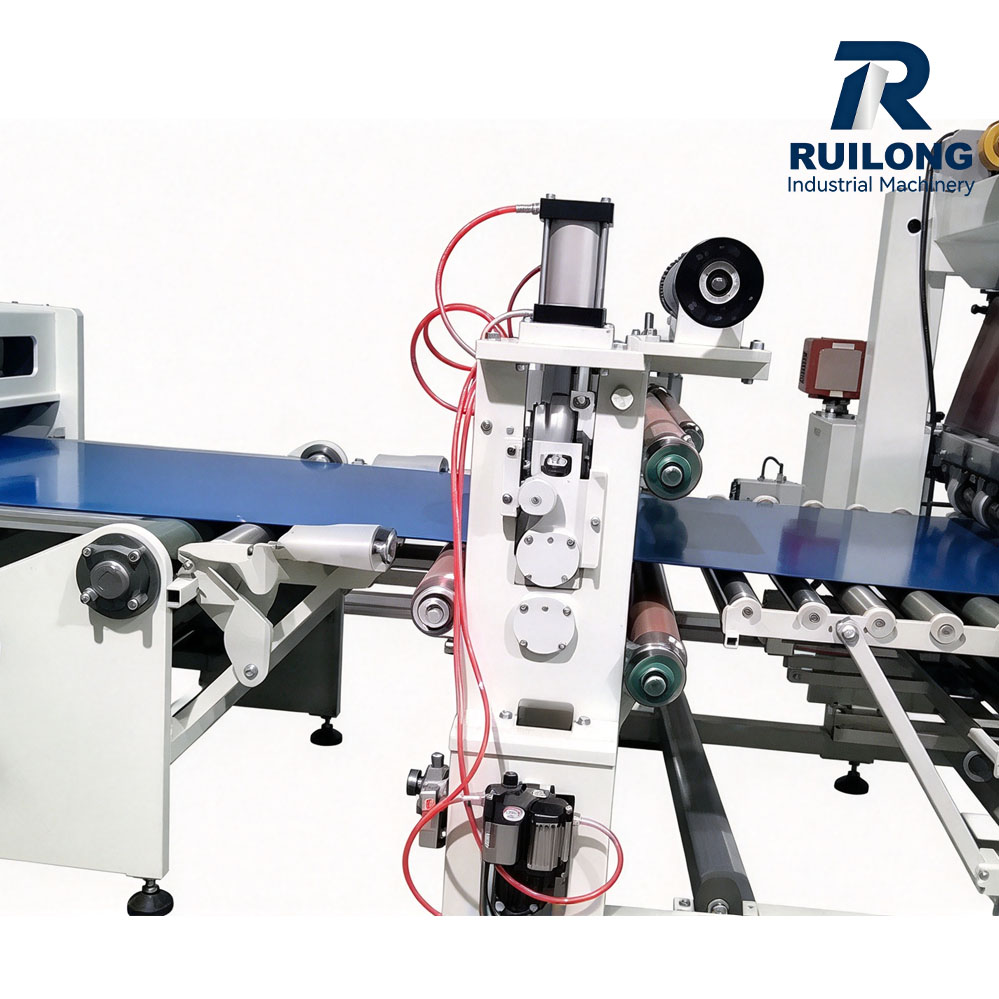
1. Read the Spacing — Every Mark Has an Address
Periodicity is the whole diagnosis: measure the distance between consecutive marks with a tape, and the component names itself. The addresses:
|
Mark spacing |
Source |
Mechanism |
|
≈ work roll circumference (200–400mm) |
Leveler work roll |
Pickup, embedded grit or a scored roll printing every revolution |
|
≈ drive roll / bridle roll circumference |
Tension or drive rolls |
Slip plus pickup under high contact pressure |
|
Constant offset from sheet edge, no period |
Entry guide or side guide |
Sliding contact against a worn or galled guide face |
|
Random, long arcs |
Stacker, tables, fork areas |
Sliding contact during landing or handling |
|
One printed pattern repeating exactly |
A damaged single roll |
Score or weld-splatter spot imprinting at its pitch |
The mechanism behind the most common address is contamination cycling, not raw steel: stainless oxide and mill scale embed in soft roll surfaces, ride around, and print themselves onto the next sheet — which is why the marks survive roll cleaning and return within a coil. Stainless is also self-punishing: its work-hardened slivers and burrs are harder than the surface beneath, so any pickup on a soft roll becomes a scoring tool within a hundred sheets. That combination — soft surfaces, hard debris — is why scratches on stainless steel sheet from leveler rolls dominates complaint statistics relative to carbon lines, and why the fix list below is surface-and-cleanliness engineering rather than pressure tuning. The contact-map design logic behind these addresses is the same one our elevator-panel article lays out; this article is the troubleshooting twin, for lines already running.
✅ Bottom line: Tape the spacing before touching a roll — periodic equals rotating, random equals sliding, and the tape names the component.
2. The Fix List — Hard Surfaces and Continuous Cleaning
Two line-level fixes cover the periodic addresses, and both are purchase decisions, not habits — that is the division of labor Ruilong builds into stainless lines from the specification stage. First, roll surface: chromium plated leveler rolls for scratch free surface work because hard chromium will not accept embedded grit the way a soft or anodized surface does — debris has nowhere to anchor, so the contamination cycle breaks at its root, and the plating's polish sheds stainless slivers instead of dragging them. Second, continuous cleaning: a felt and brush cleaning unit for leveling line operation wipes each outgoing sheet at the leveler exit and brushes the roll surfaces on the fly, removing the grit load before it can embed — on stainless lines the cleaning unit is not an accessory, it is the other half of the plating fix, and Ruilong specifies the pair together on every stainless-duty quotation. For coated or prepainted duty the same logic runs softer, on PU surfaces, per the prepainted article; for bare stainless, hard chromium plus brush cleaning is the standard pair.
The stacker address closes the list, because the last marks in the file are usually the newest: landing arcs on the bottom sheets of the stack are stacking contact, fixed by the vacuum or magnetic landing discipline compared in our stacker article, not by roll changes. Ruilong sequences the fix by the tape evidence — plating and cleaning first, stacker second — and audits the result with a simple standard: every sheet in the next bundle under a raking light, zero linear marks at any spacing. Lines that adopted the pair report the complaint moving from weekly to annual, and the annual ones trace to a single scored roll that the spacing table identified in minutes.
✅ Bottom line: Chromium breaks the embed cycle, brushing breaks the grit supply — fit both, then audit under a raking light, bundle by bundle.
FAQ
Q: The marks repeat at exactly 300mm — what does that spacing identify? A: A rotating element with a 300mm circumference, almost certainly a leveler work roll — inspect that roll for embedded grit or a score, because the pitch of scratches on stainless steel sheet from leveler rolls equals the roll's circumference every revolution.
Q: Are chromium plated leveler rolls for scratch free surface duty worth the cost on a stainless line? A: Yes — hard chromium refuses embedded grit, which is the contamination cycle that soft surfaces cannot break; on a dedicated stainless line the plating and the cleaning unit together are cheaper than one visible-surface rejection batch per quarter.
Q: Does a felt and brush cleaning unit for leveling line duty need maintenance of its own? A: Minimal but scheduled — felt belts wash, brushes wear to the hub, and Ruilong puts both on the weekly check so the unit keeps removing grit instead of printing it, which is what a saturated felt does.
Fix the Address, Not the Symptom
Send Ruilong your finishes and gauge range, and the engineering team will return the roll surface specification — chromium, PU or plated-plus-felt combination — with the cleaning unit sized to the line, from our China factory: as the manufacturer behind Tai'an Ruilong Machinery Co., Ltd., we quote supplier/OEM-direct with the surface map in the offer, free of charge and without obligation. The custom pairing is chosen by your finishes, not by habit.