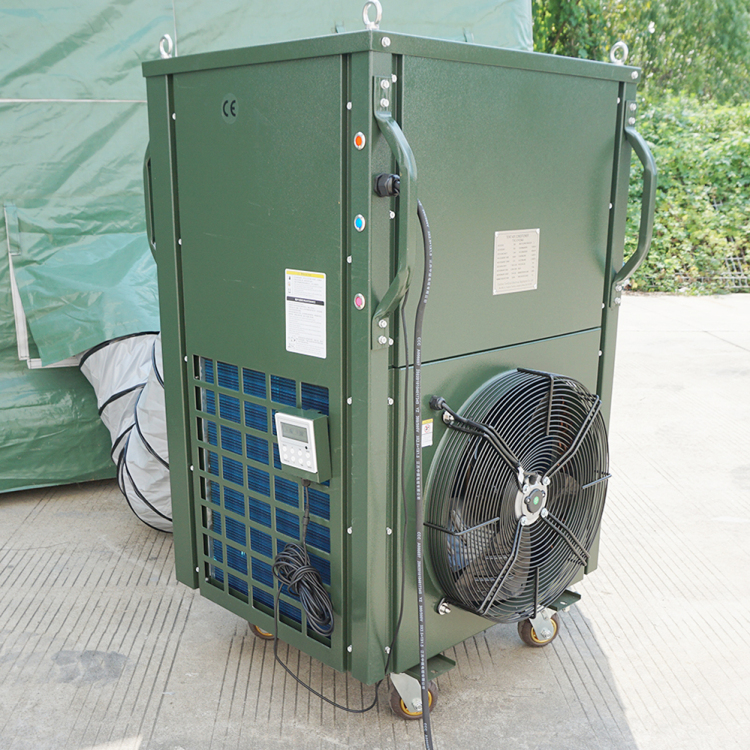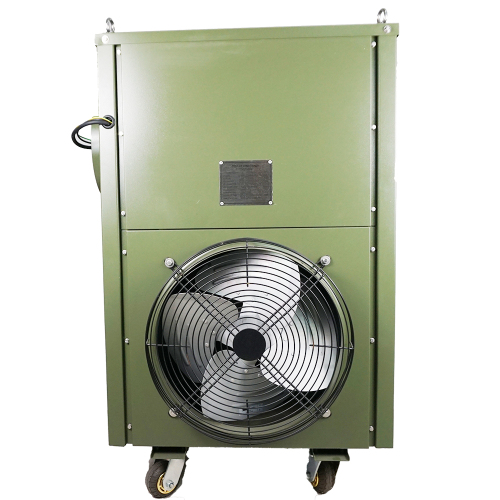
The problem lies with the aluminum fins on the condenser. Bare aluminum quickly oxidizes under salt exposure. This oxidation forms a layer of white rust, which blocks airflow and acts as a thermal insulator. As the heat transfer efficiency drops, the compressor has to work harder, eventually leading to overheating and total system failure.
This is why a standard Tent Air Conditioner is rarely suitable for coastal defense operations. A Military Tent Air Conditoner must be engineered for these harsh conditions. The most effective solution is applying specialized coatings to the coils, such as epoxy resin (often called Blue Fin) or hydrophilic coatings (Gold Fin). These layers seal the aluminum from the salt and moisture, maintaining heat exchange efficiency while preventing corrosion.
The stakes are even higher for an ECU Environmental Control Unit. An ECU is the lifeline for sensitive electronics and personnel in the field. If the coils corrode and the system loses capacity, the entire command post or medical shelter is compromised. Coating the coils protects the system's heat exchanger, but it also reduces the maintenance burden, as crews do not have to constantly wash away salt buildup.
When sourcing cooling equipment for coastal or marine deployments, do not settle for standard commercial coils. Ask your supplier for the specific coating type and request salt spray test reports, such as ASTM B117. The right coating is the difference between a system that lasts a few months and one that survives the entire deployment.