
1. Rockwool vs Polyurethane Cold Room Panels — Which One to Choose for Your Project?
When buyers ask rockwool vs polyurethane cold room panels which one to choose, the answer splits cleanly: rockwool wherever non-combustibility is legally required or a hot process sits next door; PU/PIR wherever temperature control and energy cost dominate.
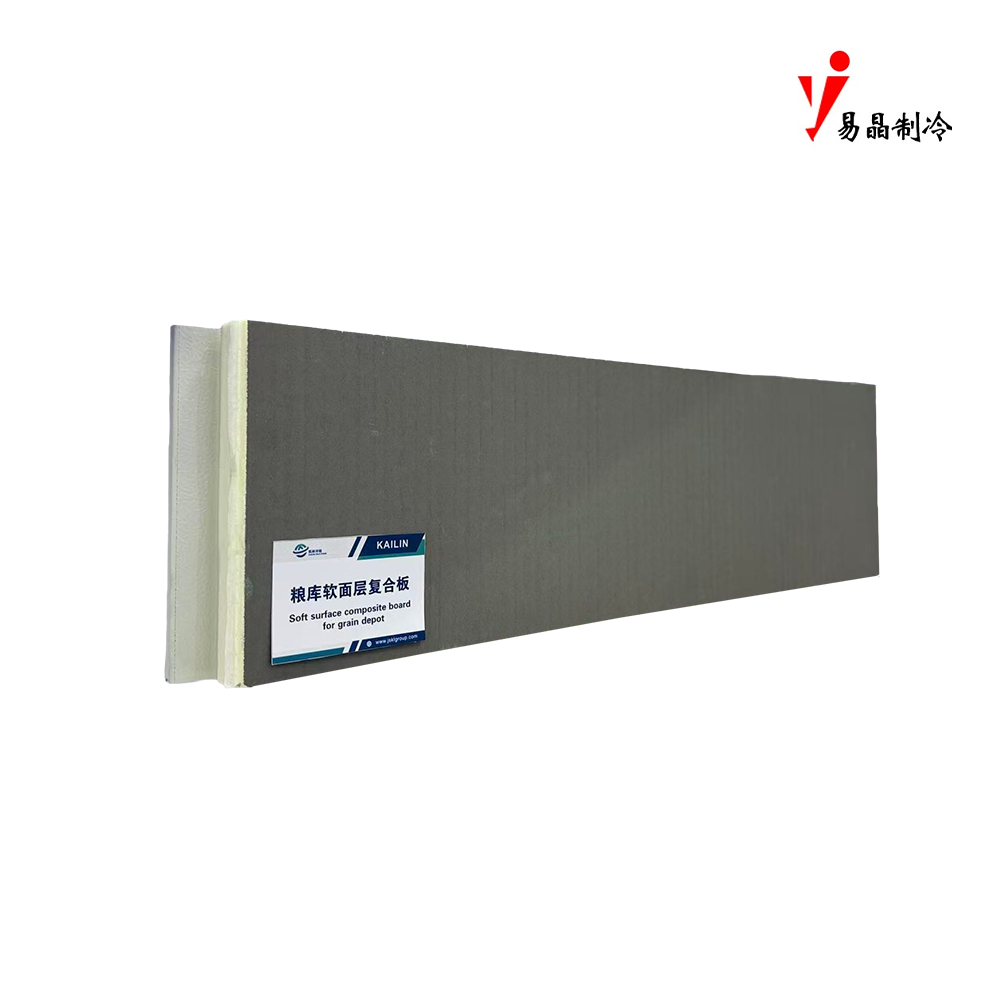
Both cores are produced as sandwich Cold Room Panels with pre-painted steel skins, so switching core changes nothing about the construction method — the camlock joints, install speed and panel widths stay the same. What changes is the physics:
|
Decision factor |
Rockwool core |
PU / PIR core |
When it decides |
|
Thermal conductivity λ |
0.037–0.040 W/m·K |
0.022–0.024 W/m·K |
Below −18 ℃, always |
|
Fire class (EN 13501-1) |
A2-s1,d0 non-combustible |
B1 (PU); B-s1,d0 achievable (PIR) |
Under strict codes / insurers |
|
Panel weight |
~2× heavier |
Light |
Shipping cost, structure |
|
Moisture behaviour |
Absorbs water, loses R when wet |
Closed-cell, near-zero absorption |
Washdown / humid rooms |
|
Cost per m² |
Higher core cost |
Lower |
Rarely the deciding factor |
The R-value reality check settles most freezer projects: the R value of 150mm PU cold storage panel for freezer room duty is about 6.8 m²K/W, while the same 150 mm in rockwool delivers roughly 3.9. Matching PU performance with rockwool would take a ~260 mm panel — heavier, costlier to ship, and deeper foundations on every wall.
Where rockwool genuinely earns its premium: pharma and chemical plants where the insurer mandates non-combustible construction, wall lines adjacent to boiler or engine rooms, and fire walls in mixed food factories. A non-combustible wall line only works if the openings match it — pair rockwool sections with fire-rated Insulated Cold Storage Doors, or the compartment rating breaks exactly at the door. Yijing also builds hybrid walls — rockwool firewall sections joined to PU temperature sections on one line — which is how most real food plants end up.
✅ Bottom line: Below −18 ℃, PU/PIR is the only rational core; rockwool justifies its cost only when the fire code or your insurer requires non-combustible construction.
2. How Do You Check a Cold Storage Panel Fire Certificate (B1 / EN 13501-1) Before Paying?
Buyers who know how to check cold storage panel fire certificate b1 en 13501 paperwork look for one thing: a full-panel test report from an accredited laboratory — datasheet claims, core-only reports and trade names like "B1 grade" prove nothing on their own.
Four checks separate a real certificate from marketing paper:
- Full panel, not core. The tested specimen must be the complete sandwich panel — steel skin, core and adhesive together — because the skins change the classification.
- Accredited lab and report number. Ask which laboratory issued it (a national building-materials testing centre with recognised accreditation) and request the report number, issue date and tested thickness.
- The exact class string. "B1" is a German DIN 4102 shorthand; EN 13501-1 classes read like B-s1,d0 or A2-s1,d0 — the s1 smoke rating and d0 droplet rating are what insurers actually price, and a report without them is incomplete.
- Match it to your requirement. Get the required class in writing from your insurer or local authority, then buy against the report. In our export order reviews, missing or core-only fire reports are the single most common failure point when importers qualify an OEM or wholesale supplier — asking before the deposit, not after production, is what protects the shipment.
✅ Bottom line: Buy the test report, not the datasheet claim — a full-panel EN 13501-1 class matched to your insurer's written requirement is the only fire certificate worth paying for.
FAQ
Q: Can I mix rockwool and PU panels in the same cold storage building?
A: Yes, and it is the standard outcome once buyers stop searching rockwool vs polyurethane cold room panels which one to choose as a single question: rockwool on fire walls and hot zones, PU/PIR on freezer and chiller envelopes, joined on one wall line with matched camlock joints.
Q: What paperwork should I receive before wiring a deposit for fire-rated panels?
A: The four checks above, in this order. When importers ask how to check cold storage panel fire certificate b1 en 13501 compliance on a shipment from China, we advise requesting the full-panel report before the deposit and verifying that the tested thickness matches the quoted panel — a 50 mm test result does not cover a 150 mm claim.
Q: What is the R value of 150mm PU cold storage panel for freezer room use — and can rockwool match it?
A: About 6.8 m²K/W at λ 0.022 W/m·K; rockwool needs roughly 260 mm to match, which is why freezer envelopes stay PU/PIR unless the fire code overrides. Changzhou Yijing Refrigeration Equipment Factory publishes tested λ values per core and thickness, so buyers can verify rather than trust the datasheet.
Get a Core Recommendation for Your Code and Your Temperature
Send Yijing two things — your target room temperature and your fire code or insurance requirement — and our engineers will return a core recommendation (PU, PIR, rockwool or hybrid wall) with a panel-by-panel quotation within 24 hours. As a factory-direct China manufacturer with both machine-made and handmade lines, Yijing supplies OEM cores and complete Custom Cold Room Systems to contractors and wholesalers worldwide, with certificate verification included before every fire-rated order ships.
Tel: +86 13861290677
Email: [email protected]
Website: www.yjcoldroom.com