
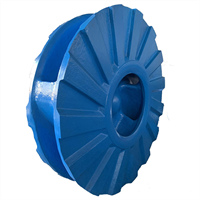
The installation checks that determine the next interval
1. Confirm front clearance against the manufacturer's setting table before the casing is closed — not after
2. Check that the throatbush is new or within tolerance; a new impeller against a worn throatbush will not hold clearance
3. Verify shaft straightness and bearing condition, since a new impeller will amplify any existing runout
4. Check that the shaft sleeve and seal faces are clean and undamaged
5. Rotate by hand after assembly to confirm no rubbing before the drive is connected
6. Record the installation date, the measured clearance and the part's heat number in the maintenance log
7. Re-check clearance after the first hundred hours of operation, when bedding-in wear is at its highest
The seventh item is the one that separates plants with predictable maintenance budgets from plants that discover wear-part costs when a pump stops.
Frequently asked questions
How long should a slurry pump impeller last?
In abrasive duty with moderate solids loading, field life commonly falls between 1,500 and 4,000 operating hours. Figures outside that band are normal and are explained by particle size and shape, solids concentration, discharge head and whether clearance was maintained. Any supplier quoting a single figure without asking about the duty is quoting a hope rather than an estimate.
Can I fit a rubber-covered impeller where a metal one was fitted?
The hydraulic envelope is generally compatible, but the decision should follow the duty. Rubber performs well with fine, sharp solids and in corrosive slurries, and poorly with coarse solids, oil contamination or elevated temperature. If the original metal impeller failed by abrasion rather than corrosion, changing to rubber without changing the duty usually shortens life rather than extending it.
Why does a new impeller lose performance within days?
Almost always clearance. Either the throatbush was left in service, the clearance was set from a generic table rather than the manufacturer's data for that frame size, or the casing was assembled with debris between the mating faces. The second most common cause is that the pump is operating far from its best efficiency point, which produces recirculation that erodes the new part from the first hour.
Is a harder impeller always better?
No. Hardness addresses abrasion. It does nothing for cavitation, and in some fine-slimy duties an elastomer outperforms a harder alloy because it deflects the particle rather than resisting it. Material should be selected against the wear mechanism found on the failed part, which is why the wear pattern is worth photographing.
What information is needed for a quotation?
Pump model or nameplate photograph, impeller outside diameter, required material, quantity and expected annual consumption, and the duty conditions — flow, head, solids concentration, maximum particle size, pH and temperature. With those, a quotation can normally be issued without further clarification.
Next step
Photograph the failed impeller from the inlet side and at the vane outlets, note the pump model from the nameplate, and send both with the duty conditions. The wear pattern will indicate whether the correct action is a material change, a clearance correction, or a hydraulic fix — and only one of those three involves buying a part. Browse the impeller range or the full slurry pump and spares catalogue, and see the technical article archive for related diagnostic guides.
Published by the technical team. Wear patterns described here are indicative; site-specific diagnosis should account for the actual duty conditions and the pump manufacturer's data.