Working Mechanism
In an FG Fluidizing Dryer, ambient air is filtered, heated through a heat exchanger, and introduced into the drying chamber at a controlled velocity. Once the air velocity exceeds the minimum fluidization threshold, solid particles lift from the bed surface and behave like a boiling liquid. This turbulent mixing eliminates temperature gradients that commonly occur in static tray or rotary drying systems. The result is uniform heat transfer at the individual particle level, with residence time adjustable through bed depth and airflow rate settings.
Temperature Control and Uniformity
Precise thermal regulation is central to the design of the Uniform Heat Precision FG Fluidizing Dryer. Inlet air temperature is monitored continuously via thermocouples positioned at multiple points within the chamber. A PID controller adjusts the heating source—whether steam, electric elements, or thermal oil—to maintain setpoint stability within ±2°C. Exhaust temperature feedback further refines control, preventing thermal degradation of heat-sensitive materials such as pharmaceutical granules, food additives, or fine chemical intermediates.
The fluidized state itself contributes to uniformity. Because particles circulate freely within the bed, no single region remains exposed to peak inlet temperatures for extended periods. This self-mixing behavior reduces the risk of hot spots and produces a narrow moisture distribution in the final product, typically achieving residual moisture variation below 0.5% across the batch.
Structural Considerations
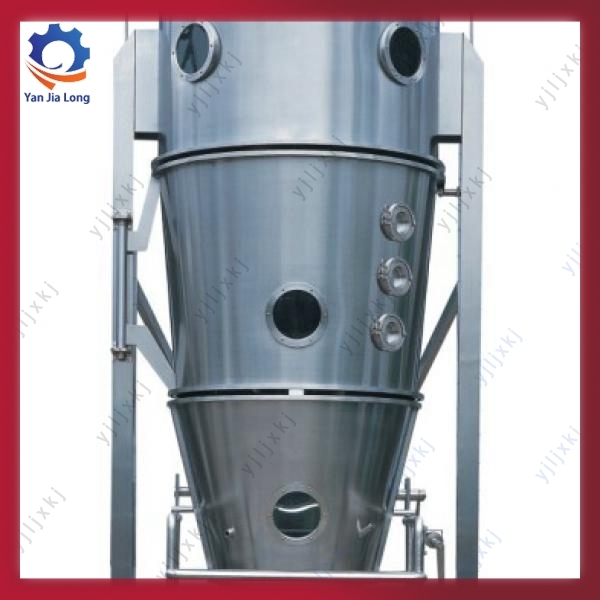
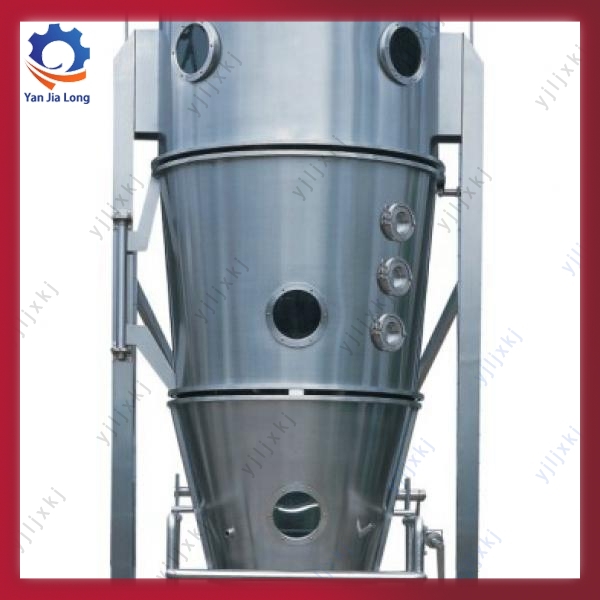
Key components affecting heat uniformity include the air distribution plate, chamber geometry, and exhaust filtration system. The distribution plate must provide even airflow across its full area; uneven perforation or blockage creates dead zones where particles settle and dry inconsistently. Chamber walls are insulated to minimize radial heat loss, and the expanded upper section reduces particle entrainment while allowing adequate disengagement space.
Application Scope
The Precision FG Fluidizing Dryer for Uniform Heat suits granular or crystalline materials with particle sizes between 0.1 mm and 6 mm. It is widely applied in pharmaceutical, chemical, and food processing industries where batch-to-batch consistency and controlled thermal exposure are required. Operating parameters—air velocity, temperature, and bed load—are adjusted according to material density, initial moisture content, and target specifications.