
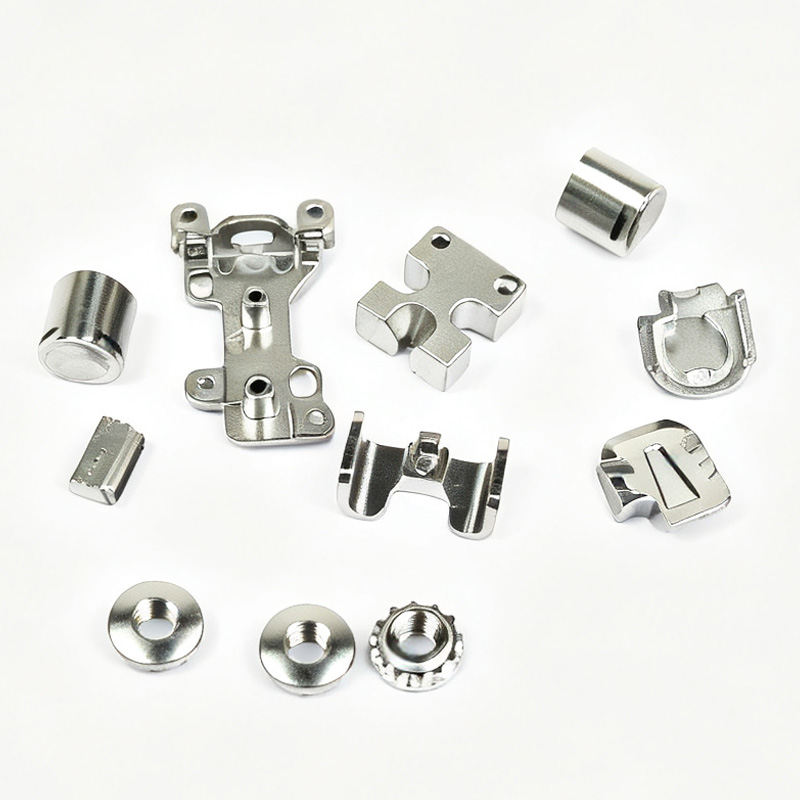
Choosing between Powder Metallurgy and Metal Injection Molding is not a simple contest between “lower cost” and “higher precision.” The better process depends on the part’s geometry, dimensions, tolerance, material, annual volume, surface requirements, and acceptable secondary operations. Conventional Powder Metallurgy is often efficient for medium-to-large quantities of relatively simple parts. MIM is usually stronger when a small metal component has complex three-dimensional features and must be produced repeatedly at high volume.
1. What Are Powder Metallurgy and Metal Injection Molding?
1.1 How the Powder Metallurgy process works
The conventional Powder Metallurgy process generally includes powder preparation, blending, compaction, and sintering. Metal powder is filled into a rigid die and compacted at room temperature to create a “green” compact. The compact is then heated in a controlled atmosphere. During sintering, particles bond through solid-state diffusion without fully melting the part. Depending on the design, the material and the required properties, sizing, machining, heat treatment, or surface treatment may follow.
The term Powder Metallurgy covers a broad family of technologies. In this article, “powder metallurgy products” and “powder metallurgy parts” mainly refer to conventional press-and-sinter components, while “metal powder metallurgy” describes the wider material and process field. This distinction matters because MIM is also a powder-based, sinter-based technology, but it uses injection molding rather than conventional die compaction.
1.2 How the MIM process works
MIM, or mim metal injection molding, combines fine metal powder with a thermoplastic or wax-based binder to create feedstock. A metal injection molding machine injects the feedstock into a mold cavity, producing a “green part.” Most of the binder is removed during debinding, and the remaining binder is removed during controlled-atmosphere sintering. The final part undergoes shrinkage, so mold design and process control must account for it. MPIF notes that MIM commonly uses fine powders typically smaller than 20 micrometers.
A complete mim manufacturing process therefore includes feedstock formulation, injection molding, debinding, sintering, inspection, and—when necessary—secondary finishing. MIM is especially valuable because injection molding can reproduce small ribs, bosses, slots, curved surfaces, and other features that are difficult to form with a conventional press-and-sinter tool.
2. Key Differences: Geometry, Precision, Materials, and Cost
2.1 Geometry and design freedom
Conventional press-and-sinter Powder Metallurgy works best when the part can be filled, compacted, and ejected along the pressing direction. Uniform wall thickness, suitable draft, controlled aspect ratios, and limited undercuts make the tool simpler and the density distribution more predictable. Deep side holes, severe undercuts, very thin walls, and large changes in section may require added tooling or secondary machining.
MIM offers greater geometric freedom for small parts because the feedstock flows into the cavity like an injection molding compound. This does not mean every geometry is automatically suitable. Long flow paths, abrupt thickness changes, trapped air, weak gate locations, and uneven shrinkage can still create defects. Simulation and early design-for-MIM review are therefore important.
2.2 Dimensional control and surface finish
Neither process has one universal tolerance value. Actual performance depends on powder characteristics, tool accuracy, part size, geometry, sintering shrinkage, furnace control, inspection method, and whether secondary machining is used. MIM commonly provides strong repeatability for small, complex components, while conventional Powder Metallurgy can provide excellent production consistency for properly designed parts.
A practical rule is to specify general tolerances realistically and reserve tight tolerances for critical dimensions. If a critical bore, flatness feature, or mating surface cannot be held directly through molding and sintering, a controlled secondary operation may be more economical than forcing the entire part into an extreme as-sintered tolerance.
2.3 Material selection and performance
Powder Metallurgy supports iron, steel, stainless steel, copper-based materials, magnetic materials, carbide systems, and many engineered compositions. Porosity can also be useful in selected products, such as self-lubricating bearings and filtration components. The final properties depend on powder type, density, alloy chemistry, sintering atmosphere, and post-treatment.
MIM supports many stainless steels, tool steels, low-alloy steels, titanium alloys, nickel alloys, cobalt alloys, and other systems. Fraunhofer IFAM lists stainless steel, low-alloy steel, titanium, nickel alloys, copper, and aluminum among materials used in its MIM work. Material availability must still be confirmed with the powder and feedstock supplier, especially for corrosion, fatigue, biocompatibility, and high-temperature requirements.
2.4 Tooling, equipment, and total cost
Powder metallurgy products often use a press, a forming die, and a sintering furnace. The tooling can be cost-effective when the geometry is suitable and the volume is high enough to spread the die cost across many parts. However, complex tooling, extra machining, density-control measures, or multiple finishing steps can change the economic balance.
MIM requires feedstock preparation, a metal injection molding machine, molds designed for shrinkage, debinding equipment, and sintering equipment. Tooling and process development are usually more demanding at the beginning. Once the process is qualified, multi-cavity molding and high automation can reduce the cost per part. MPIF and Fraunhofer both emphasize MIM’s suitability for complex shapes and economical series production.
3. Decision Guide: Which Process Should You Choose?
The following HTML table can be copied directly into a website CMS.
| Decision factor | Conventional Powder Metallurgy | MIM |
|---|---|---|
| Best geometry | Simple to moderately complex, press-direction features | Small, complex three-dimensional features |
| Typical production logic | Efficient when tooling and part design are straightforward | Strong for qualified, high-volume series production |
| Material route | Broad PM material families and engineered blends | Fine-powder feedstocks, including many stainless and alloy systems |
| Tooling and equipment | Press, die, and sintering furnace | Injection machine, mold, debinding, and sintering line |
| Key cost risk | Complex tooling or extensive secondary machining | Upfront mold, feedstock, and process-validation cost |
| Recommended first question | Can the part be compacted and ejected reliably? | Can shrinkage, flow, debinding, and sintering be controlled? |
Choose conventional Powder Metallurgy when the part has a suitable pressing direction, the geometry is not dominated by undercuts or deep side features, and cost-efficient repeat production is important. Automotive structural parts, gears, bushings, magnetic components, and selected wear parts are common candidates, subject to design and material validation.
Choose MIM when the component is small, complex, difficult to machine, and required in substantial quantities. Medical, electronics, automotive, consumer products, and aerospace applications may benefit from MIM, but safety-critical parts still require formal material qualification, validation, and regulatory control.
A powder metallurgy manufacturer should be involved before the final design is frozen. Ask for a manufacturability review covering fill behavior, parting lines, gates, ejection, shrinkage, density, sintering distortion, inspection points, and secondary operations. The best supplier is not simply the one with the lowest quotation; it is the one that can connect material data, process capability, quality records, and production scale.
4. A Practical Project Workflow
Start with a functional specification rather than a preferred process. Define load, temperature, corrosion exposure, wear, mating surfaces, critical dimensions, annual demand, target price, and acceptable appearance. Then compare conventional Powder Metallurgy, MIM, machining, casting, and additive manufacturing where relevant.
Next, create a manufacturability prototype. For Powder Metallurgy, review compaction direction, density variation, die movement, and ejection. For MIM, review feedstock flow, gate placement, wall thickness, debinding paths, shrinkage allowance, and sintering support. Use simulation where the geometry or risk justifies it.
Finally, validate the complete process rather than only a first article. A robust validation plan should include dimensional capability, material composition, density, hardness, tensile or fatigue properties when applicable, surface condition, cleanliness, and lot-to-lot consistency. Production approval should be based on measured capability and the actual drawing requirements.
Conclusion
Powder Metallurgy is usually the better starting point for parts that are structurally suitable for compaction, cost-sensitive, and required in stable volumes. MIM is usually the stronger option for small, intricate components that demand geometric freedom, repeatability, and efficient high-volume production. The correct answer is not “which technology is superior,” but “which process can meet the part’s requirements with verified capability and acceptable total cost.”
FAQs
① Is MIM always more precise than Powder Metallurgy?
No. MIM often offers strong repeatability for small and complex parts, but the achievable tolerance depends on the part design and process. Properly designed conventional Powder Metallurgy parts can also be highly consistent, and critical dimensions may use secondary machining.
② What is the main difference between powder metallurgy products and MIM parts?
The main difference is the shaping method. Conventional powder metallurgy products are commonly compacted in a rigid die and then sintered. MIM parts are made by injecting fine-powder feedstock into a mold, followed by debinding and sintering.
③ Is MIM economical for low-volume production?
Usually, MIM is more attractive when the volume can spread the cost of the mold and process development across many parts. For prototypes or very small batches, machining, additive manufacturing, or a simpler Powder Metallurgy route may be more economical.
④ How should I select a powder metallurgy manufacturer?
Evaluate technical capability, material traceability, tooling design, process monitoring, inspection equipment, quality systems, capacity, and experience with comparable parts. Request a design review and a documented capability plan before approving tooling.