
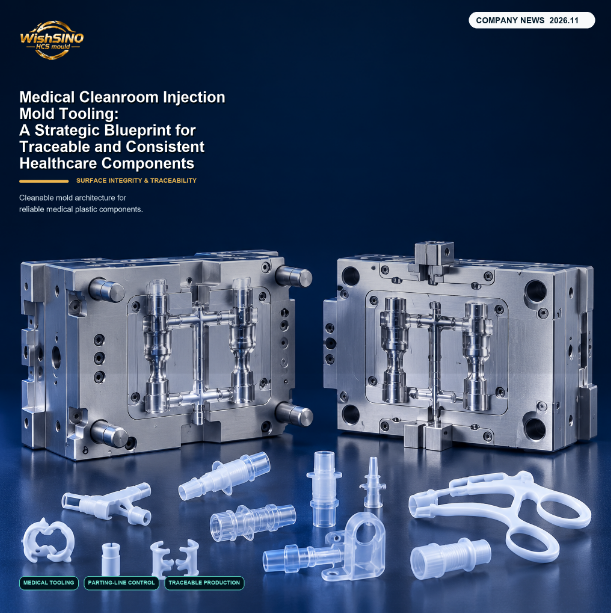
Medical Cleanroom Injection Mold Tooling: A Strategic Blueprint for Traceable and Consistent Healthcare Components
Nov 19, 2026
Surface Integrity and Validation Evidence: The Technical Roadmap for Reliable Medical Plastic Production
Medical plastic components are increasingly used in diagnostic instruments, fluid-control assemblies, surgical accessories, wearable monitoring devices, and compact patient-contact systems. For these programs, the mold must support more than repeatable geometry. It must help control particles, flash, burrs, weld-line risk, surface damage, and material traceability while allowing the buyer to connect tooling decisions with validation evidence. [Medical Cleanroom Injection Mold Tooling] therefore links mold architecture, controlled handling, inspection, and production documentation into one procurement decision.
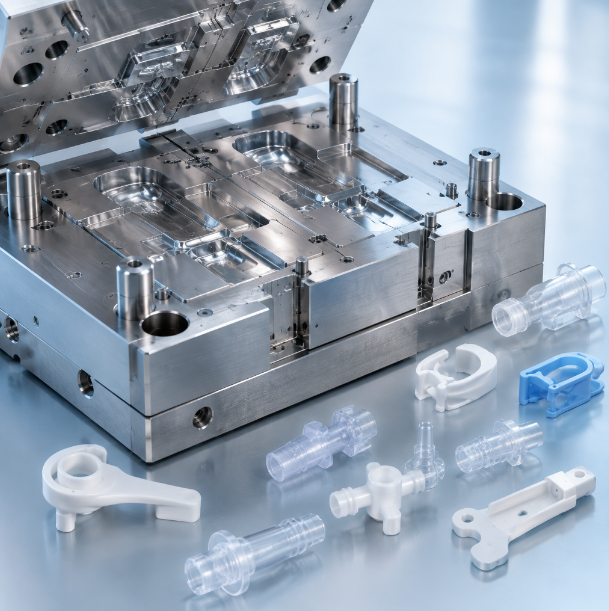
The first priority is [Medical Mold Surface Integrity and Parting-Line Control]. Polished cavity surfaces, disciplined parting-line transitions, controlled vents, balanced ejection, and replaceable wear elements help reduce unwanted marks and particle-generating damage. Mold design should also consider resin sensitivity, runner cleanliness, gate vestige location, demolding force, and the practical cleaning route for components used in medical assemblies. These details influence both visible quality and the reliability of downstream assembly.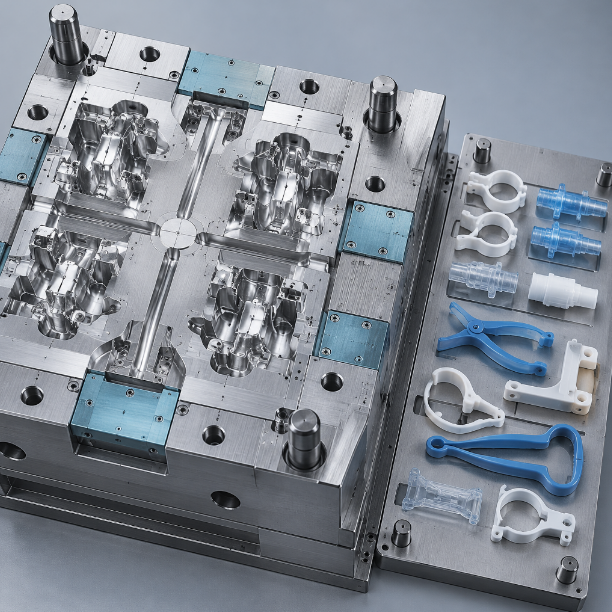
For purchasing and quality teams, [Traceable Medical Plastic Components] means that each approved part can be connected to a defined material lot, mold cavity, process record, inspection plan, and retained sample. Useful verification may include critical-dimension checks, visual inspection under controlled lighting, flash and burr review, functional fit checks, and documented change control. A structured evidence package gives OEM and brand teams a clearer route for reviewing supplier consistency without relying only on a first-article sample.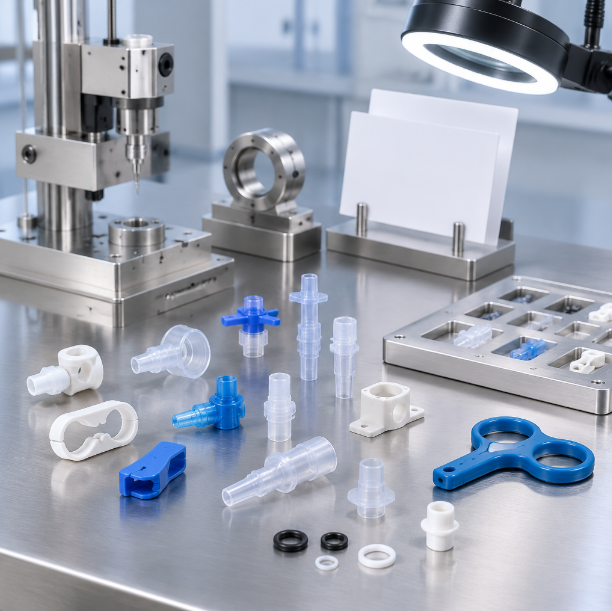
A service-ready medical mold should make inspection and maintenance deliberate rather than improvised. Access to gates, vents, ejectors, slides, and cavity inserts should support controlled cleaning and documented replacement. Clear setup instructions, component identification, spare-part control, and restart checks reduce the chance that an avoidable maintenance event becomes a quality deviation. When tool design, process qualification, inspection evidence, and change management are planned together, medical plastic programs gain a more dependable path from development samples to repeatable production.