
1. The Printing Mechanism — One Score, Every Sheet
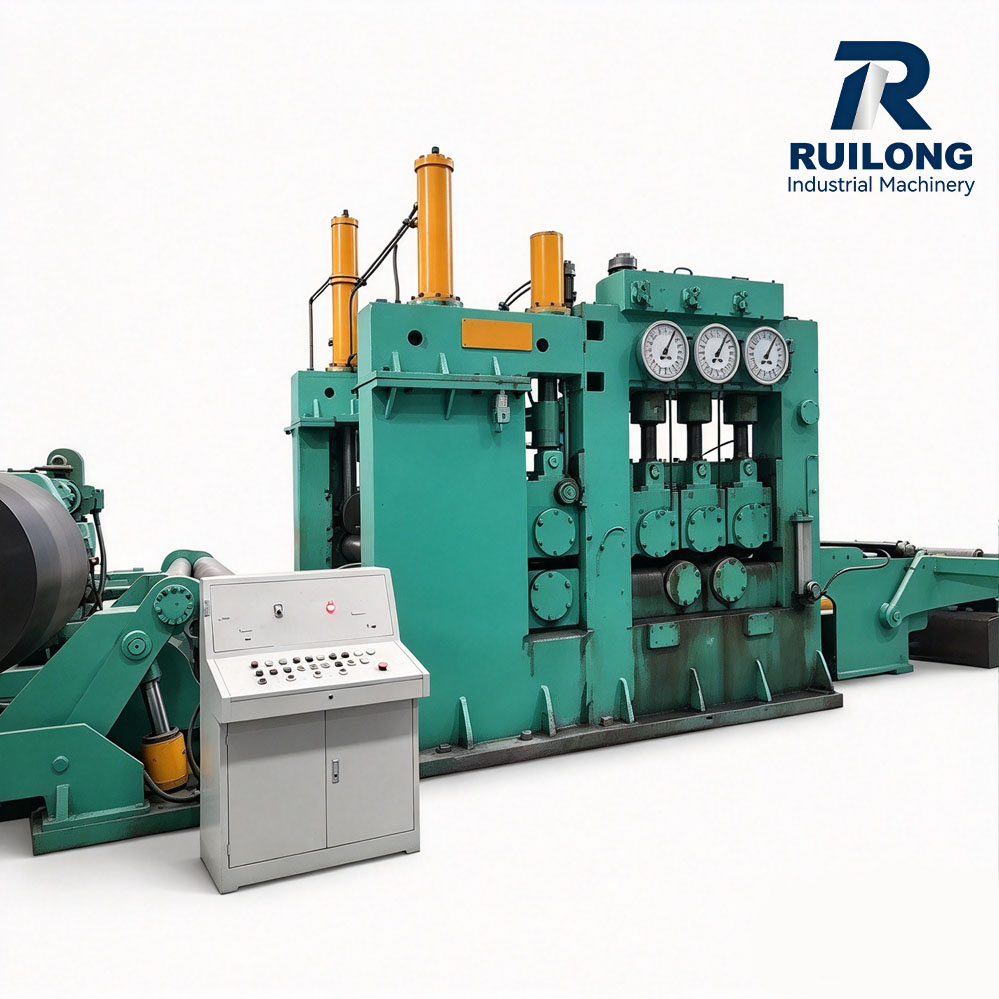
The leveler works at continuous contact: whatever is wrong with one roll's surface is copied to the strip's surface at that roll's pitch, sheet after sheet. The mechanism makes the fault both dramatic and easy to identify — the marks repeat at a fixed spacing equal to the damaged roll's circumference, in a straight line along the sheet's width, and they appear on every sheet from the first meter after the roll is damaged, which is exactly the signature Ruilong teaches crews to confirm with a tape before opening anything. Common scoring sources, in observed order: hard debris (weld spatter, a dropped tool, a bolt) carried through by a threaded strip end; a burred or cracked strip edge from an upstream slitting fault riding against one roll; and pickup-induced galling, where stainless slivers weld to a soft roll surface and then score the next sheets — the contamination cycle the scratch article documents from the sheet's side.
The response sequence is deliberately narrow: stop the line before diagnosing with production sheets, open the leveler per the lockout procedure, and roll-mark each work roll with a felt pen at top dead center — then jog one revolution and see which pen mark's path shows damage. One revolution localizes the roll; the alternative, running sheets and guessing, wastes the shift the score is already ruining. The repair decision then follows the score's depth, not its visibility: scoring within a few hundredths of a millimeter regrinds out in place, while a deep gouge or a spatter crater that regrind cannot reach without exceeding the roll's diameter tolerance means replacement — and this is where leveler roll inspection and maintenance interval discipline pays its real dividend, because a roll caught at the shallow stage regrinds in hours and a roll caught late is a spare-parts lead time.
✅ Bottom line: The roll prints its damage at its own pitch — one pen-marked revolution localizes the fault, and depth decides regrind versus replace.
2. Inspection Intervals — and the Fault With No Visible Mark
The schedule that catches scoring early costs minutes a week: visual under raking light weekly, dial-gauge runout monthly, and after any known strip-through event immediately. The weekly pass takes the rolls in order under an angled light, looking for the reflective line a fresh score makes before it is deep enough to print; the monthly pass measures each roll's runout at center and quarter positions against the delivery tolerance, building the trend that separates a stable surface from a slowly scoring one. The immediate trigger is the discipline most crews skip: any event that sent something hard through the leveler — a crashed strip end, a broken upstream knife, a bolt from the shear table — schedules an out-of-cycle inspection the same shift, because that is how most scores are actually born.
The invisible variant deserves its own paragraph because it is the classic misdiagnosis: when flatness varies sheet to sheet but no roll shows a mark, the fault is usually backup roll bearing play causing flatness variation — a worn backup bearing lets the supported work roll deflect and vibrate under load, printing intermittent, wandering flatness error that no intermesh setting stabilizes. The test is force-and-feel: with the line stopped, check each backup roll bearing for radial play against the specification (a few hundredths of a millimeter), and listen for the roughness a failing bearing makes under slow jog. Ruilong puts both checks on the same monthly dial-gauge round, because the visible and invisible faults share a schedule and different symptoms — and the bearing play found early is a bearing replacement in a planned window, while the same play found late reads as a mystery flatness complaint that survives two intermesh re-tunes and a blade regrind before anyone checks a bearing.
✅ Bottom line: Weekly eyes, monthly gauges, and an instant check after every hard event — and when flatness wanders with no mark anywhere, check the backup bearings first.
FAQ
Q: How deep can a score be before the roll must be replaced instead of reground? A: When regrind to remove the score would breach the roll's diameter or crown tolerance — leveler roll scoring marks on every sheet from a shallow score regrinds out, while a spatter crater deep enough to demand tens of milligrams of removal means replacement.
Q: What leveler roll inspection and maintenance interval do you actually recommend? A: Weekly visual under raking light, monthly dial-gauge runout including backup bearings, and an immediate out-of-cycle check after any hard event through the roll gap — Ruilong ships the log sheet with the line so the schedule is a checklist, not a memory test.
Q: Flatness varies sheet to sheet but no roll shows any mark — what should I check first? A: Backup roll bearings — radial play beyond spec lets the supported roll vibrate under load, which is the classic backup roll bearing play causing flatness variation signature, and it explains the complaint the intermesh and blade changes could not.
Start the Log With the Line, Not After the First Score
Send Ruilong your gauge range and duty mix, and the engineering team will return the inspection schedule — weekly, monthly and event-triggered checks with tolerances — alongside the roll specification, from our China factory: as the manufacturer behind Tai'an Ruilong Machinery Co., Ltd., we quote supplier/OEM-direct with spares lead times stated, free of charge and without obligation. The custom log carries your roll set's serials and tolerances from commissioning day.