

The laser wire stripping parameters for PTFE insulated wire that engineers end up trusting are usually built by trial and error; this table collects the starting windows from production data instead — including a documented 8 AWG PTFE case at 0.9 W on a 405 nm ring-rotation system. First dial position, not the last word. Every supplier who promises a finished recipe without testing your wire is guessing.
1. What Are the Starting Parameters for Each Insulation Type?
Each insulation has a workable window on one or two laser sources, and the window is set by absorption, not by melting point. One caveat: the laser stripping ETFE tefzel insulation power setting changes with the source — 12–20 W on CO₂ against 4–8 W on UV — before it changes with the wire. XINGHUO validates every row on sample material before a machine ships. PTFE melts at 327°C but ablates cleanly under 10.6 µm radiation; Kapton survives 400°C yet chars under the same beam. The table gives the first dial-in position for the seven constructions that cover most aerospace and medical wire:
|
Insulation |
Typical wire family |
Source & mode |
Starting window |
Passes |
Primary failure if wrong |
|
PTFE (Teflon) |
AS22759 family |
CO₂ 10.6 µm CW, or 1064 nm pulsed (20–50 ns, 30 kHz) |
15–25 W, 8–15 mm/s |
2–3 |
HF fume under-vented; insulation smears when under-powered |
|
PTFE, heavy gauge (8 AWG and up) |
AS22759 large conductors |
405 nm diode, ring rotation |
0.8–1.0 W, 3 rev/s, ~8 s per end |
1 |
Axial overheat beyond the strip ring |
|
FEP |
High-temp jacketing |
CO₂ 10.6 µm |
10–18 W, 10–15 mm/s |
1–2 |
Shrink-back: melts at ~260°C, pulls from the cut edge |
|
PFA |
High-temp jacketing |
CO₂ 10.6 µm |
15–22 W, 10–15 mm/s |
1–2 |
Cleanest perfluorinated edge; under-cutting if rushed |
|
ETFE (Tefzel) |
AS22759 Tefzel types |
CO₂ 12–20 W, or UV 355 nm at 4–8 W / 50 kHz |
1 pass typical |
1 |
Stringing and pull-back at low energy |
|
Kapton (polyimide) |
MIL-W-81381 legacy |
UV 355 nm, 3–6 W / 50 kHz |
1–2 passes |
1–2 |
Conductive carbonized char — never run CO₂ |
|
Magnet (enamel) wire |
Motor and transformer leads |
UV 355 nm |
4–8 W / 50 kHz |
4–5 |
Enamel thickness varies batch to batch |
Three scaling rules apply across every row:
- ✅ Bigger conductor, slower travel. Strip time scales with the circumference the beam sweeps — an 8 AWG ring-rotation job takes seconds where a 28 AWG takes a fraction of one.
- ✅ More passes beat more power on every fluoropolymer. Doubling power past the window pushes heat into the conductor; doubling passes just removes more insulation.
- ✅ Over-strip compensation is a settings job, not a rework job. Multi-layer constructions need a deliberate 0.1 mm overshoot allowance per layer, planned in the recipe rather than fixed afterwards.
✅ Bottom line: PTFE starts at 15–25 W on CO₂, Kapton at 3–6 W on UV, ETFE in between — all as first-pass windows pending sample validation.

2. Why Does the Same Machine Char Kapton but Leave PTFE Clean?
Because the two materials fail by different mechanisms: PTFE unzips into gas, Kapton decomposes into conductive carbon. Get this distinction wrong and no amount of power tuning will save the strip.
PTFE and its relatives (FEP, PFA) are fluoropolymers. Under a CO₂ beam they break molecular chains directly and leave as gas. A correct laser wire stripping parameters for PTFE insulated wire recipe therefore leaves a bare copper edge with nothing to wipe off — and extraction matters more than the power setting. The byproduct is hydrogen fluoride — the price of a clean strip on PTFE is a serious filter.
Kapton is the opposite case, and it is where laser stripping settings for kapton polyimide insulation get argued about most. Polyimide absorbs 355 nm radiation strongly and does not vaporize cleanly — under too much fluence it leaves a black, carbon-rich edge. Carbon conducts, so a charred edge on an avionics wire is a latent fault, not a cosmetic one. The working rules:
- ✅ UV 355 nm only, 3–6 W, short pulses at 50 kHz — low fluence per pass, one or two passes maximum
- ❌ CO₂ on Kapton: the absorption profile drives thermal decomposition and guaranteed charring
- ✅ A visible black edge at 10x inspection means the fluence is too high — reduce power or add a pass at lower energy, never raise speed to "outrun" the char
ETFE sits between the two families, which is why the laser stripping ETFE tefzel insulation power setting depends on the source before it depends on the wire. Below the CO₂ window, Tefzel pulls back in strings instead of separating; on UV it ablates cold, at the cost of throughput. Shops with mixed wire lists standardize on one source and accept the compromise.
Multi-layer cable (MIL-DTL-27500 constructions) is its own discipline, staged rather than dial-in:
- ✅ Jacket: 20–30 W, long pulse, remove bulk first
- ✅ Shield: 5–10 ns pulses at low energy, ablate braid coverage without heating the core
- ✅ Inner insulation: below 10 W, two to three passes, with the 0.1 mm per-layer over-travel allowance built in
Validation follows one sequence everywhere: ten samples, strip, inspect at 10–30x against the standard limits — residue ≤0.05 mm, nicks ≤5% of strand diameter, tilt ≤3°, HAZ <0.1 mm — tensile-check, then adjust one variable at a time. Changzhou Xinghuo Laser Equipment Co., Ltd. runs this validation on customer wire before shipment and returns the final recipe window with the strip report, which is the only version of these parameters that is actually guaranteed. As a China manufacturer working factory-direct, XINGHUO treats the recipe as part of the machine rather than an aftermarket service.
✅ Bottom line: Fluoropolymers ablate clean under CO₂ and polyimide needs low-fluence UV — matching the source to the failure mechanism comes before any power number.
FAQ
Q: Can one recipe cover all wire sizes of the same insulation?
A: The laser wire stripping parameters for PTFE insulated wire transfer as a window; the endpoints do not. A PTFE window validated on 22 AWG will not run 8 AWG at the same travel speed: circumference and thermal mass both scale. Expect to hold the power and lengthen the time, or step to a ring-rotation head above roughly 10 AWG.
Q: Why does Kapton char even at low power?
A: If "low power" means low wattage on a CO₂ source, that is exactly the error — polyimide absorbs 10.6 µm thermally and decomposes to carbon regardless of wattage. The laser stripping settings for kapton polyimide insulation that work are UV 355 nm at 3–6 W, 50 kHz, one or two passes, and a fluence low enough that the edge shows no black under 10x.
Q: Will a supplier validate these parameters on my wire before I buy?
A: The credible ones insist on it. XINGHUO runs a strip test on ten samples of each wire type, returns the defect data and the validated window, and ships the recipe pre-loaded — standard or OEM custom builds alike. A quotation without a sample-test step simply means you will do the validation yourself.
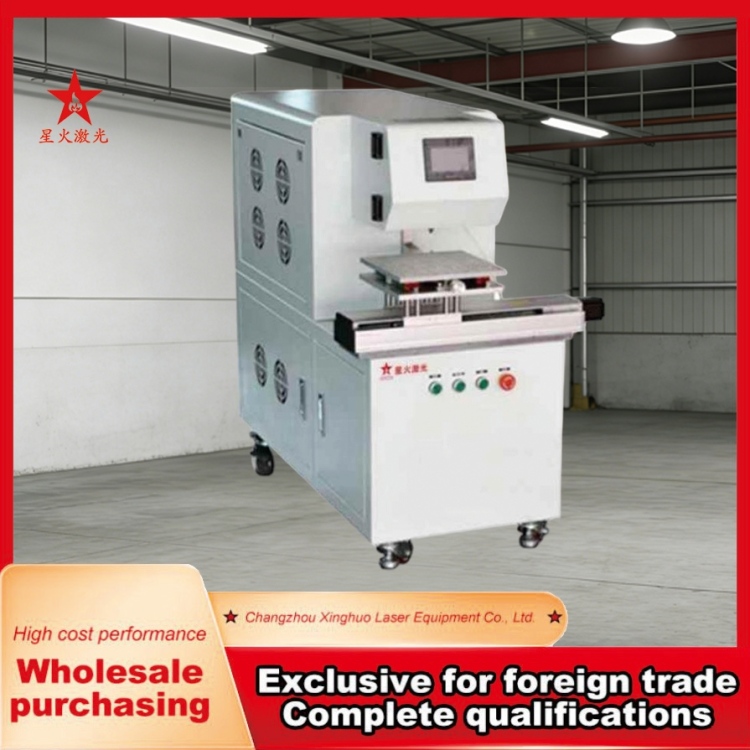
CTA: Send Ten Wires, Get the Recipe Window Back
Send 10 pieces of each wire type — insulation, AWG, and standard (AS22759, MIL-DTL-27500, or your own part number) — and XINGHUO will return a validated parameter window, stripped samples, and a factory-direct quotation with the recipe pre-loaded. The table above gets you to the right neighborhood; the sample test gets you to production.
|
|
|
|
Published: November 2026 |
By XINGHUO Laser Application Engineering Team |