
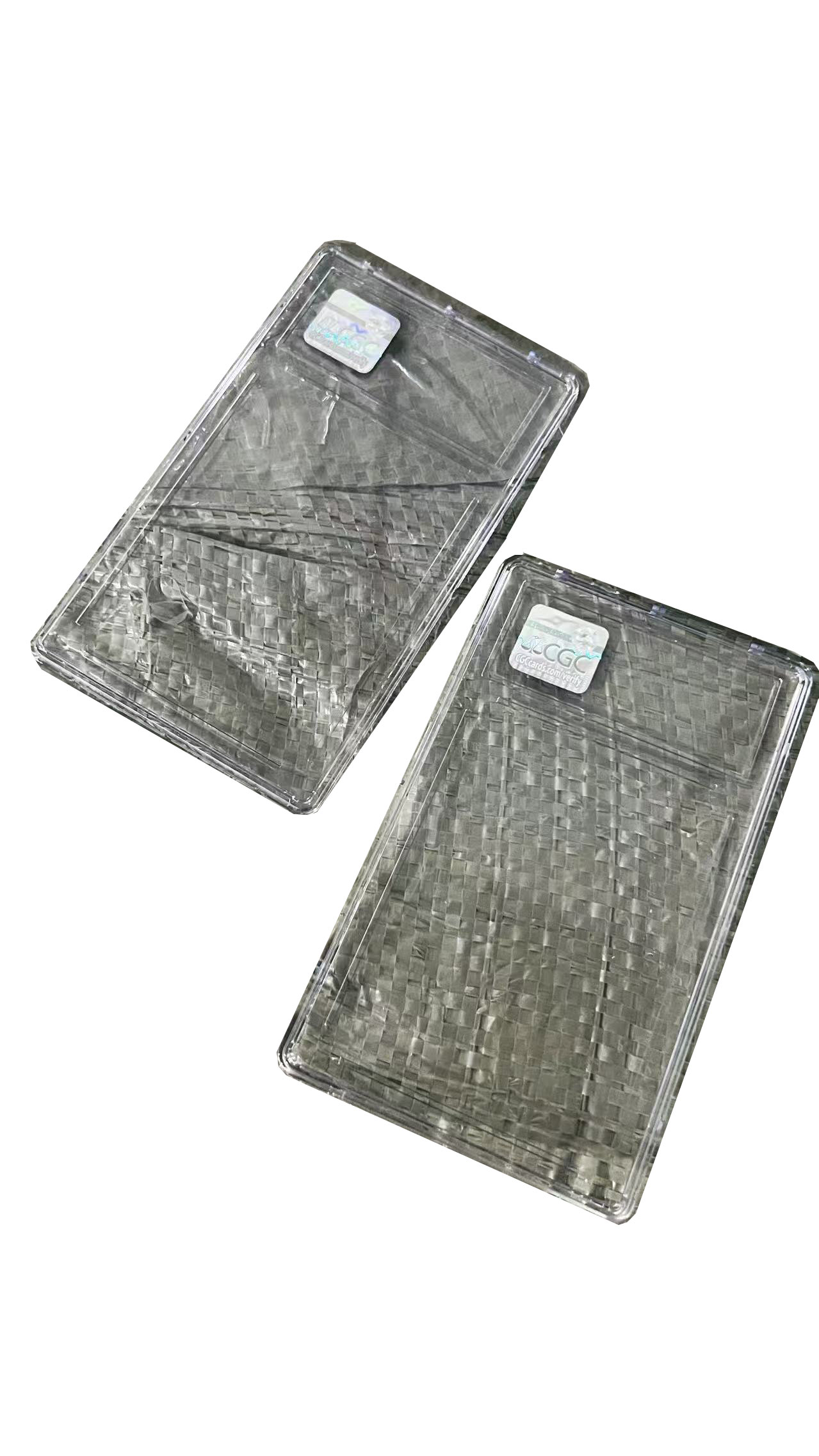
1. Applications of Laser Holographic Anti-Counterfeit Foil Stamping
Plastic housings used in electronics, telecommunications, and high-tech equipment often require hot foil stamping for brand logos, model numbers, certification marks, decorative patterns, and anti-counterfeit identification.
Unlike conventional hot stamping, laser holographic positioning foil stamping provides precise pattern transfer, strong adhesion, and abrasion resistance while enhancing product appearance and preventing counterfeiting through unique optical security features.
2. Working Principle of Laser Holographic Foil Positioning Technology
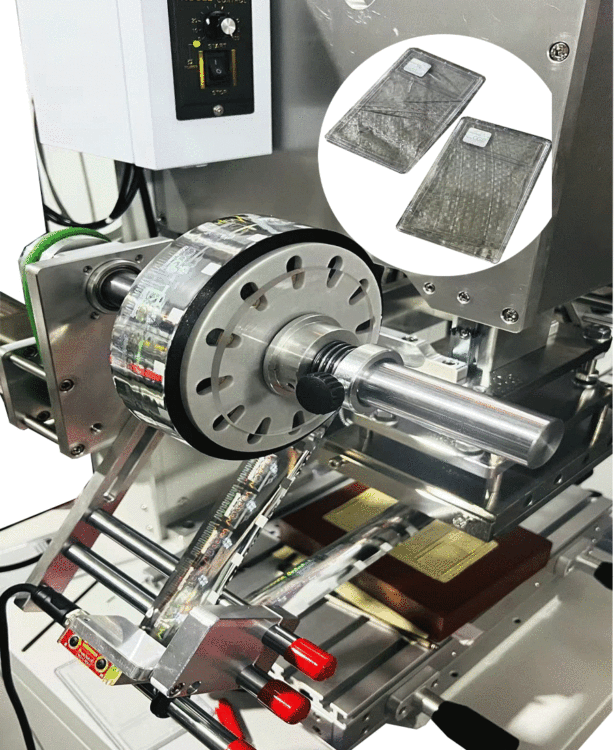
Holographic foil positioning stamping is a specialized hot stamping process that combines laser holographic patterns with precision positioning technology.
Customized holographic designs are produced on continuous transfer film, with registration marks added at preset intervals. During production, an optical sensor detects these marks and controls the foil feeding distance and stamping position.
The machine then applies controlled heat and pressure to transfer the holographic pattern and adhesive layer directly onto the designated area of the plastic housing.
Compared with conventional security stickers, this process eliminates manual label positioning errors and improves production consistency. Combined with customized holographic patterns, microtext, and special optical effects, it enhances product security and makes counterfeiting more difficult.
2.1 Main Features of Holographic Security Foil
-
Dynamic Optical Effects: Holographic patterns display rainbow-like colors, brightness variations, and other optical effects when viewed from different angles.
-
Customized Brand Designs: Exclusive holographic patterns can be developed according to customer requirements, including brand logos and product identification marks.
-
Special Security Patterns: Microtext, geometric graphics, and complex line structures can be incorporated to increase the difficulty of reproduction.
-
Precise Pattern Transfer: The holographic design can be transferred to a designated position on the product using an optical registration system.
-
Combined Decoration and Security: The process enhances product appearance while providing brand identification and anti-counterfeit marking.
It is important to note that holographic patterns alone cannot completely prevent counterfeiting. For electronic products and communication equipment requiring higher security levels, customized holographic designs can be combined with serial numbers, unique identification codes, and other security technologies to establish a multi-layer anti-counterfeit system.
3. Technical Requirements for a High-Precision Laser Holographic Foil Stamping Machine
Holographic security marks are often relatively small and require high positioning accuracy, consistent transfer quality, and precise registration. Therefore, conventional hot stamping machines may not meet the requirements of these applications.
A professional high-precision holographic foil stamping machine should provide stable stamping pressure, accurate positioning, reliable temperature control, and an automatic foil feeding system.
The main technical configurations include:
3.1 PLC + HMI Touchscreen Control System
The machine adopts an industrial PLC control system combined with an HMI touchscreen interface.
The system provides centralized control of machine operation, stamping parameters, foil feeding distance, working cycles, and production counters.
Operators can adjust production parameters according to different product and process requirements, improving operational convenience and production stability.
3.2 Servo-Controlled Stamping System
The stamping mechanism is driven by a servo motor to achieve precise control of stamping position, movement stroke, and operating speed.
Compared with conventional mechanical control systems, servo control helps improve repeatability and positioning accuracy, making it particularly suitable for small holographic security marks and precision-positioned foil stamping applications.
3.3 High-Precision Optical Registration System
3.4 Independent Temperature Control System
3.5 Customized Product Positioning Fixtures
3.6 Automatic Servo Foil Feeding and Rewinding System
3.7 Optional CCD Vision Positioning System
3.8 Automated Worktable and Production Configurations
Different worktable configurations can be selected according to product dimensions, shapes, and production efficiency requirements.
-
Fixed Worktable: Suitable for products with simple structures and relatively small production volumes.
-
Automatic Sliding Worktable: Suitable for applications requiring manual loading and unloading while maintaining stable stamping positions.
-
Multi-Station Rotary Indexing Table: Suitable for mass production, allowing continuous operation through multiple working stations.
-
Automatic Loading and Unloading System: Can be integrated with industrial robots to automate product loading, positioning, stamping, and unloading.
For products made from polypropylene (PP) and other low-surface-energy plastics, additional surface treatment may be required if adhesion tests indicate insufficient bonding performance.
Flame treatment or plasma treatment can be installed before the stamping station to improve surface wettability and adhesion conditions.
4. Suitable Plastic Materials and Process Selection
Different plastics have varying surface energies and heat resistance, affecting holographic foil selection and stamping performance.
First, select foil with an adhesive layer compatible with the plastic material. Then conduct sample tests to optimize stamping temperature, pressure, and dwell time.
If adhesion remains insufficient, additional surface treatment may be considered. However, pretreatment is not always necessary, as excessive treatment may affect product appearance or material properties. The final process should be determined through testing.
| Plastic Material | Stamping Suitability | Process Considerations |
|---|---|---|
| ABS | Good | Select holographic foil specifically designed for ABS and control stamping temperature and pressure |
| PC | Good | Carefully control temperature, pressure, and dwell time to avoid thermal deformation or stress damage |
| PVC | Good | Select holographic foil compatible with PVC surface characteristics and consider the material's heat resistance |
| PP | Requires careful validation | Due to its low surface energy, test specialized holographic foil first; flame, plasma, or corona treatment may be required |
| PET | Requires material testing | Consider surface coatings, film structure, and heat resistance when selecting the transfer adhesive layer |
5. How to Select the Right Holographic Foil Positioning Stamping Machine
When selecting equipment for holographic anti-counterfeit stamping on electronic and communication equipment housings, it is important to consider more than just the stamping area and production speed.
The following factors should be evaluated:
- Product Material: Identify the plastic material and its existing surface treatment condition.
- Product Structure: Determine whether flatbed or curved-surface hot stamping is more suitable.
- Pattern Dimensions: Select an appropriate stamping head and worktable according to the size of the holographic security mark.
- Positioning Accuracy: Choose between optical registration and CCD vision positioning according to the required alignment precision.
- Production Efficiency: Select a fixed worktable, automatic sliding worktable, or multi-station rotary indexing table according to production volume.
- Adhesion Requirements: Conduct actual stamping tests to determine the appropriate foil type and whether pretreatment is necessary.
- Automation Level: Configure automatic foil feeding, rewinding, loading, unloading, and tension control according to production requirements.
Since electronic product housings vary in structure, material, and holographic pattern requirements, it is recommended to provide product samples, stamping artwork, and holographic foil materials for actual testing before equipment design and manufacturing.
By selecting the appropriate machine structure, positioning system, and stamping process, manufacturers can achieve precise holographic pattern transfer onto plastic housings while meeting the requirements of the electronics, telecommunications, and premium packaging industries.
6. KC Customized Automatic Precision Holographic Foil Stamping Solutions
KC Printing Machine specializes in the development and manufacturing of industrial automation equipment, including screen printing machines, pad printing machines, hot foil stamping machines, and heat transfer printing machines.
For holographic anti-counterfeit stamping applications on electronic product housings, communication equipment enclosures, and premium packaging products, KC provides customized equipment solutions according to product dimensions, material characteristics, pattern positioning requirements, and production capacity.
Available machine configurations include:
- PLC + HMI touchscreen control system
- Servo-driven precision stamping mechanism
- Photoelectric holographic foil registration system
- Optional CCD vision positioning system
- Automatic servo foil feeding and rewinding mechanism
- Automatic foil tension control system
- Customized product positioning fixtures
- Automatic sliding worktable or multi-station rotary indexing table
- Optional flame or plasma surface treatment system