
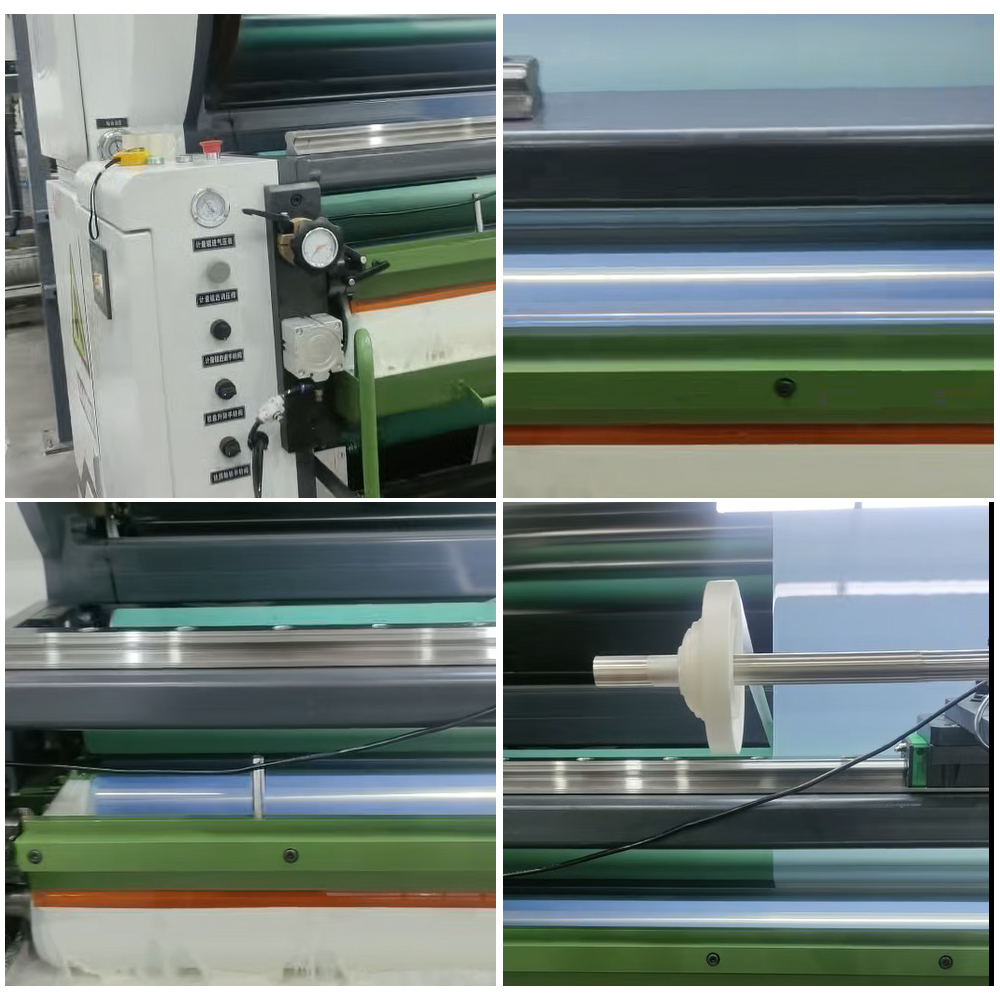
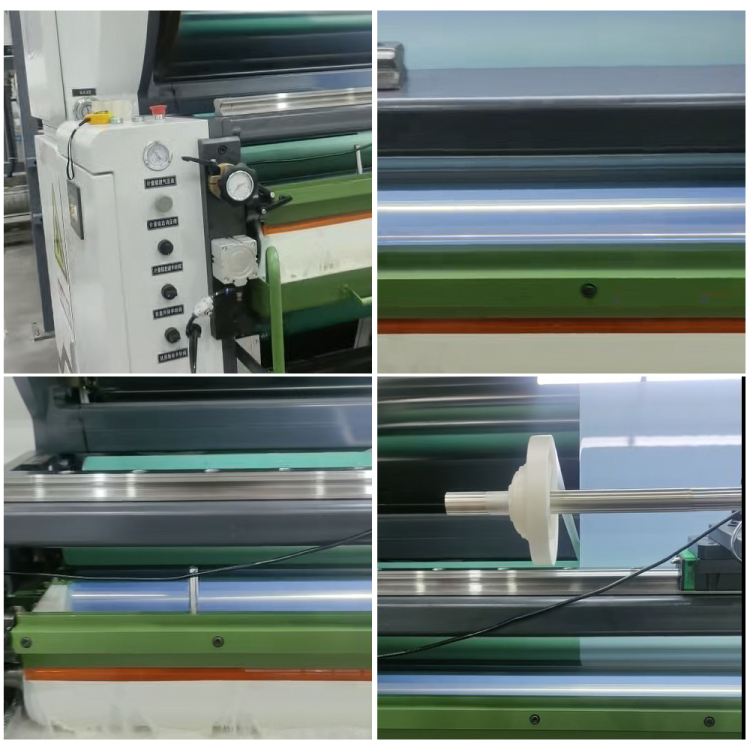
In lamination, nip pressure is the parameter most often copied from one job to another as if it were a single universal number. Change the machine, the paper grammage, the film or the adhesive, and the right setting changes with them. The more common mistake is to remember the number and forget the unit. On a continuously running packaging printing line, a pressure setting that is slightly wrong rarely stops production. It accumulates as bubbles, delamination, roller marks and adhesive squeezed out at the edges, and turns up later as reject material and rework in a batch.
Read the gauge unit before the number
On many shop floors the pressure for a standard job is remembered as a bare figure such as one hundred to one hundred and fifty. Without a unit, that figure is not a process parameter at all. Gauges on different machines are marked in kilopascals, in kilogram-force or in megapascals; two readings can look similar on the dial and differ by close to two orders of magnitude once converted. Copying a dial reading from one line to another, or from one shift to the next, applies a completely different pressure to a different machine.
The order of work matters: first confirm the unit and the range of the gauge, then confirm whether the value is a gauge pressure or a linear nip load across the roll face, and only then write it into the process card. The quotation, the operating manual and the gauge on the machine all have to use the same convention before a written setting means anything.
How too little and too much pressure leave different marks
- Too little. The adhesive does not flow into the microscopic valleys of the paper surface, so contact at the interface is incomplete. Bubbles and delamination show up first on heavy solid ink coverage, large ink areas or rough paper, and peel strength falls with them.
- Too much. The paper shows pressure marks and uneven gloss, adhesive squeezes out at the edges, and the finished reel can end up with stretched film and a poor roll shape.
Both are usually blamed on the adhesive. Before changing the glue, write down the pressure reading, the line speed, the substrate and the adhesive batch together; otherwise the same fault finding loop starts again from the beginning on the next job.
Why one end of the batch can behave differently
When pressure is not the same at the two edges of the web, the left and right sides of the same reel are bonded differently, and one batch appears to alternate between good and bad. This kind of deviation usually does not come from the set value. It comes from the surface accuracy of the nip rollers, the consistency of roller diameters, the parallelism of the gap between rollers, and the rigidity of the frame and the loading mechanism over long runs.
The check is straightforward: examine appearance and peel strength at the left, centre and right of the web, and log the readings before and after a reel change and through acceleration and deceleration. If the three points keep showing a difference in the same direction, look at the mechanical conditions first instead of trimming the set value again.
What to check when specifying and accepting a line
Turning pressure from an operator's feel into a list of checkable items means recording the following at the material trial:
| Item to check | How to measure it | What to write in the process card |
|---|---|---|
| Gauge unit and range | Read the machine nameplate, the pressure gauge and the manual | Unit, range, and whether the value is gauge pressure or linear nip load |
| Set value versus actual reading | One reading at low, normal and high speed | The three readings and their deviation |
| Cross-web uniformity | Appearance and peel strength at left, centre and right | Three results and the verdict |
| Transition stability | Log pressure through a reel change and a speed ramp | Fluctuation band and recovery time |
| Mechanical conditions | Verify roller surface finish, gap parallelism and the loading method | Specification items that match the quotation and acceptance sheet |
What can be checked in published specifications is the nip roller configuration and the loading method, for example the pairing of a mirror roller with a pressure roller. The exact configuration follows the actual quotation, so treat these as catalogue items to verify rather than performance claims. The water-based dry laminating machine specification lists the published figures for comparison; it does not give a pressure value for a particular plant's job.
Keep pressure on the same process card as the other two readings
Pressure is not an independent setting. Coat weight decides how much pressure the adhesive layer needs to fill the microscopic valleys of the paper. The temperature of the drying section and of the laminating roller decides the state of the adhesive at the moment it reaches the nip. Once the three readings are recorded separately, it becomes hard to tell which one moved first when bubbles or delamination appear.
Set up one baseline process card during the material trial, using your own substrate: substrate structure, paper grammage, film, adhesive batch, line speed, coat weight, pressure unit and reading, both temperatures, and the appearance and peel strength results, all on one page. Six months later, that card is what tells you whether the machine has drifted, not a sentence saying the line seems stable. Plants running short runs with frequent changeovers reset the process far more often, so the transition rows in the table deserve particular attention, and the nameplate speed versus real output calculation explains why those speed changes keep happening.
Start with readings from your own line
If you are evaluating water-based dry roll-to-roll laminating equipment, send us your substrate structure, paper grammage, web width and current line speed. We will put together the pressure points worth recording on your line, so the material trial can be measured against them. When bubbles or delamination show up, the lamination defect troubleshooting guide gives the order of checks to run before the adhesive is changed, and the energy cost and payback worksheet applies the same discipline of replacing a catalogue claim with measured numbers. If the process route itself is still open, start with the comparison of water-based, thermal and solvent-free lamination.
Frequently asked questions
Is there a standard nip pressure we can copy from another line?
No. A number without a unit and a stated convention is not a process setting. Gauges are marked in different units, and the same job can need a different value when the paper grammage, film, adhesive or running speed changes. Read the gauge unit and range on the machine in front of you, then establish the value during a material trial on your own substrate.
Why do bubbles appear even when the adhesive has not changed?
Pressure below what the substrate needs leaves the adhesive unable to wet the paper surface, particularly on heavy solid ink coverage or rough stock. Check the pressure reading, line speed, substrate and adhesive batch together before changing the glue. Drying conditions and coat weight belong in the same check.
How do we check whether both sides of the web are pressed equally?
Take appearance and peel strength readings at the left, centre and right of the web at normal running speed, and repeat them after a reel change and through a speed ramp. A repeating difference in the same direction points to roller surface accuracy, diameter consistency, gap parallelism or frame rigidity rather than to the set value.
Can we run a trial with our own paper and film?
Yes. A material trial at our Foshan factory can be arranged with your own substrate. Tell us the substrate structure, paper grammage, web width and target output in advance so the line is set up for a meaningful run, and so the readings can be written into a baseline process card.
About Senruiyuan
Senruiyuan is based in Foshan, Guangdong, and builds roll-to-roll laminating, printing and post-press equipment for water-based dry and pre-coated film process routes. If you would like a pressure recording sheet for your own line, send your substrate structure, paper grammage, web width and current line speed. Use the enquiry form on this site, or the contact details below.
Contact Senruiyuan
Foshan Senruiyuan Machinery Technology Co., Ltd.
Email: [email protected] | WhatsApp: +86 17328088404
No. 8, Jinxian, Jinli Community, Lishui Town, Nanhai District, Foshan, Guangdong, China