

Segmentation by Product Type
- Conventional Fluid Bed Dryers: Standard vertical flow designs for dairy powders, lactose, and grain-based products; emphasis on uniform heat transfer and simple control architectures for cost-sensitive applications.
- Co-Current and Counter-Current Fluid Bed Dryers: Differing air-particle contact regimes; counter-current designs typically yield lower surface temperatures and improved moisture removal for heat-sensitive compounds, appealing to pharma and nutraceutical segments.
- Granulation-Integrated Fluid Bed Dryers: Combined drying and granulation capability (GGP or agglomeration features) enabling in-line particle growth, reducing handling steps for pharmaceutical excipients and specialty chemicals.
- High-Efficiency or Low-Temperature Dryers: Enhanced insulation, energy-recovery exhaust, and inert-gas options for heat-sensitive materials and sterile manufacturing environments.
- Robust, Hygienic Cleanroom-Ready Systems: CIP/SIP-enabled designs tailored for GMP-compliant food and pharmaceutical facilities; emphasizes contamination control and rapid changeover capability.
- Modular, Retrofit-Compatible Units: Scalable platforms designed for phased capacity expansion, essential for regions with volatile demand or retrofit-driven modernization programs.
Segmentation by Technology
- Direct Drying with Air or Inert Gas: Core technology enabling rapid moisture removal with controlled carrier gas; suitable for pharmaceutical powders and foods with low thermal sensitivity.
- In-Line Moisture Sensing and Feedback Control: Real-time moisture measurement (near-infrared or terahertz technologies) feeding automated control loops to minimize over-drying and energy waste.
- Closed-Loop Gas Recirculation: Energy recovery and reduced solvent emissions; increasingly mandated in regulatory environments and clean manufacturing contexts.
- Integrated Granulation and Drying (GGP): In-line granulation steps reduce process steps; favored in excipients and agrochemical processing where agglomeration quality matters.
- CIP/SIP-Ready Hygienic Platforms: Sanitary designs for food and pharma segments; emphasis on cleanability and sanitation cycles.
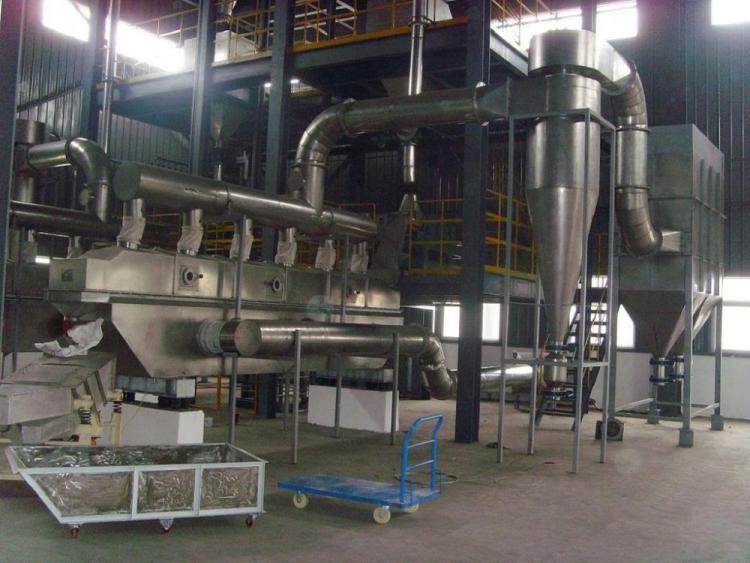
Segmentation by Application
- Pharmaceutical Excipients and APIs: Drying of milled powders, granules, and moisture-sensitive APIs; strict control of residual solvents and moisture.
- Food and Nutraceuticals: Drying of powders, flavors, enzyme preparations; focus on particle uniformity, microbial safety, and shelf-stability.
- Fine Chemicals and Agrochemicals: Granulated intermediates and finished products requiring precise moisture control and minimal thermal degradation.
- Ceramics and Specialty Materials: Drying of ceramic powders and catalysts where particle integrity and porosity must be maintained.
- Biotech and Fermentation Residues: Specialized drying of biological materials under controlled temperatures to preserve activity in downstream processing.
- Petrochemical Additives: Inert-gas dried powders used in coatings and lubricants with stringent contamination controls.
Segmentation by End-User Industry
- Pharmaceuticals and Contract Manufacturing Organizations (CMOs): Demand for GMP-compliant, scalable, and traceable drying lines with validation packages.
- Food & Beverage: Requirements around hygienic design, energy efficiency, and line-speed compatibility for batch-to-batch consistency.
- Chemicals and Agrochemicals: Emphasis on material handling, solvent management, and throughput for complex formulations.
- Ceramics and Materials Processing: Reliability under high abrasion and robust maintenance programs; focus on consistent porosity outcomes.