
|
|
|
|
Published: November 2026 |
By BQD Engineering Team |
1. What Did QMSR Actually Change for a Pump Supplier?
Part 820 was retitled the Quality Management System Regulation and now incorporates ISO 13485:2016 by reference with FDA-specific additions; on 2 February 2026 the FDA also retired the QSIT inspection checklist in favour of compliance program 7382.850. For a component maker, three consequences matter more than the renaming.
- Risk management now spans product realisation. The old QSR asked for risk analysis mainly inside design controls. QMSR expects risk controls across purchasing, production, process validation and change management — exactly the stages a compressor pump touches.
- Previously exempt records are in scope. Internal audit findings and supplier audit records that once fell under the 820.180(c) exemption can now be reviewed by an investigator. A supplier whose quality agreement promises "full audit access" will actually be asked to prove it.
- A certificate is not a compliance claim. FDA states plainly that an ISO 13485 certificate does not demonstrate QMSR compliance and does not prevent inspection. Buyers who treat the certificate as the finish line are behind the curve.
The scope question causes the most confusion. Buyers ask us to summarise the FDA QMSR 2026 requirements for oxygen concentrator component suppliers in one line, and the honest answer is that Part 820 generally does not apply directly to makers of components or parts — the FDA encourages them to consider its provisions, while the finished-device manufacturer remains responsible for applying suitable, risk-based controls to suppliers. In practice that responsibility lands on the OEM's QMS and flows down as contract terms, audit rights and documentation duties.
|
Dimension |
ISO 9001 |
ISO 13485:2016 |
What QMSR/KMS means for a pump supplier |
|
Primary focus |
Customer satisfaction, continual improvement |
Safety, effectiveness, regulatory compliance |
OEM needs evidence, not just a certificate |
|
Risk |
General risk-based thinking |
Risk management across product realisation |
Risk file must cover production and changes |
|
Documentation |
Flexible |
Many mandatory procedures and records |
Auditors ask for the records, not the manual |
|
Validation |
Limited expectation |
Processes and software where output cannot be verified |
Pump test and end-of-line software must be validated |
|
Post-market |
Customer feedback |
Complaints, vigilance, recall support |
Supplier must feed field failures back to OEM |
|
Change control |
General |
Documented, customer-notified where relevant |
Unannounced pump revision can void OEM certification |
✅ Bottom line: QMSR regulates the OEM, but its supplier-control clause turns ISO 13485-style evidence into a commercial requirement for every critical pump source.
2. What Will a Concentrator OEM Ask You to Prove?
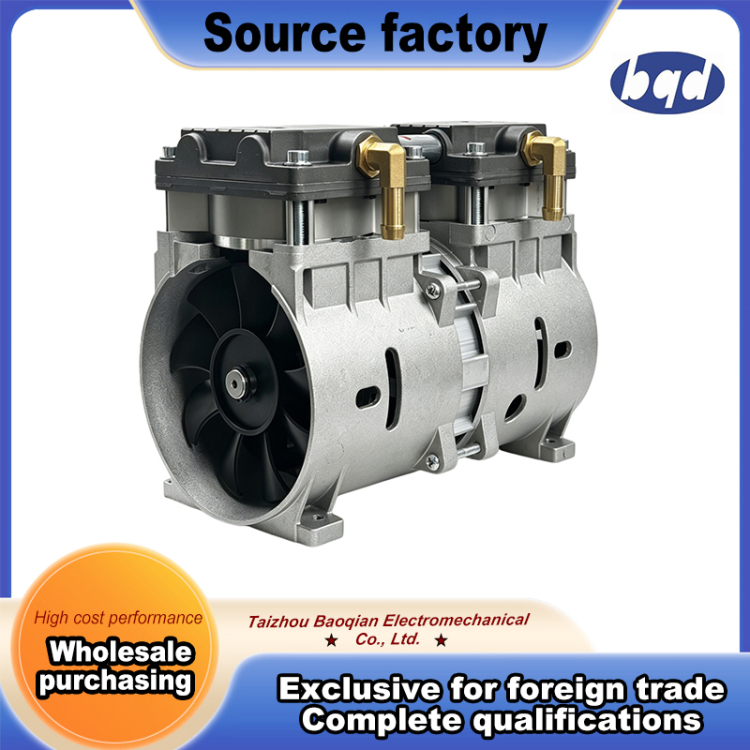
Expect the audit to focus on traceability, change notification and validated processes — not on the wall certificate. A pump is a critical component because it determines sieve pressure and oxygen purity; under risk-based supplier controls it sits in the same tier as the sieve bed and the valve block. When an OEM evaluates an ISO 13485 certified compressor pump supplier for medical oxygen concentrator production, these are the five evidence packages that decide the outcome.
- Traceability. Medical device compressor component traceability serial number requirements are usually defined by the OEM's own QMS rather than a universal rule: a unique pump serial, linked to material lots, build date, test record and shipped destination, retained for the agreed period. Traceability is what makes a recall surgical instead of a full-market withdrawal.
- Change notification. A winding supplier change, a valve material substitution or a firmware update on the test rig must be reported in writing before shipment. Undisclosed changes are the fastest way to invalidate an OEM's device certification.
- Process validation. Processes whose output cannot be fully verified — sealing, welding, bonding, software-driven end-of-line testing — need documented validation and revalidation after significant change.
- Complaint and CAPA support. Field failures must reach the quality team, be risk-assessed, and be reportable to the OEM within the quality agreement's timeline.
- Quality agreement. Roles, audit rights, retention periods and notification windows must be written down. Verbal understandings do not survive an inspection.
|
Evidence package |
What the OEM asks for |
Common supplier gap |
|
Serial/batch traceability map |
One pump serial → material lots, test data, ship-to |
Test record not linked to serial |
|
Process validation file |
Validation protocol, results, revalidation trigger |
Validated once, never revisited after change |
|
Software validation |
Test-rig software version control and validation |
Off-the-shelf tool used unvalidated |
|
Change-control log |
Dates, impact assessment, customer notification copy |
Change made, OEM told at invoice stage |
|
Complaint/CAPA record |
Trend data, root cause, corrective action closure |
Complaints stay with sales, never reach QA |
For buyers comparing sources, BQD publishes lot-level flow-pressure data and serial-linked test records, and operates change-notification and traceability procedures built on its ISO 9001 QMS — we do not claim an ISO 13485 certificate we do not hold, and we tell OEMs exactly where our system meets their expectation and where a gap analysis is still needed. That transparency is increasingly what quality teams score highest.
✅ Bottom line: Win the audit with serial-linked records, notified changes and validated processes — not with a framed certificate.
FAQ
Q: Do I legally need an ISO 13485 certified compressor pump supplier for medical oxygen concentrator production?
A: Not by statute for components — Part 820 generally does not apply directly to component makers. But the OEM's QMSR supplier controls usually make it a contract requirement for critical parts, so in practice it is the entry ticket.
Q: Does an ISO 13485 certificate prove QMSR compliance?
A: No. FDA states it does not. QMSR adds US-specific expectations on complaints, reporting, labelling and records, and FDA may inspect regardless. Buyers should audit the system, not just the certificate.
Q: What does the FDA QMSR 2026 requirements for oxygen concentrator component suppliers mean for documentation we must keep?
A: Keep serial-linked traceability, process and software validation, a change-control log with OEM notification copies, and complaint/CAPA records — with agreed retention periods written into the quality agreement.
Q: Can BQD support a customer's medical device compressor component traceability serial number requirements?
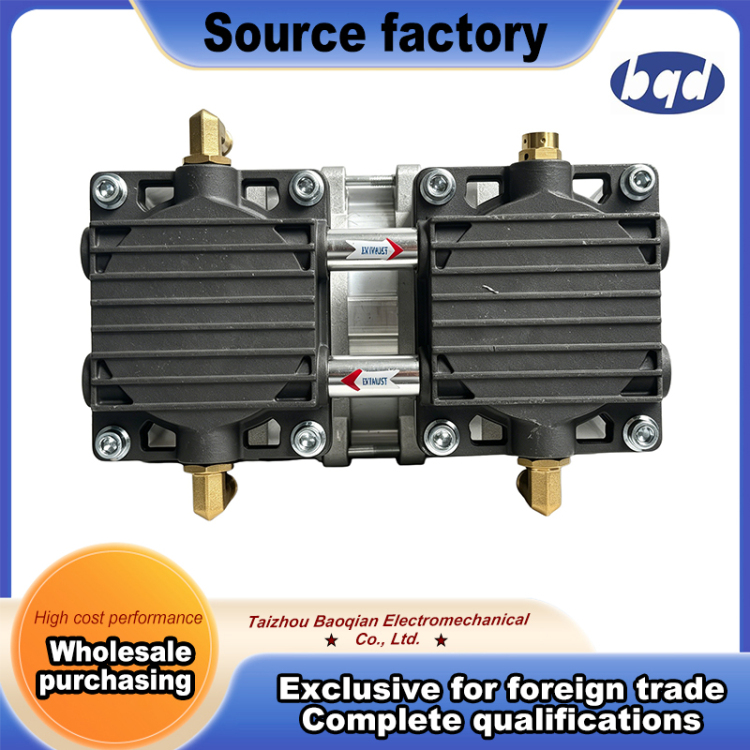
A: Yes. BQD (Taizhou Baoqian Electromechanical Co., Ltd.) supplies serial-linked test records and lot traceability from its ISO 9001-certified factory, with factory-direct pricing, bulk supply and ODM support for concentrator platforms worldwide.
CTA: Audit the System, Not the Logo
Send BQD your supplier questionnaire and quality-agreement draft, and our engineering team will return the traceability map, change-control procedure and lot-level test data your QA team needs. Taizhou Baoqian Electromechanical Co., Ltd. has built oil-free compressor pumps since 2007 under ISO 9001 and CE certification, supporting medical device OEMs with documented processes and factory-direct supply.