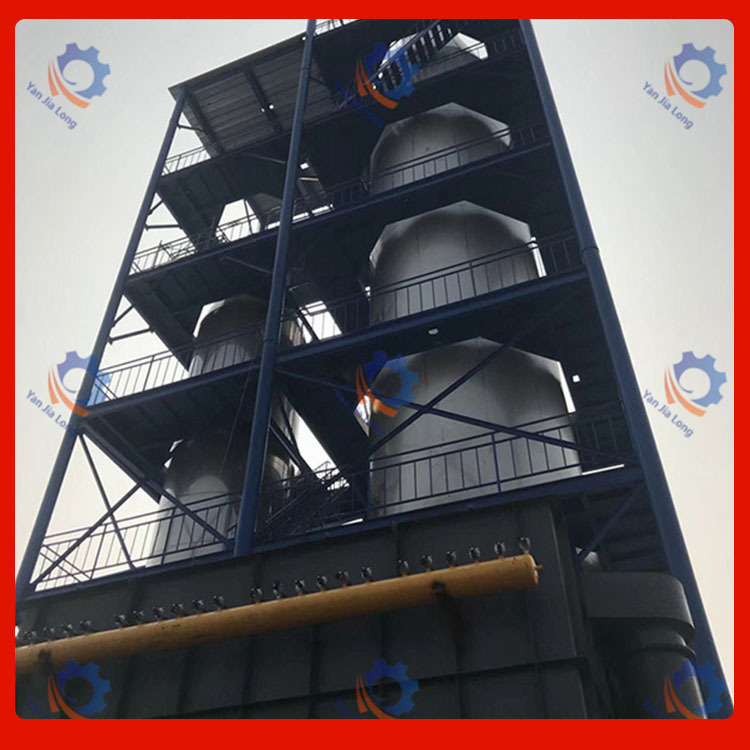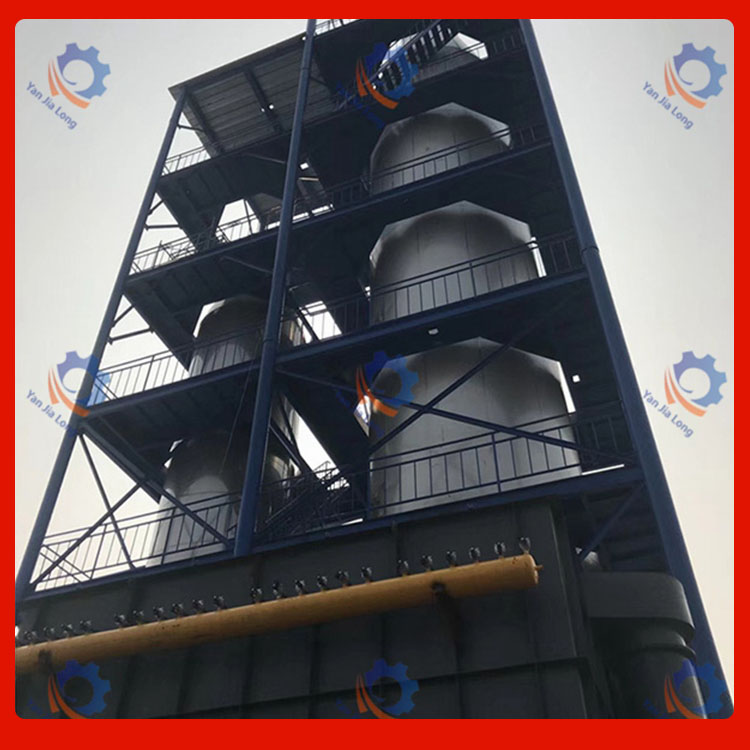
The Automated YPG Pressure Spray Drier Machine is a widely used drying equipment in the chemical, pharmaceutical, and food industries. Its core principle involves atomizing liquid materials with a high-pressure pump and spraying them into a hot air stream for instant drying. By precisely controlling the feed pressure and hot air temperature, the equipment ensures uniform dispersion of droplets within the tower and completes heat and mass exchange, ultimately forming granular or powdered products. The structural design of the Durable YPG Pressure Spray Drier Machine emphasizes sealing and pressure resistance, typically equipped with a high-pressure plunger pump, atomizing nozzle, drying tower, cyclone separator, and exhaust gas treatment system to meet the processing requirements of materials with varying viscosities and solid contents.
During operation, the YPG Pressure Spray Drier is highly sensitive to operating parameters. The spray pressure, inlet air temperature, and exhaust humidity must be adjusted based on material properties to prevent issues such as wall sticking, agglomeration, or uneven particle size. The equipment is typically constructed with stainless steel, meeting GMP or food hygiene standards. Key components like nozzles are prone to wear and require regular inspection and replacement to maintain atomization performance. Additionally, the system often integrates automatic cleaning devices and explosion-proof designs to enhance continuous operation safety and maintenance convenience.
As a typical representative of pressure spray drying, the Versatile YPG Pressure Spray Drier Machine is suitable for drying operations of solutions, suspensions, or emulsions with relatively low thermal sensitivity and good fluidity. Compared to centrifugal or air-jet spray dryers, it has relatively lower energy consumption and higher particle density, but its processing capacity is limited by the single-unit scale. In practical engineering applications, comprehensive selection is required based on the thermal stability of the material, target particle size distribution, and production capacity requirements, along with corresponding pretreatment and post-processing equipment to ensure the stability of the overall process and consistent product quality.