1. What changes when the same tank moves from food to cosmetic to chemical duty?
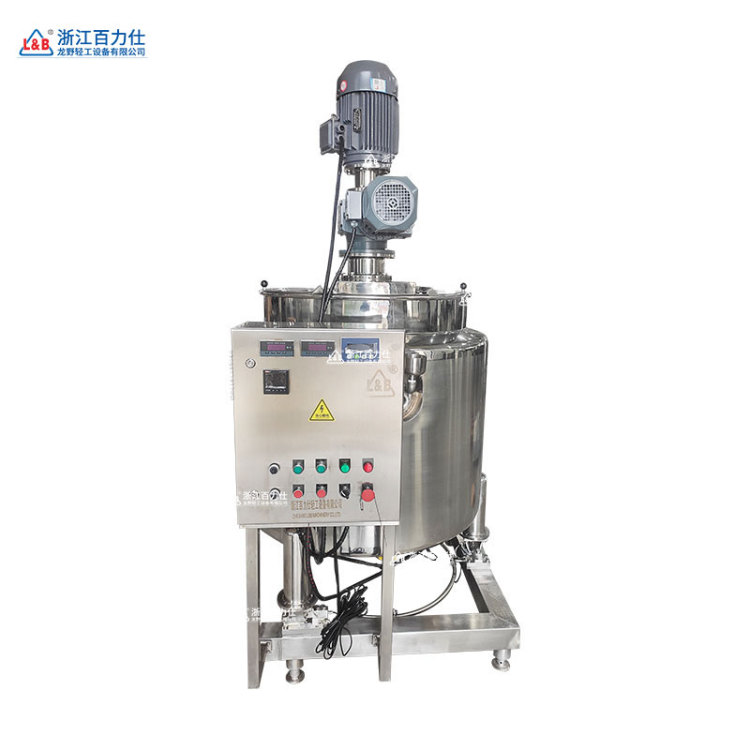
Four things change and one does not: finish, seals, water quality, and documentation are industry-specific; the shell mechanics — thickness by hydrostatic head, baffles, drainability — are universal.
|
Duty |
Material and finish |
Seals and wetted parts |
Documentation |
Typical extras |
|
Food and beverage |
304/304L, Ra ≤0.8 µm (32 µin) |
EPDM, FDA 21 CFR 177 |
FDA contact, 3-A where dairy |
CIP spray ball, jacket for sauces |
|
Cosmetic and personal care |
316L, Ra ≤0.8 µm |
EPDM or silicone, no dead legs |
GMP-style batch records |
vacuum deaeration, homogenizer, scraper |
|
Pharmaceutical |
316L electropolished, Ra ≤0.4 µm |
PTFE/silicone, sanitary tri-clamp |
full traceability, weld map, ASME |
WFI-grade water system, insulation |
|
Chemical and water treatment |
316L for chloride duty, +1 mm corrosion allowance |
FKM/PTFE, matched to medium |
material certs, pressure certs |
ATEX motor, agitator for solids, thicker shell |
Two contrasts are worth spelling out. Between food and pharma, the difference is documentation depth as much as hardware: both can run Ra ≤0.8 µm interiors, but a pharma audit wants heat-number traceability to every weld, which costs 10–20% more in paperwork and inspection, not in steel. Between food and chemical duty, the difference is chemistry: a sauce tank and a brine tank can share the same drawing, but the brine version must be 316L with a corrosion allowance, because 304 pits in chloride service within months.
Water quality cuts across all four rows and is the most frequently missed line. Water Storage Tanks in a food plant hold chlorinated municipal water, which 304 tolerates at ambient temperature. A cosmetic plant stores purified water, which demands 316L, minimal dead legs, and low-conductivity fittings. A chemical site storing brine or process water with chloride needs 316L plus an allowance — same word "water," three different specifications.
✅ Bottom line: The product — not the tank shape — decides finish, seals, and paperwork; getting those three right per industry is most of the difference between a compliant vessel and an audit finding.
2. Which decisions are industry-specific, and which are universal?
Get the universal ones right once — thickness, geometry, drainage — then buy the industry layer (finish, seals, documentation) exactly at the depth your auditor requires.
✅ Universal, whatever the duty. Shell thickness follows hydrostatic head (3 mm bottom course on vessels over 3 m), a single-gauge shell is always wrong somewhere, baffles at one-tenth of the diameter stop vortex swirl, and the bottom must drain fully — a flat bottom with a raised outlet is a contamination and corrosion liability in every industry.
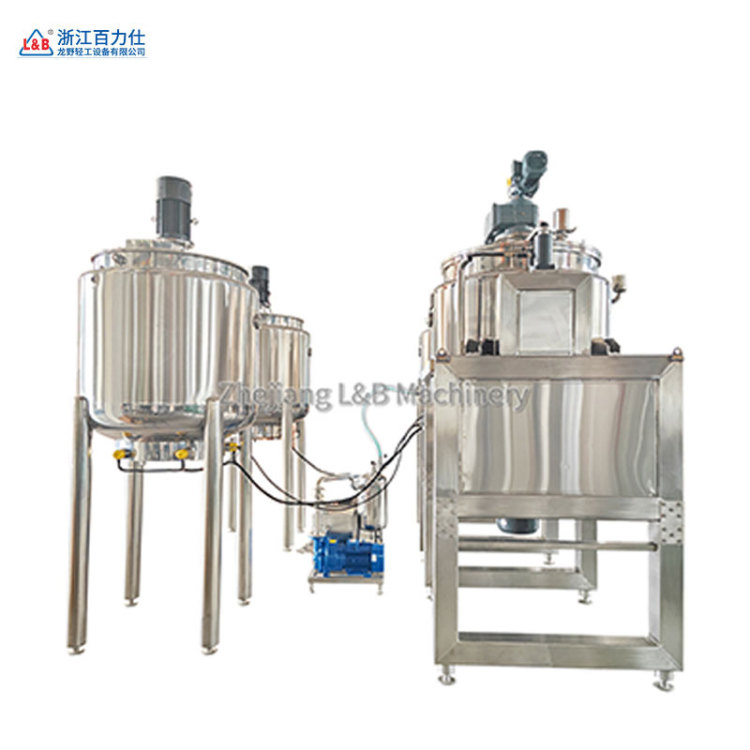
✅ Food and beverage. Spend on CIP and drainability, not on exotic alloy. 304 with Ra ≤0.8 µm covers most duties, including the plant's Water Storage Tanks for process and CIP water; jacket the sauce and dairy tanks, add spray balls, and the audit needs are FDA contact compliance plus 3-A if dairy is involved.
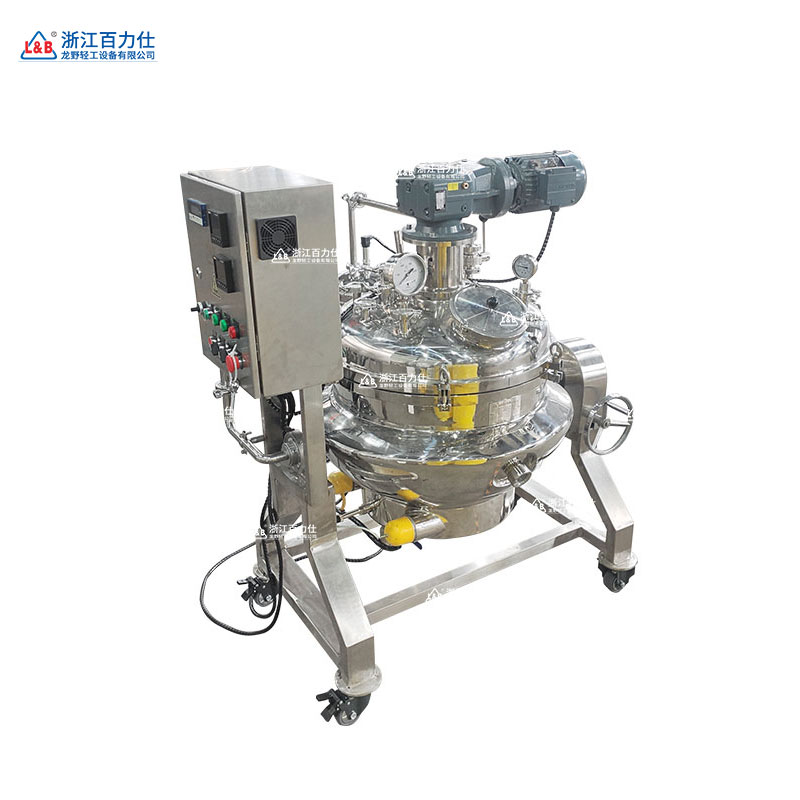
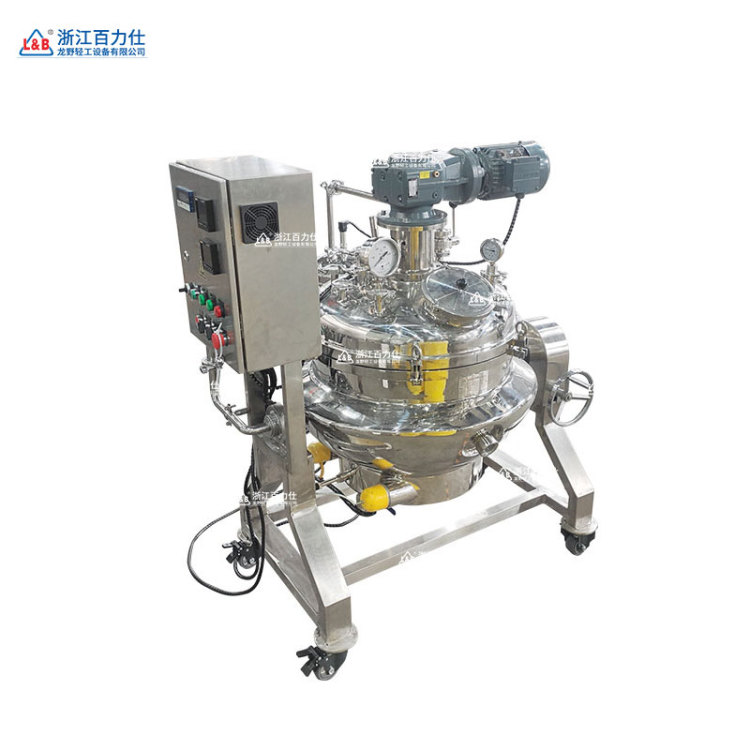
✅ Cosmetic and personal care. The product is the finish and the vacuum. Creams and serums entrain air that ruins texture, so vacuum deaeration and a scraper or homogenizer matter more than extra shell thickness. Batch record format matters more than the nameplate.
✅ Pharmaceutical. The documentation is the product. Electropolished interiors, sanitary tri-clamp everything, orbital welds with a map, ASME stamping where pressure applies. A tank without its paperwork is, for audit purposes, not a tank.
✅ Chemical and water treatment. The duty is corrosion and safety. Match the seal to the medium (FKM or PTFE), add the corrosion allowance, specify ATEX motors where solvents are present, and keep chloride-bearing service in 316L or better.
Across all four, the resale and expansion argument favours one fabrication standard: vessels built to documented specifications retain value and re-deploy between plants. L&B Machinery builds Industrial Tanks from 100 L to 50,000 L across these four duty classes, in 304L or 316L, jacketed or plain, and regularly ships Custom Tanks where a chemical plant's existing bund, a cosmetic line's low ceiling, or a food plant's CIP header dictates the geometry rather than the catalogue. OEM and ODM builds carry the customer's nameplate with the full documentation package behind it.
✅ Bottom line: Nail the universal mechanics once, then spend the industry layer — finish, seals, documentation — exactly where your auditor and your chemistry demand it.
FAQ
Q: Can one tank serve both food and cosmetic production? A: Physically yes if it is 316L at Ra ≤0.8 µm with CIP and full drainage — cosmetics are the stricter of the two on finish and cleanability. The catch is validation: cosmetics want batch records and a no-dead-leg geometry that a basic food tank lacks, so most plants keep the lines separate.
Q: Why does chemical duty need a thicker shell than food duty? A: Corrosion allowance. Chemical service consumes wall thickness over time, so a 1 mm allowance is added on top of the hydrostatic calculation — plus 316L where chlorides are present. Food duty at ambient, neutral pH consumes almost no wall.
Q: Do you build Industrial Tanks to our industry's audit standard? A: Yes. ZHEJIANG L&B MACHINERY CO., LTD. supplies FDA and 3-A documentation for food, GMP-style traceability packages for cosmetic and pharma duty, and pressure-certified builds for chemical plants, on standard vessels or Custom Tanks to your drawing, with OEM nameplates and wholesale volumes both supported.
CTA: Send Your Product, Not Just Your Volume
Tell us what goes in the tank — product, temperature, chloride level, cleaning regime — and which auditor you answer to, and L&B Machinery will return a specification matched to the duty: material, finish, seals, documentation, and a factory-direct price. Standard builds ship in 20–35 days; OEM and ODM projects start from an approval drawing.