Industrial PLG Disc Dryer System for Continuous Drying
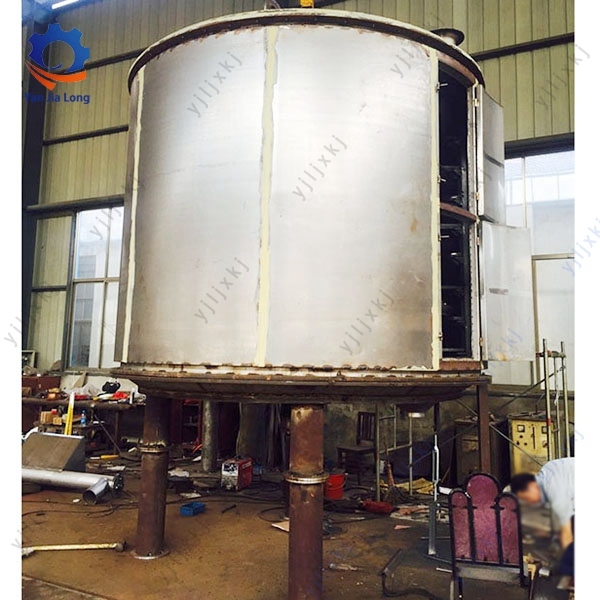
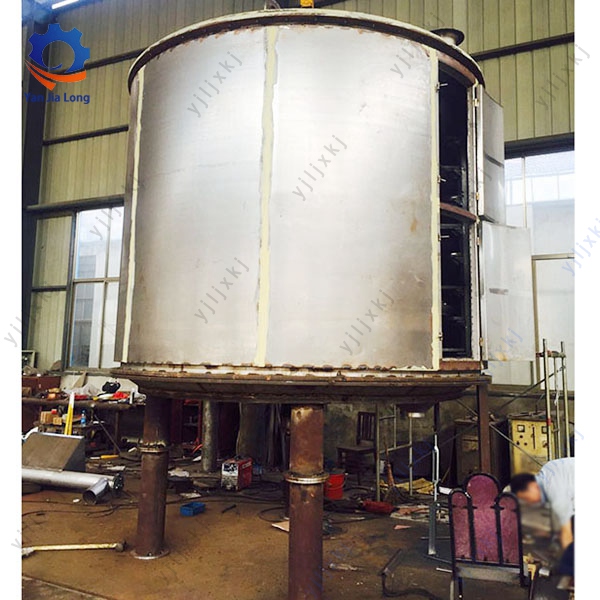
The PLG Series Continuous Disc Plate Dryer is an indirect conduction drying system designed for continuous processing of powders, granules, and crystalline materials across chemical, pharmaceutical, and food-grade production lines.
Working Principle
Material enters from the top and falls onto a series of heated horizontal discs arranged vertically within a sealed cylindrical shell. Rotating rake arms sweep material across each disc surface in alternating inward and outward spiral paths, ensuring uniform residence time and consistent heat transfer. Moisture evaporates through direct contact with steam- or thermal-oil-heated plates, while vapor exits through a dedicated exhaust port. The dried product discharges continuously from the bottom outlet.
Structural Features
The PLG Series Continuous Disc Plate Dryer consists of stacked disc plates (large and small diameter alternating), a central rotating shaft with adjustable rake arms, a jacketed shell, drive assembly, and feeding/discharging mechanisms. Disc spacing, rotation speed, and heating medium temperature are independently adjustable, allowing operators to control final moisture content without interrupting production flow.
Operational Characteristics
- Enclosed operation minimizes dust emission and solvent loss, supporting nitrogen-blanketed configurations for flammable or oxidation-sensitive materials.
- Low-speed mechanical agitation reduces particle attrition compared to rotary or flash dryers.
- Multi-zone temperature control permits staged heating profiles within a single unit.
- Compact vertical footprint suits facilities with limited floor space.
Application Scope
Typical materials processed include calcium carbonate, titanium dioxide, pesticide intermediates, starch derivatives, and polymer resins. The PLG Series Continuous Disc Plate Dryer accommodates feed moisture ranging from 5% to 60%, with throughput capacities scaling from laboratory units at 5 kg/h to industrial installations exceeding 5,000 kg/h. Material compatibility depends on corrosion-resistant plate construction options such as stainless steel 316L or carbon steel with specialized coatings.