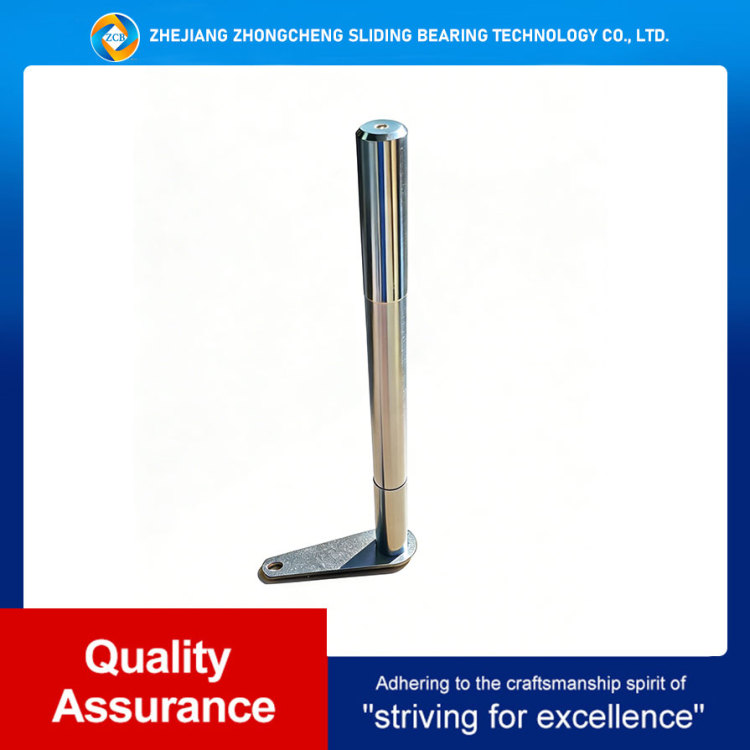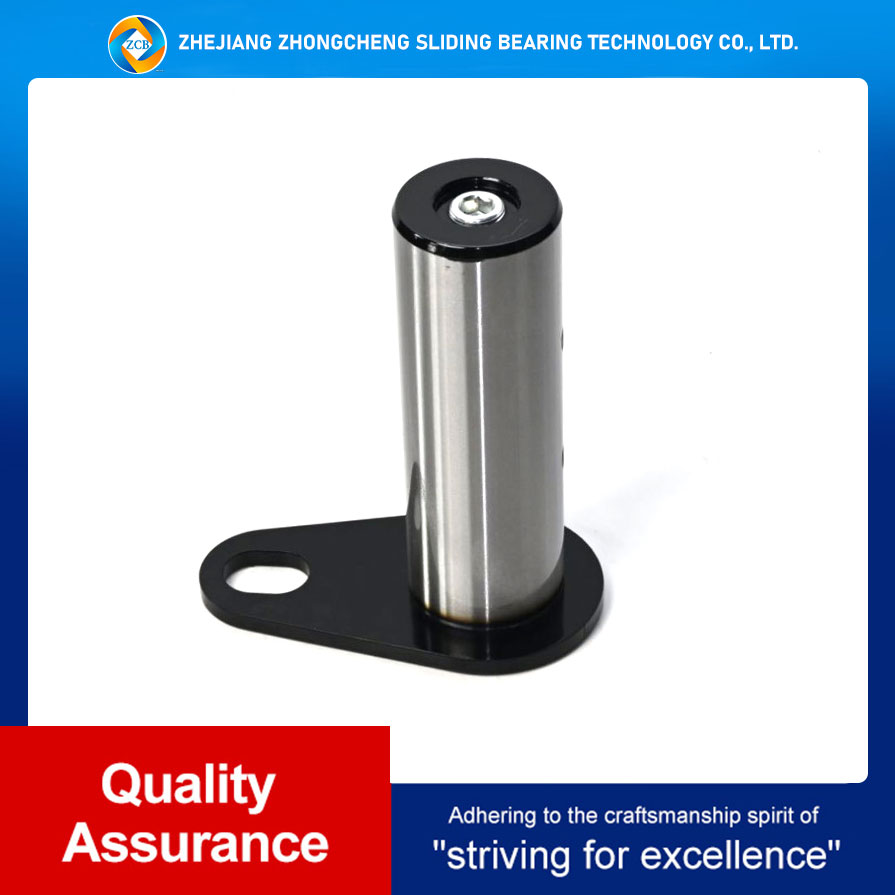
This comparison is written from the treatment floor. Zhongcheng — Zhejiang Zhongcheng Sliding Bearing Technology Co., Ltd., a National High-Tech Enterprise in Zhejiang, China — runs induction furnaces, salt bath nitriding lines and QPQ lines in-house on 200+ dedicated equipment sets, which is why we can specify case depth and salt-spray performance per batch rather than per brochure.
1. What Does Each Heat Treatment Actually Do to a Pin?
Each process builds a different kind of armor, and the failure it prevents tells you when to use it. Here is the head-to-head comparison:
|
Treatment |
Surface Hardness |
Case Depth |
Corrosion Resistance |
Best For |
|
Induction hardening (HF/MF) |
HRC 55–62 |
1.5–3.0 mm (to 5 mm) |
Low unless coated |
Shock loads, abrasion, excavator bucket pins |
|
Salt bath nitriding |
HRC 55+ (compound layer) |
0.1–0.7 mm diffusion |
High |
Corrosive + wearing duty, precision pins |
|
QPQ (nitride + polish + oxidize) |
HRC 55+ |
0.1–0.7 mm diffusion |
Highest, salt-spray proven |
Wet/coastal duty with tight tolerances |
|
Galvanized / nickel plating |
Base metal |
Coating only |
Medium–high |
Low-cost wet-duty pins, non-critical joints |
A few practical notes behind the table:
- Induction hardening creates a deep hardened skin over a tough core (HB 260–320). It is the only choice where the joint takes impact — bucket pins, demolition attachments, loader linkages. Its weakness is corrosion: an uncoated hardened pin will rust, so outdoor duty needs plating or a nitride variant.
- Salt bath nitriding diffuses nitrogen into the surface, forming a hard compound layer with low distortion. Because the part stays dimensionally stable, it suits high-quality pin shafts where tolerance matters more than raw case depth — scissor lifts, AWP pins, injection molding machinery.
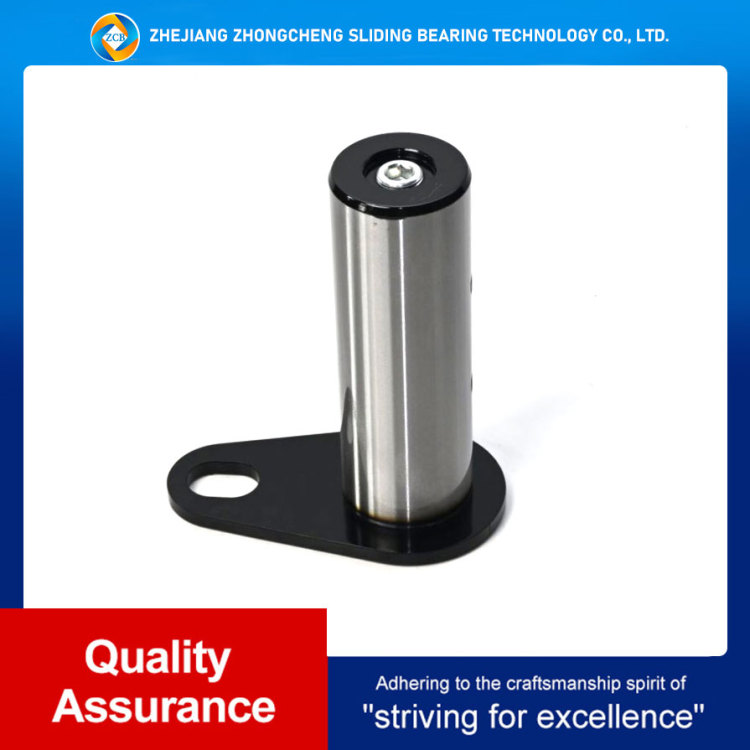
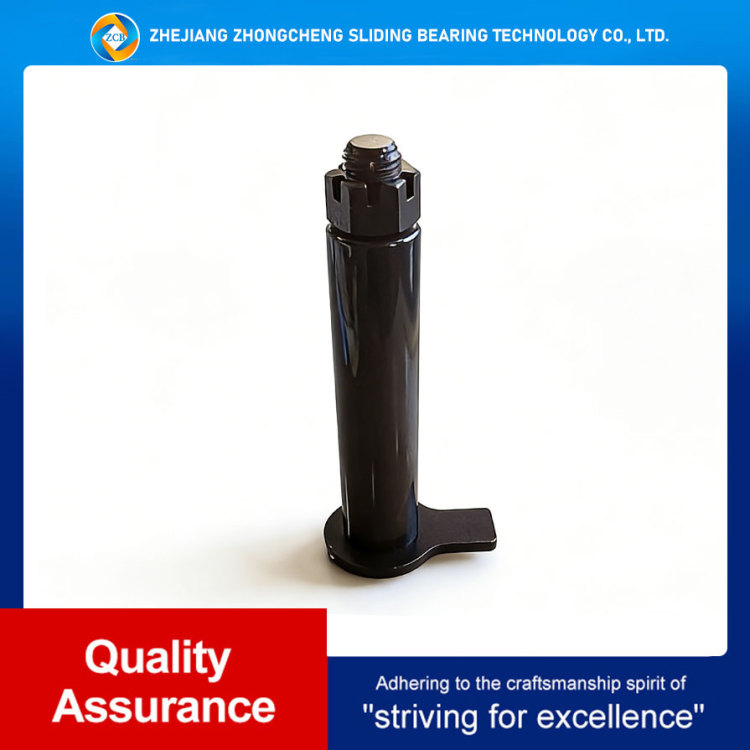
- QPQ adds a polish-and-oxidize step to nitriding, producing a black, low-friction, highly corrosion-resistant surface. It is the treatment for pins that live in salt fog, mud slurry or chemical exposure while still turning in a precision joint.
- Plating-only pins are the budget option — fine for light wet duty, but thin coatings pit in salt environments, and high-strength plated pins need hydrogen embrittlement baking, which not every low-cost supplier performs.
✅ Bottom line: Induction hardening for impact, nitriding for corrosion-plus-precision, QPQ for the harshest wet environments — choose by failure mode, not price.
2. How Do You Match the Treatment to Your Working Condition?
Start from the environment and load cycle, then work backwards to the treatment — and order both variants from one qualified series. A practical decision path:
- Quarry, mining, demolition — deep induction hardening (3–5 mm case) on 40Cr/42CrMo; the standard spec for durable pin shafts in shock duty, where corrosion is secondary to wear.
- Construction fleets, mixed duty — induction hardening plus zinc-phosphate or galvanized coating; the standard excavator/forklift combination.
- Coastal, port, agriculture, chemical — high-quality pin shafts with salt bath nitriding or QPQ treatment; no coating to pit or flake, corrosion resistance is in the surface itself.
- High-cycle precision joints (scissor lifts, aerial platforms, industrial machinery) — nitrided pins for dimensional stability and consistent batch geometry.
- Budget non-critical joints — galvanized carbon steel pins are acceptable where failure costs are low and duty is light.
One more selection rule buyers overlook: ask whether the supplier can hold all these variants on one drawing system. Sourcing induction-hardened bucket pins from one factory, nitrided AWP pins from another and QPQ variants from a third multiplies your inspection and qualification workload. Zhongcheng's pin shaft series runs to 22+ configurations — hardened, nitrided, QPQ, galvanized, nickel-plated, flanged and welded types — produced under one in-house process chain, so a fleet operator or distributor consolidates qualification once. As an ODM/custom manufacturer, we also build hybrid solutions, such as induction-hardened pins with QPQ finish, when a duty cycle demands both deep case and corrosion armor.
✅ Bottom line: Match treatment to environment and load first, then consolidate variants on one qualified pin shaft series to cut qualification cost.
FAQ
Q: Can one pin combine induction hardening and corrosion protection? A: Yes. We produce hardened pins with galvanized, nickel or QPQ finishing — a common combination for port and agricultural machinery. The treatment stack is chosen by your working condition, and every batch ships with hardness and coating-thickness reports.
Q: Which treatment gives the longest salt-spray life for wholesale orders? A: QPQ, consistently — the compound layer is integral to the surface rather than a deposited coating, so it cannot flake. Nitrided pins follow, then galvanized. For coastal fleets we recommend QPQ or nitrided variants from our durable pin shafts line.
Q: Does treatment choice affect lead time for OEM custom pins? A: Slightly. Induction hardening and plating are same-week steps; salt bath nitriding and QPQ cycles add 2–4 days. Standard wholesale quantities typically ship within 2–4 weeks depending on machining complexity.
CTA: Send Your Working Condition, Get the Right Treatment
Email your machine model, joint loads and site environment to Zhongcheng, and our engineers will specify the treatment — induction hardening, nitriding or QPQ — with a free quote and sample validation. Zhejiang Zhongcheng Sliding Bearing Technology Co., Ltd. offers OEM/ODM custom production factory-direct in China for distributors and equipment manufacturers worldwide.