
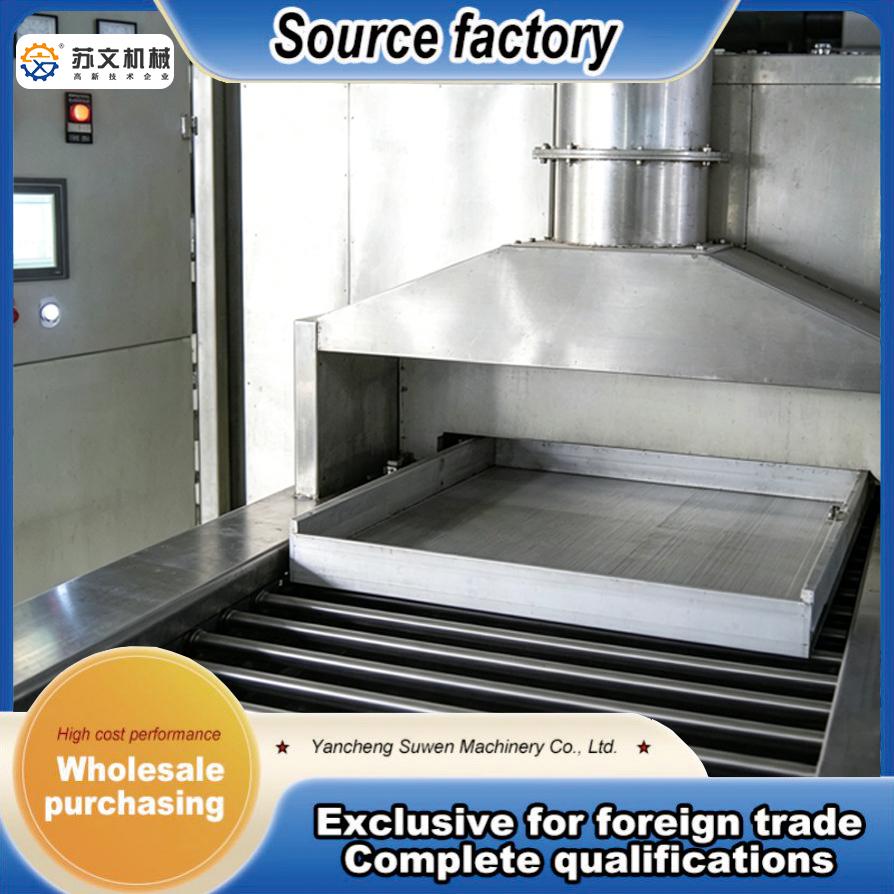
Storage orders are won on cost per kilowatt-hour, so the line must be configured around plate throughput per shift, not just technical specs. Yancheng Suwen Machinery Co., Ltd. has delivered cold plate and radiator brazing lines to heat exchanger plants serving energy storage and EV programs; after 300+ line deliveries since 2006, the pattern is clear — storage buyers who plan capacity correctly at the start avoid the two classic errors: over-specifying automation and under-sizing leak-test throughput. That is why Suwen asks for the MW·h target and plate drawing before quoting any line.
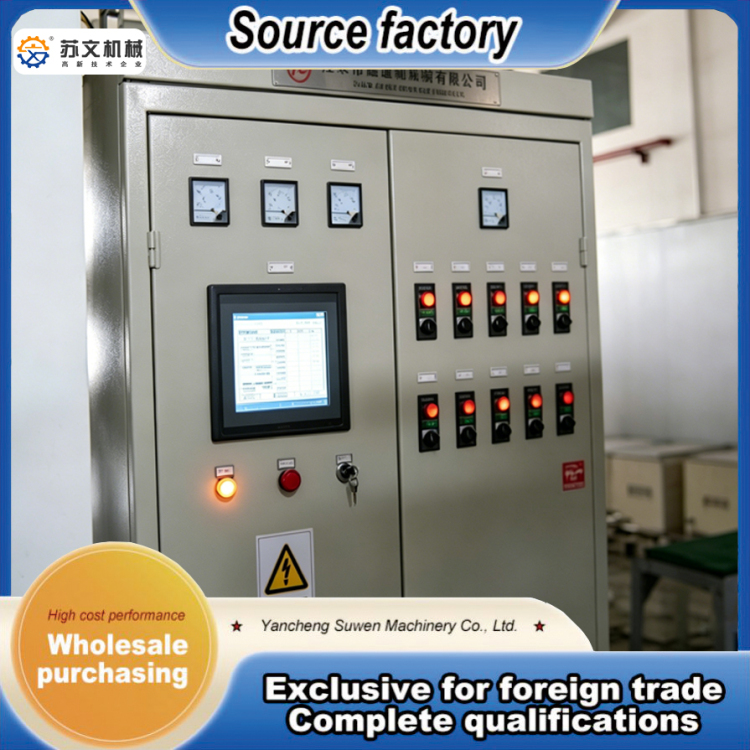
1. What Equipment Does an Energy Storage Cold Plate Factory Need?
A storage cold plate line has six stations: stamping, cleaning, flux spraying, brazing, leak testing, and final inspection — with helium leak testing sized as the true bottleneck. Any energy storage cold plate factory startup equipment planning exercise must start with plate dimensions: storage plates run 600–2,000 mm long (larger than most EV plates) and use fewer part numbers, which changes the logic in three ways:
- ✅ Stamping: fewer tooling sets needed than EV (lower mix), but larger presses for long plates and header tanks.
- ✅ Cleaning + flux: same 40 kHz ultrasonic standard and ≥40 dyne/cm cleanliness as EV plates; custom OEM/ODM fixtures handle the larger plate envelope.
- ✅ Brazing: continuous mesh-belt furnace at 600–650°C, O₂ ≤20–100 ppm; 8–11 m muffle is typical for storage throughput.
- ✅ Leak testing: helium mass-spectrometer leaks at 50–400 kPa — this station sets the line's real cycle time, not the furnace.
- ✅ Inspection: visual braze-fillet check plus flatness gauge; long plates warp more, so flatness fixtures matter.
The most common planning mistake is sizing to the furnace's belt speed and forgetting that a helium test cycle takes 30–90 seconds per plate. A China manufacturer building a full line will balance station counts — often two leak-test rigs feeding one furnace — so no single station throttles the others. Ask each supplier to show the cycle-time balance table, not just the headline "plates per hour."
✅ Bottom line: Size the line around helium leak-test throughput; it is slower than the furnace and sets real output.
2. How Do You Plan Capacity and Cost for Storage Orders?
Plan capacity from the plate count per megawatt-hour, then work backward to shifts and furnace length — a 200 MW·h/year storage program typically needs 400–900 plates per day at ~15–20 plates per MW·h. For cold plate production line investment cost for energy storage, the equipment split looks like this:
- ✅ Brazing furnace: 35–45% of equipment budget — muffle length sets throughput ceiling.
- ✅ Cleaning + flux line: 15–20% — automated here cuts labor on every shift.
- ✅ Helium leak test + inspection: 15–20% — budget for multiple rigs in parallel.
- ✅ Stamping + tooling: 20–25% — fewer part numbers than EV, but larger presses.
Capacity math: at 600 plates/day on a single shift with a 90-second leak-test cycle and 85% OEE, you need roughly two test rigs running in parallel with an 8–11 m furnace. A factory targeting 1,000+ plates/day should plan a second shift or a dual-line layout. The cold plate factory capacity planning for EV and storage orders question matters here: storage plates are longer and slower per piece, so a line sized for EV plate counts will under-deliver on storage orders by 20–30% unless fixtures and test cycle times are re-checked.
Storage buyers are also more price-driven than EV buyers. A pragmatic approach is to start with a semi-automatic line (lower capital, 2–3 operators) and reserve space and utility capacity for a second shift later — the OEM design should make future expansion a layout decision, not a rebuild.
✅ Bottom line: Work backward from plates per MW·h, balance leak-test rigs to furnace output, and design for a second shift.
FAQ
Q: Can one line serve both EV and energy storage cold plates? A: Yes, if fixtures cover both envelopes and the line is configured for the slower storage test cycle. Specify dual-product capability in your OEM/ODM custom request — and note EV plates need tighter flux control. Suwen builds dual-product lines around the storage cycle time, then confirms the EV plate can run within it, so one energy storage cold plate factory startup equipment planning decision covers both programs.
Q: Why does a storage line need more leak-test capacity than an EV line? A: Longer plates with more brazed joints per plate mean a longer test cycle per piece. Sizing to the furnace alone leaves a bottleneck; a credible China supplier balances station counts on the layout drawing. Get that balance wrong and your cold plate factory capacity planning for EV and storage orders will miss its targets no matter how long the furnace is.
Q: What is the realistic lead time from order to production? A: About 75–90 days from a Chinese factory for the line itself, plus installation and commissioning. The cold plate production line investment cost for energy storage is only part of the decision — ask each wholesale supplier candidate to commit to training and spare-parts supply in the contract.
CTA: Get a Storage Cold Plate Line Proposal
Send us your MW·h target and plate dimensions, and the engineering team at Suwen (Yancheng Suwen Machinery Co., Ltd.) will return a capacity-balanced line configuration with equipment split, staffing, and workshop layout within 5 working days — free. With 300+ lines delivered since 2006, we build custom OEM/ODM cold plate lines for energy storage and EV programs. Contact Suwen today.
|
|
|
|
Published: November 2026 |
By Suwen Engineering Team |