
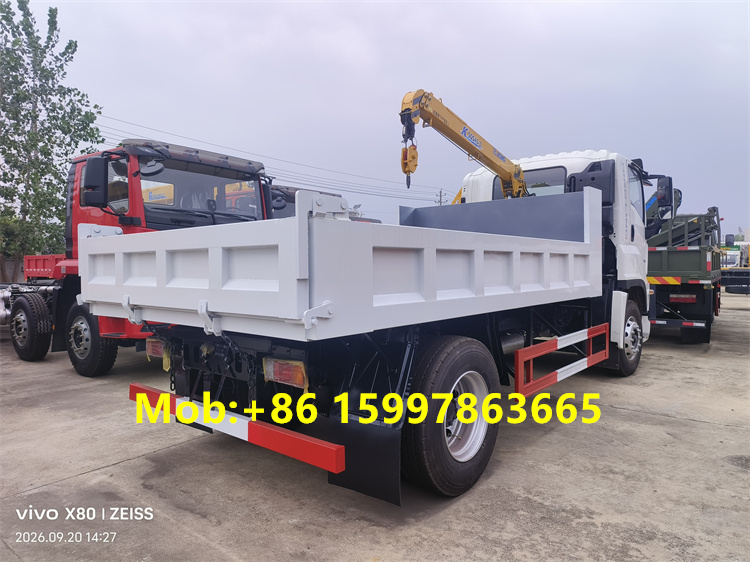
Designing a truck crane feels like architecting a mobile giant—blending brute strength, smart engineering, and road-ready agility to hoist loads effortlessly. Imagine crafting an 8-ton ISUZU 4x2 model that swings timber or telecom gear with precision; it starts with balancing chassis might, hydraulic smarts, and safety first. Engineers at leading manufacturers draw on proven blueprints to create reliable workhorses for construction and logistics.
Selecting the Chassis Base
Begin with the foundation: pick a robust truck chassis like the ISUZU 4x2 with a 3815mm wheelbase, 190HP engine, and Euro V compliance for global roads. Factor in gross vehicle weight (GVW) up to 16 tons, ensuring axle loads stay legal. Reinforce the frame rear for mounting, integrating a PTO port to tap engine power at 2200rpm—key for hydraulic drive without draining speed.
Aim for compact dimensions: overall length ~9.2m, width 2.1m, fitting urban hauls while supporting 2.5-ton deadweight cranes.
Engineering the Superstructure
Mount the turntable and slewing ring atop the chassis of truck crane for 360-degree rotation. Design the upper frame with a 20MPa hydraulic system, 50L/min pump, and 160L tank for smooth power. Position counterweights (1-2 tons) rearward to counter boom torque, calculating moments up to 20 ton-m.
Incorporate modularity: allow quick swaps for 8–12-ton capacities, with dead-weights around 2.8 tons for easy install in 1m x 1.2m spaces.
Boom and Lifting System Layout
Core to design is the telescopic boom—3-4 steel sections extending 10-13m via ram cylinders. Specify luffing angles 0-75 degrees, hoist heights ~11m, and wire rope diameters for 12-ton rated loads (tapering to 1.8 tons max). Add fly jibs for outreach boosts, ensuring stability via finite element analysis (FEA) against buckling.
Integrate winches with brakes and proportional valves for feather-touch control, syncing with boom extension sensors.
Outriggers and Stability Features
Design four hydraulic outriggers spanning 4.2m horizontally/vertical, with H-type beams for quick setup. Cylinders lift 18 tons each, auto-levelling via sensors to handle 5-degree slopes. Simulate overturning risks in CAD, optimizing pads for soil grip.
Embed load moment indicators (LMI), anti-two-block alarms, and emergency PTO disengages for compliance.
Controls, Testing, and Final Touches
Craft an intuitive cab with joysticks, torque converters, and ground/remote remotes. Wire CAN-bus for diagnostics, adding cameras and wind sensors. Prototype rigorously: static load tests at 1.25x capacity, dynamic swings, and road trials for 80km/h speeds.
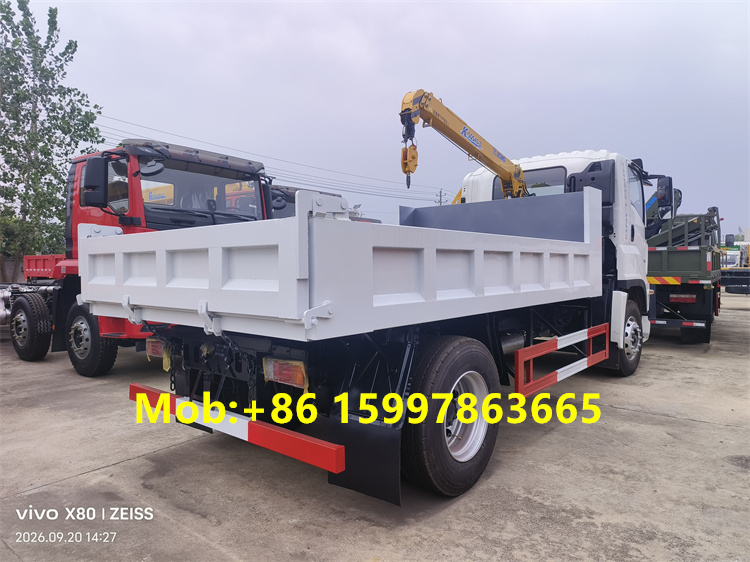
Finalize with powder-coated finishes, LED lights, and service kits. This blueprint yields truck cranes like reliable 8-tonners—safe, efficient, and built to last. Designing one demands iterative simulations, real-world feedback, and passion for lifting the impossible.
Selecting the Chassis Base
Begin with the foundation: pick a robust truck chassis like the ISUZU 4x2 with a 3815mm wheelbase, 190HP engine, and Euro V compliance for global roads. Factor in gross vehicle weight (GVW) up to 16 tons, ensuring axle loads stay legal. Reinforce the frame rear for mounting, integrating a PTO port to tap engine power at 2200rpm—key for hydraulic drive without draining speed.
Aim for compact dimensions: overall length ~9.2m, width 2.1m, fitting urban hauls while supporting 2.5-ton deadweight cranes.
Engineering the Superstructure
Mount the turntable and slewing ring atop the chassis of truck crane for 360-degree rotation. Design the upper frame with a 20MPa hydraulic system, 50L/min pump, and 160L tank for smooth power. Position counterweights (1-2 tons) rearward to counter boom torque, calculating moments up to 20 ton-m.
Incorporate modularity: allow quick swaps for 8–12-ton capacities, with dead-weights around 2.8 tons for easy install in 1m x 1.2m spaces.
Boom and Lifting System Layout
Core to design is the telescopic boom—3-4 steel sections extending 10-13m via ram cylinders. Specify luffing angles 0-75 degrees, hoist heights ~11m, and wire rope diameters for 12-ton rated loads (tapering to 1.8 tons max). Add fly jibs for outreach boosts, ensuring stability via finite element analysis (FEA) against buckling.
Integrate winches with brakes and proportional valves for feather-touch control, syncing with boom extension sensors.
Outriggers and Stability Features
Design four hydraulic outriggers spanning 4.2m horizontally/vertical, with H-type beams for quick setup. Cylinders lift 18 tons each, auto-levelling via sensors to handle 5-degree slopes. Simulate overturning risks in CAD, optimizing pads for soil grip.
Embed load moment indicators (LMI), anti-two-block alarms, and emergency PTO disengages for compliance.
Controls, Testing, and Final Touches
Craft an intuitive cab with joysticks, torque converters, and ground/remote remotes. Wire CAN-bus for diagnostics, adding cameras and wind sensors. Prototype rigorously: static load tests at 1.25x capacity, dynamic swings, and road trials for 80km/h speeds.
Finalize with powder-coated finishes, LED lights, and service kits. This blueprint yields truck cranes like reliable 8-tonners—safe, efficient, and built to last. Designing one demands iterative simulations, real-world feedback, and passion for lifting the impossible.