
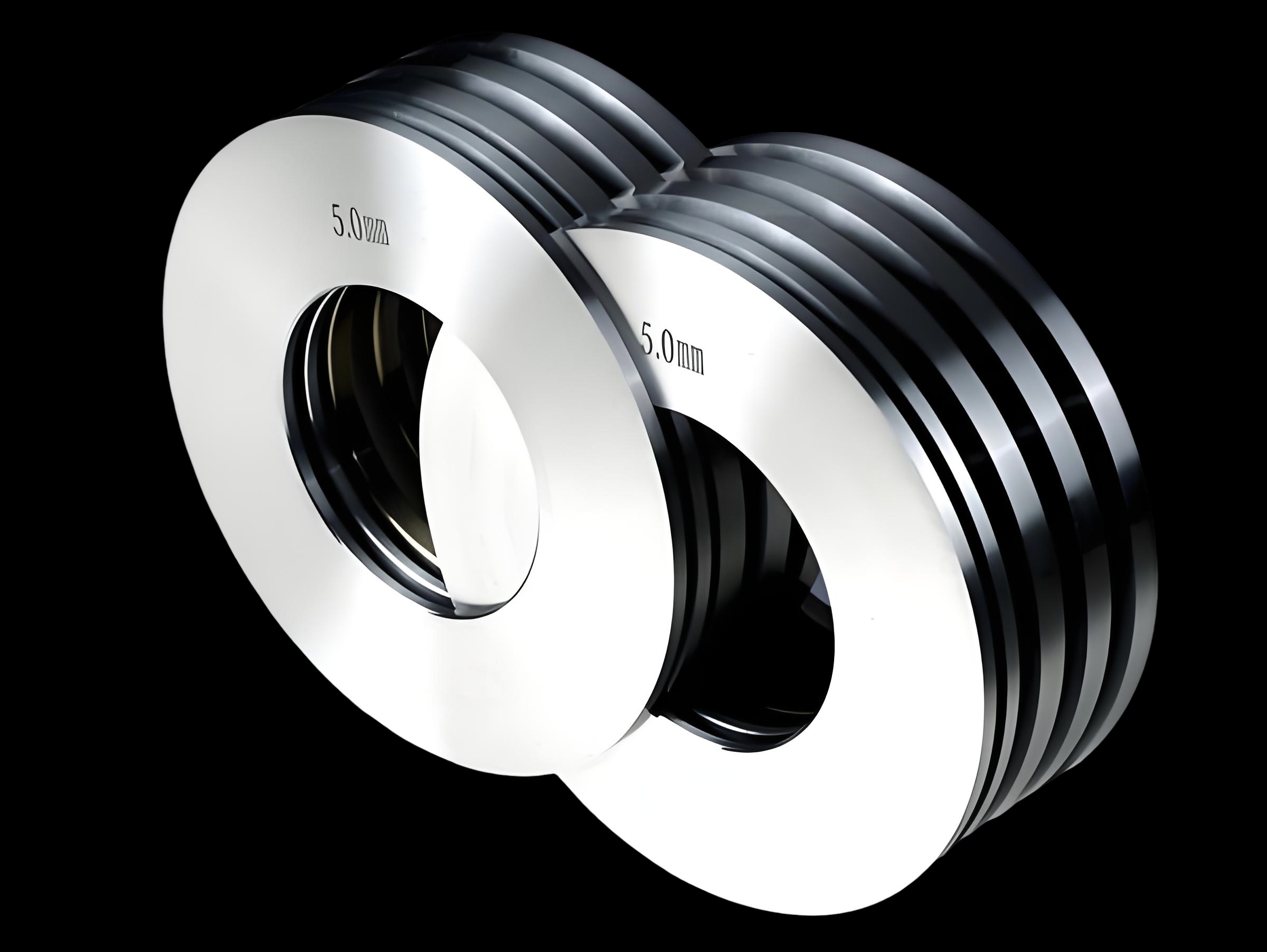
The knife shaft may be built to last 15 years, but the blades and spacers touching the strip are consumables — and they are what your customer sees on the finished edge. Choosing the right tooling for a slitting line matters as much as the machine itself.
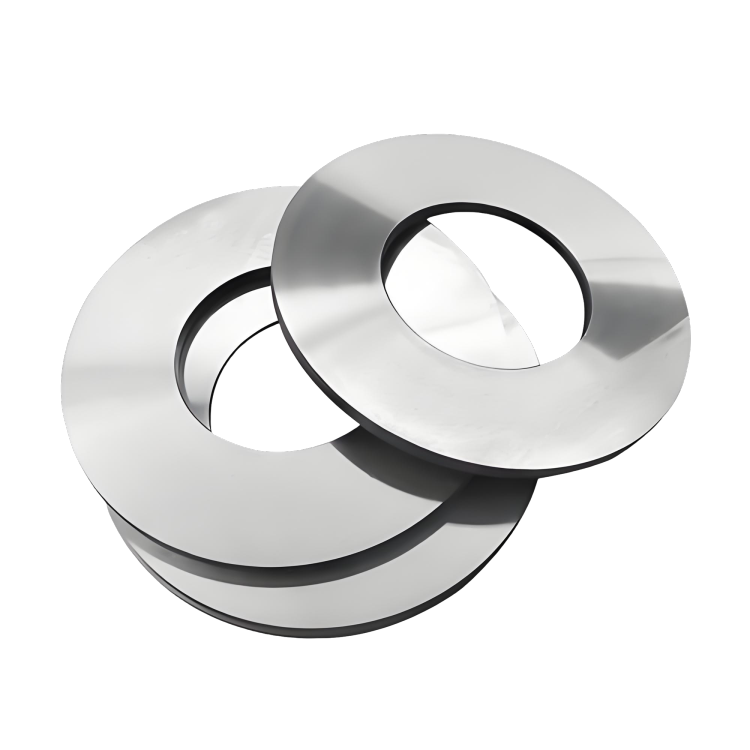
Blade materials by job
- 9CrSi / Cr12MoV general-purpose — fine for thin stainless and mild steel at moderate volume.
- SKD-11 (D2 equivalent) — the common choice for stainless and carbon slitting; good wear resistance and toughness.
- High-speed steel / coated blades — for high-volume, thin, hard materials where blade life matters more than blade cost.
Why clearance matters
The gap between the upper and lower blades is not a guess. Too tight and the edge rolls up burr; too loose and you get a torn edge and heavy wear.
- Thinner, softer strip → smaller clearance.
- Thicker, higher-tensile carbon steel → larger clearance.
- Always set clearance per thickness range, not per line.
Spacers and shim stack-up
Between the blades you stack spacer rings (间隔套) to fix each slit width:
- Keep spacer faces flat and scratch-free — any bump shows up as width error.
- Use shim sets for fine width adjustment.
- After running, check the knife stack for play; a loose stack vibrates and creates wavy edges.
- Store blades and spacers flat, not leaning, to avoid distortion.
When to regrind or replace
- Burr grows suddenly even with correct clearance → blades are dull.
- Edge shows same defect on every slit width → knives, not setup, are the cause.
- Keep a log of blades per material and shift; it tells you the true cost per ton.
About FOT
FOT Machinery supplies slitting lines with matched blade and spacer sets, and recommends the right SKD-11 blade for your material. For high-output lines, the dual-arbor slitting concept pays for the second set of blades through faster changeover.
Need blade and spacer recommendations?
Tell us the material, thickness range and required slit width — FOT will spec the tooling that goes with your line.