
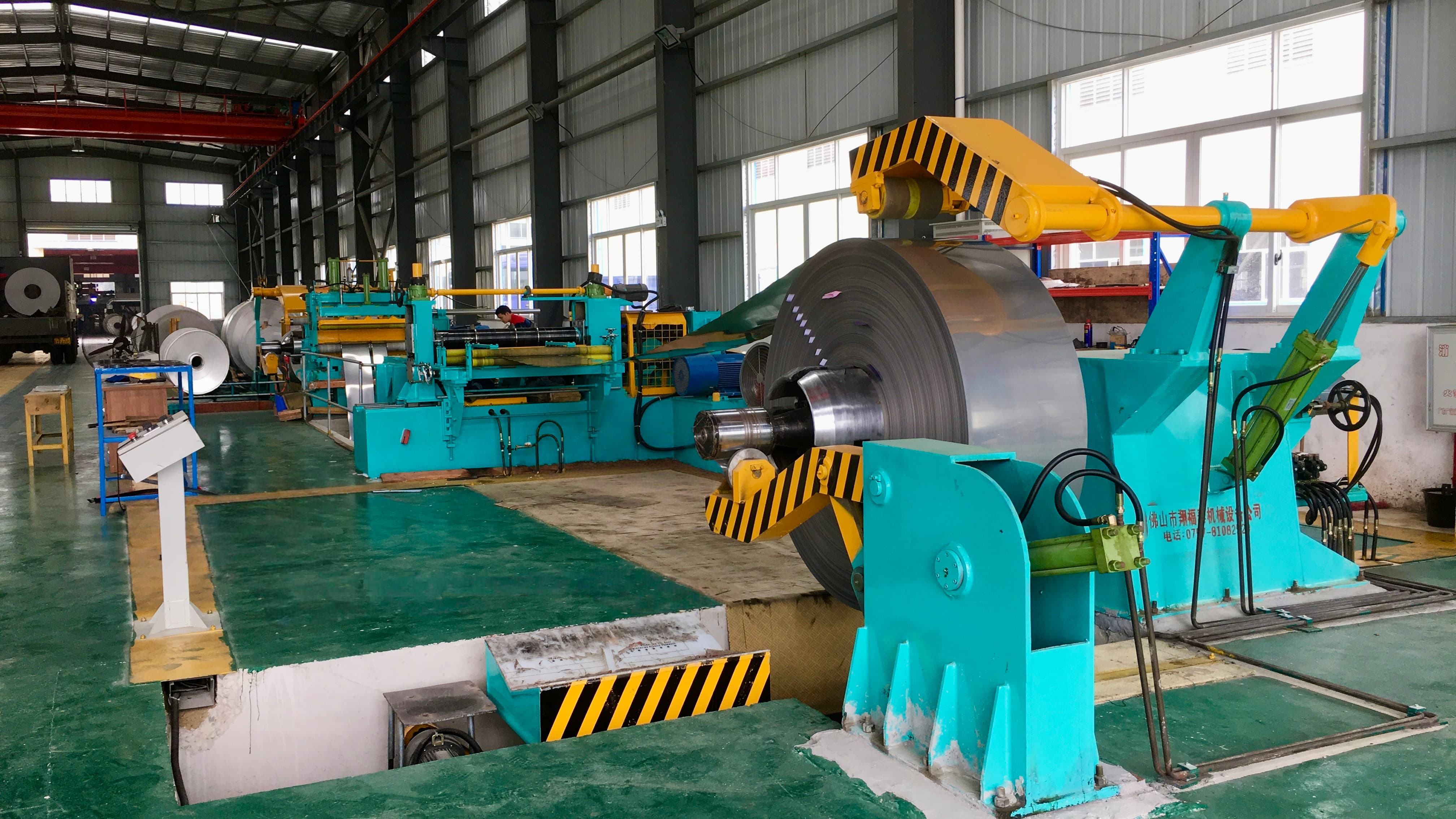
"20,000 MT per month" sounds simple, but two identical-looking lines can deliver very different real output depending on coil weight, number of coils per day, and how long changeover takes. Here is the basic calculation used when sizing a slitting line.
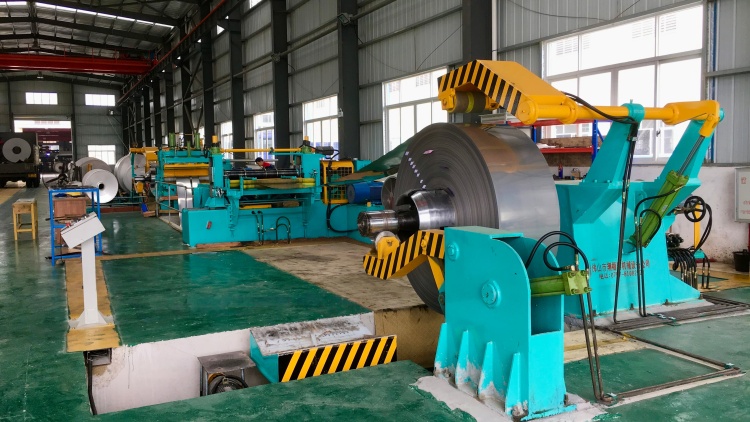
Step 1 — time per coil
For one coil:
- Processing time = (coil weight × density × width) / (line speed × material width) — roughly the minutes the knife is actually cutting.
- Changeover time = uncoiling, threading, slitting head set-up, recoiling start.
- Add them to get the time per coil.
Step 2 — coils per shift / day
- Working minutes per day = shifts × minutes per shift, minus planned maintenance, breaks and coil handling.
- Coils per day = working minutes ÷ time per coil.
- Real-world plan on 70–85% availability, not 100%.
Step 3 — tons per month
- Tons per day = coils per day × average coil weight.
- Tons per month = tons per day × working days.
A quick example
Say 10 MT coils, 150 m/min line speed, 8-hour shifts, three shifts a day, and ~80 coils per day at 10 MT:
- 80 × 10 MT = 800 MT/day
- 25 working days = 20,000 MT/month.
Notice the bottleneck is not the 150 m/min speed — it is the number of coils you can run per day. A faster line does nothing if you cannot load and thread coils fast enough.
Hidden factors that change the answer
- Thicker material runs slower — speed must be promised per thickness, not as one number.
- Narrow slit strips mean more coils per finished ton.
- Double mandrel uncoiler cuts changeover time and directly raises coils/day.
- A PG (performance guarantee) month test will expose any over-optimistic estimate.
About FOT
When customers ask for a line, FOT Machinery sizes it from the real coil weight, shift pattern and thickness range — not from a single headline speed. Our flying shear cut-to-length line follows the same logic when customers ask for sheet output.
Send us your target tonnage and coil size
We will work backwards and tell you whether your target needs a single-mandrel line, a double-mandrel line, or a wider/heavier line overall.