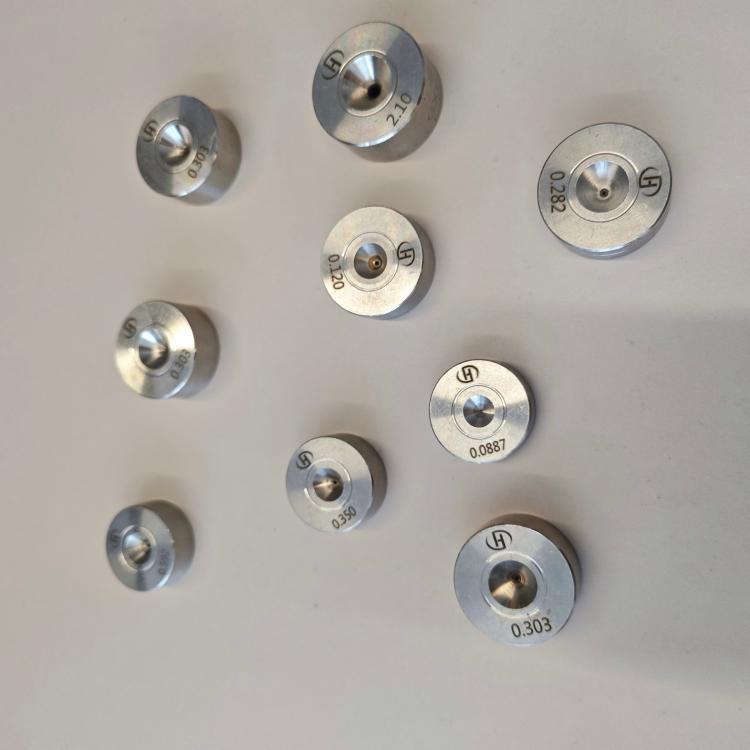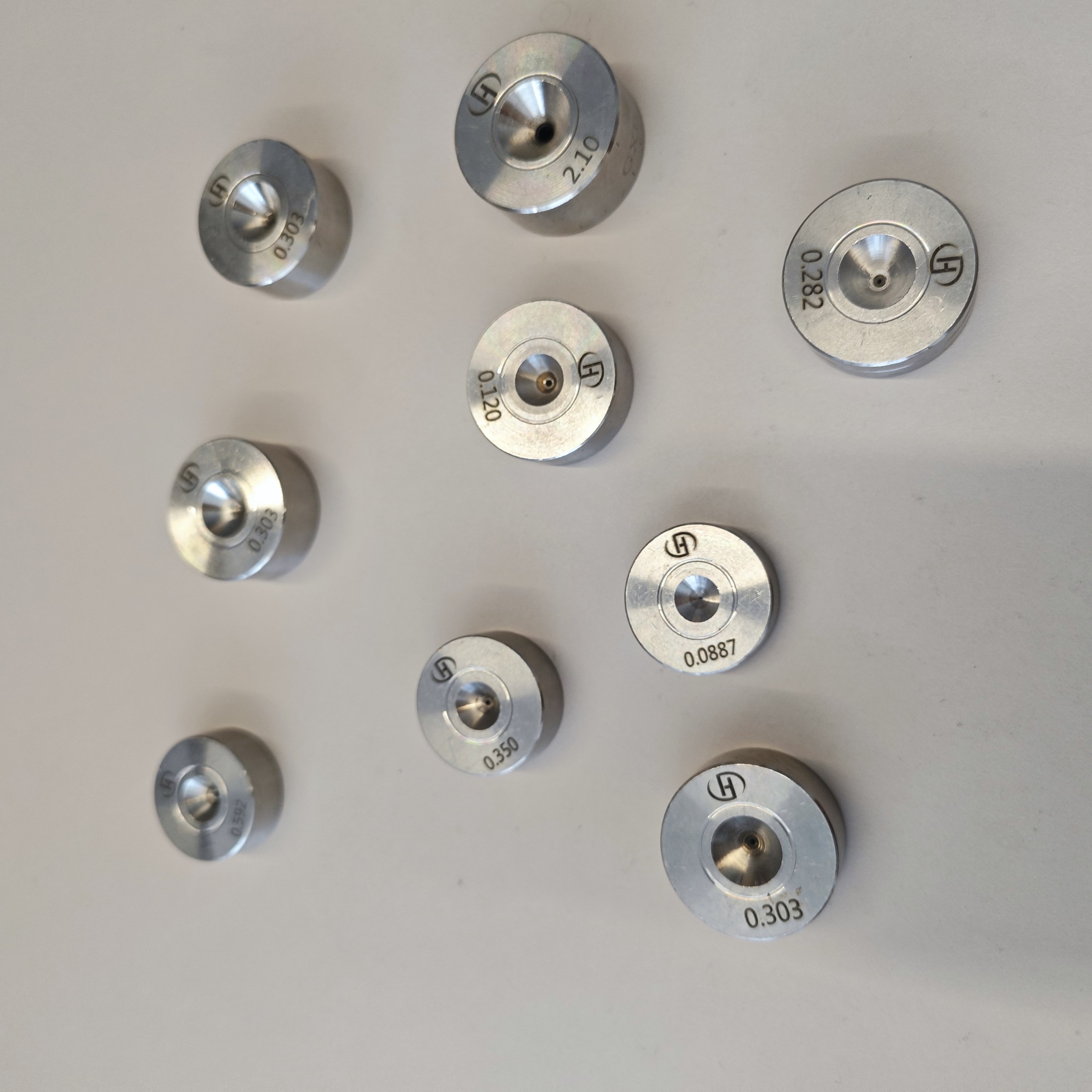
A coated wire drawing die almost always carries a higher sticker price than a plain carbide die—sometimes by 20% to 30%, occasionally more. For a purchasing manager comparing quotes side by side, that gap is hard to ignore. But the mills that have moved to coated dies are not looking at the quote in isolation. They are looking at what happens on the line between die changes.
In copper wire drawing, the enemy is adhesion. Copper is soft and ductile, but it picks up on an uncoated carbide bore, causing scoring and ovality within hours. Many plants have accepted polishing every four to six hours as normal. A coated wire drawing die changes that rhythm. With a DLC or TiAlN coating bringing the friction coefficient down to roughly 0.1 from 0.4, one cable manufacturer stretched continuous draw time from six hours to over forty. The die itself lasts longer too: nano-coated dies routinely deliver eight to ten times the service life of uncoated carbide, which translates into fewer stoppages and a lower cost per ton of wire.
Galvanized wire drawing dies face a different problem. The zinc layer is soft and adhesive, and at speed it tends to smear onto the die bearing, stripping the coating from the wire and interrupting the draw. Die geometry and lubrication matter here, but surface engineering is increasingly part of the answer. TiCN-coated inserts have shown better anti-galling behavior than uncoated or CrN-coated surfaces in ironing-zone tests. Newer carbide grades designed for coated wire also reduce adhesion, with die life improving up to three times when the surface stops grabbing zinc. A galvanized wire drawing die with the right surface treatment does not just wear more slowly—it protects the zinc layer that the customer is paying to put there.
The cost calculation for a coated wire drawing die is not “price per die.” It is die price plus changeover and downtime, divided by the length of wire drawn before the die falls out of tolerance. Coating moves both sides of that equation: the die costs more, but it draws far more wire and stops less often. For a mill running copper and galvanized products on the same floor, there is a secondary saving too—coated dies reduce the need for material-specific die inventories, freeing up capital that was sitting in spare-die cabinets. The coating does not make dies cheap. It makes them cost less where it counts.