A custom EV battery tray stamping typically costs 18–65 per accepted part above 10,000 units, plus a one-time tooling die of 20,000–90,000. That is the direct answer to how much does battery tray stamping cost in 2026 — though the figure swings widely with alloy, flatness tolerance, and sealing class. Sourcing managers often compare a China manufacturer against a domestic supplier, fixate on piece price, then pay for it later in scrap and rework. This guide breaks down the cost drivers, gives you a per-part model, and shows how to lock a quote that survives PPAP.
Ningbo Sizhuo Metal Industrial Co., Ltd. supplies OEM and ODM battery tray solutions to EV programs on three continents; the numbers below come from those builds.
1. What actually drives the price of an EV battery tray stamping?
Tooling, material, and tolerance control account for roughly 85% of a quoted piece price; the rest is rounding error.
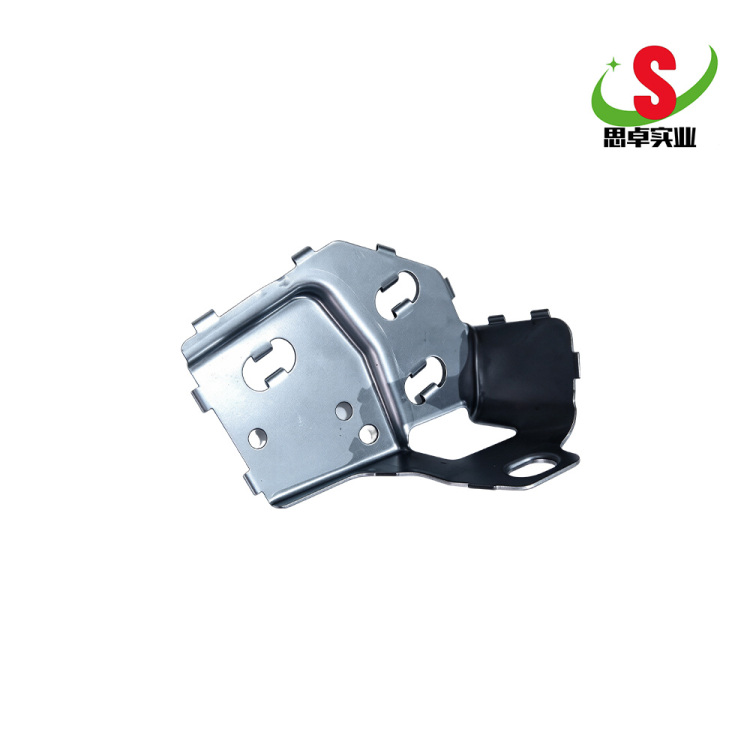
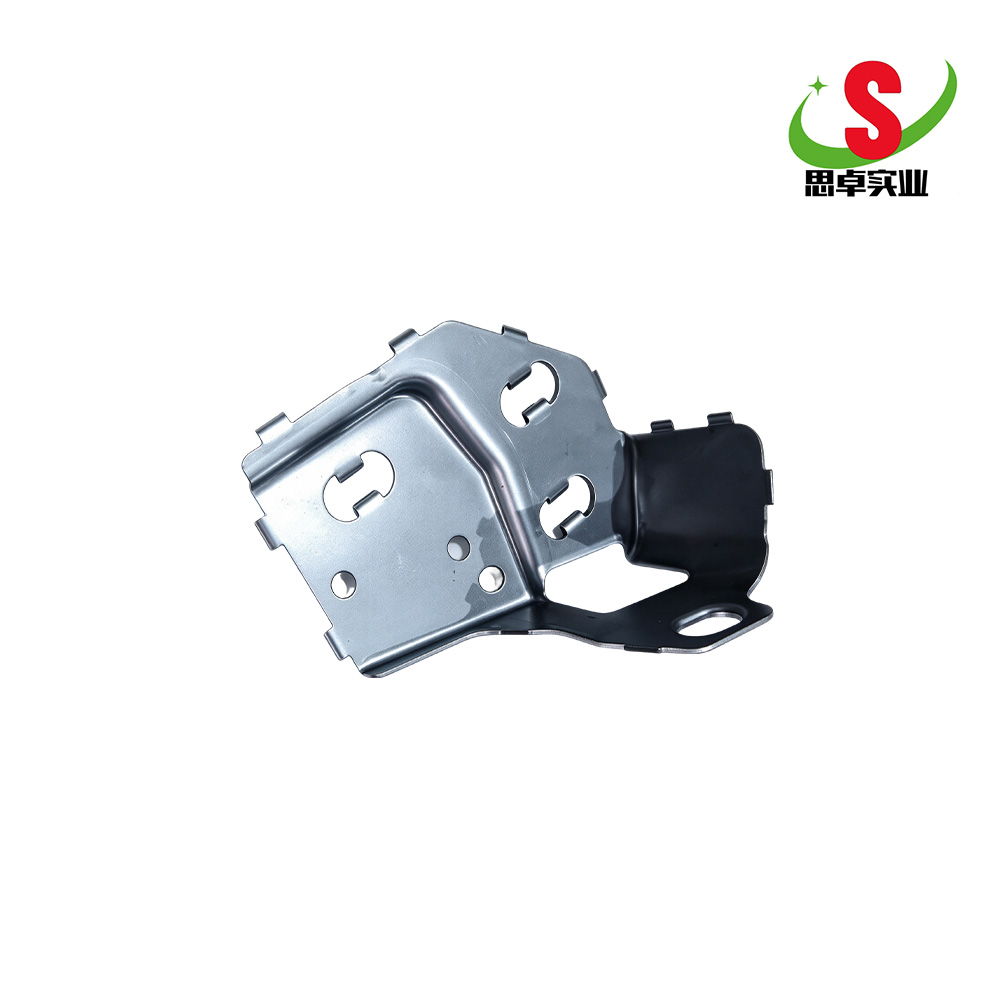
According to sizhuo engineering data, a battery tray is a structural, sealed safety component rather than a simple blank. That is why it sits in the premium tier of Automotive Stamping Parts alongside body-structure and seat-frame work, instead of with generic brackets. Four drivers dominate the number:
- Tooling amortization. A progressive die for a tray runs 20,000–90,000 depending on stations and slide actions. Spread over 10,000 units that is 2–9 per part; over 100,000 it falls below $1. Volume is the single biggest lever you control.
- Material grade. 6061-T6 aluminum at 2.0–3.0 mm is the default where weight matters. Q235 steel cuts raw material cost by 40–60% but adds mass; high-strength alloys raise forming force and accelerate die wear, quietly adding to amortization.
- Tolerance and inspection. Position holes held at ±0.05–0.1 mm and flatness at ≤0.5 mm require in-process CMM checks, not end-of-line sampling. Tightening flatness to 0.2 mm can add 4–7 per part in inspection time alone.
- Sealing class. IP67 means laser welding plus a helium leak-test station. Stepping up to IP69K adds a second seal and a pressure test — typically 2–5 more per part.
Many trays are not single stampings at all. They are Stamped & Welded Assemblies in which a formed shell, mounting rails, and threaded bosses are joined in a fixture. That adds welding time, a leak-test step, and dimensional risk at every joint — usually 3–8 per part over a monolithic stamping.
What does the stack look like in practice? At 25,000 units, ex-factory China:
|
Cost element |
Typical range per part |
What moves it |
|
Material (6061-T6, 2.5 mm) |
9–16 |
Scrap 8–15% on first articles |
|
Tooling amortization |
1–4 |
$25k die ÷ 25k units ≈ $1 |
|
Forming + welding |
5–12 |
Laser weld and fixture cycle time |
|
Sealing + leak test |
2–5 |
IP67 helium test |
|
QA / PPAP / packaging |
1–3 |
CMM, FAI report, returnable trays |
|
Total |
18–40 |
Accepted parts, ex-factory |
Springback deserves a mention: high-strength aluminum can spring back 1.5–3°, and compensating the die face is a one-time cost that pays off only at volume. That is why a factory quoting the same part at 2,000 and 200,000 units should give you two very different numbers.
✅ Bottom line: Tooling volume, alloy, and sealing class set about 85% of tray price; at 25,000 units a realistic ex-factory band is 18–40 per accepted part.
2. How do you calculate the real cost per part and verify a quote?
Price accepted units, not stamped units — the scrap-and-rework gap is where low quotes quietly fall apart.
The temptation is to hunt for the lowest EV battery tray stamping cost per part on a comparison sheet. But a quote that ignores first-article scrap, springback compensation, and leak-test reject rate will drift upward the moment production starts. A credible custom OEM partner shows you the assumptions behind the number instead of a single figure.
Before you compare how much does battery tray stamping cost across suppliers, normalize four things:
- Tolerance ownership. Who pays when flatness drifts past 0.5 mm? Get it in writing, including who runs the CMM.
- Scrap allowance. Ask for a stated first-pass yield. An 85% and a 97% yield produce very different landed costs even at the same piece price.
- Tooling ownership. Confirm who holds the die, who maintains it, and what happens at end of program.
- Validation scope. FAI reports, Cpk data, and PPAP level should be itemized. On safety-related trays, Cpk ≥ 1.33 and single-digit PPM are normal asks.
Process choice changes the math. Not every enclosure should be stamped flat and welded. When the geometry is a deep, seamless cup, Deep Drawn Parts remove the weld seam entirely and with it a whole category of leak path — but a draw-ratio ceiling means wide, shallow trays still favor stamping. A supplier who offers both processes will tell you which one your geometry actually suits, instead of forcing every part through one line.
Buyers searching for a custom EV battery tray stamping manufacturer China usually want one factory handling tooling, stamping, welding, and leak test under the same roof. That single-source model strips out the margin stack you get when three vendors touch the part, and it shortens a sampling cycle to roughly 7–10 days. Ningbo Sizhuo Metal Industrial Co., Ltd. runs that integrated flow, which is why our quotes hold through PPAP rather than drifting at first article.
One last filter: ask for the costed breakdown, not the total. sizhuo engineering reviews the print before pricing and flags tolerance stacks that will cost you later — a free step that typically saves more than the quote gap you were negotiating.
✅ Bottom line: Normalize yield, tolerance ownership, and tooling terms before comparing quotes; a cheap piece price at 85% yield always costs more than a clean 97% one.
FAQ
Q: How much does battery tray stamping cost at low volume? A: Below 5,000 units, tooling dominates — expect 60–150 per part because the die is spread across too few pieces. Bridge tooling softens the hit but per-part prices stay high. sizhuo usually recommends a staged tooling plan at this point.
Q: What tolerance can a China factory realistically hold on a battery tray? A: A custom EV battery tray stamping manufacturer China should hold position holes at ±0.05–0.1 mm and flatness at ≤0.5 mm using in-process CMM and a controlled weld sequence. Anything tighter means 100% inspection, which is rarely worth it on a tray.
Q: How does EV battery tray stamping cost per part change as volume scales? A: Roughly inversely with tooling amortization: doubling from 25,000 to 50,000 units cuts the die share from about $1 to $0.50, a 2–3% total saving. Material and forming costs barely move. sizhuo models this curve before quoting so the scaling is visible upfront.