
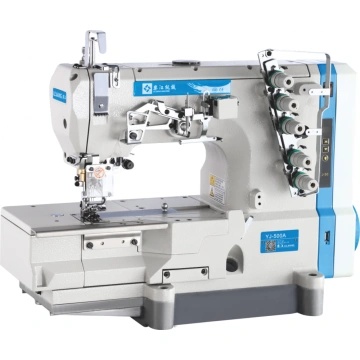
One major quality advantage of an interlock sewing machine is consistent stitch formation. Manual sewing differences may lead to uneven seams or unstable tension. Industrial interlock sewing machines reduce these variations through precise mechanical operation.
This is especially important for stretch fabrics. Elastic materials require careful handling because incorrect sewing methods may cause fabric distortion, loose seams, or reduced durability. Interlock sewing machines provide better fabric control during the sewing process.
Another benefit is improved seam strength. Garments must withstand daily use, washing, and repeated movement. A properly formed interlock stitch helps improve product lifespan and reliability.
Stable sewing performance also reduces production inspection problems. When factories experience fewer defects, they can reduce rework costs and improve delivery efficiency.
For apparel manufacturers supplying global markets, consistent quality is a key factor in building customer trust. By using reliable interlock sewing machines, factories can create higher-quality garments and maintain competitive advantages.