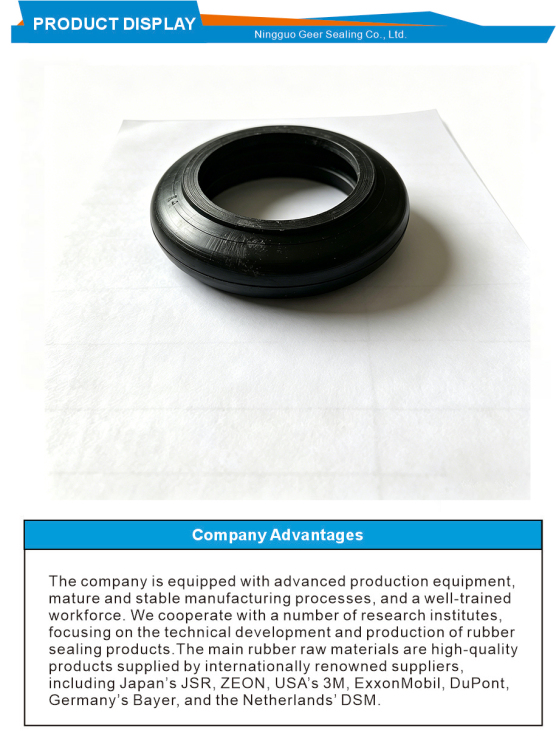
This guide puts numbers on that trade-off for importers, distributors and OEM buyers sourcing High-Quality Shock Absorbers and their mounting components, then gives you a seven-point audit you can run on any supplier before the first container ships.
1. Why Does Unit Price Mislead When Sourcing High-Quality Shock Absorbers?
Because replacement frequency multiplies the part price by labour, and labour is 8 to 12 times the part cost in most markets. Buyers comparing quotations side by side see a 120% price gap between budget and premium tiers. They rarely see the 300% gap in cost per 100,000 km.
The calculation is straightforward. Take one suspension bushing position, a workshop labour rate of $55/hour, and 0.8 hours to replace one position including alignment check — a deliberately conservative figure, since most jobs are billed as a set of four.
Table 1 — True cost per 100,000 km by bushing tier
|
Tier |
Unit price |
Service life |
Units per 100,000 km |
Part cost |
Labour cost |
Total per 100,000 km |
|
Budget (unbranded, mixed compound) |
$1.10 |
30,000 km |
3.3 |
$3.67 |
$36.70 |
$40.37 |
|
Mid-tier (catalogue grade) |
$1.85 |
60,000 km |
1.7 |
$3.09 |
$18.70 |
$21.79 |
|
Premium (validated, IATF 16949) |
$2.40 |
100,000 km+ |
1.0 |
$2.40 |
$11.00 |
$13.40 |
The premium part is 118% more expensive at the counter and 67% cheaper over the service interval. For a fleet of 200 vehicles with four positions each, that difference is roughly $21,500 in labour alone across one replacement cycle.
The costs that never appear on the quotation
- Comeback rate — budget bushings typically return at 4–7% within warranty; validated parts run below 1%. Every comeback consumes a bay, a technician and an administrative claim.
- Inventory drag — a part that fails twice as often needs twice the safety stock for the same service level, tying up working capital in slow-moving SKUs.
- Installation damage — bushings pressed in with out-of-tolerance bores crack at the flange during fitting, and the failure is blamed on the part, not the fit.
- Distributor reputation — the second failure is the one the customer remembers, and it is rarely the cheapest competitor's part they blame.
What "high-quality" actually means in a spec
The phrase is meaningless without measurement. When GEER quotes High-Quality Shock Absorbers and their mounting components, the claim maps to five verifiable numbers: rubber hardness held within ±3 Shore A of nominal, machined bore tolerance of ±0.05 mm, bond peel strength of at least 6 N/mm to ASTM D429 Method B, compression set under 25% after 22 hours at 70 °C, and a service window of -40 °C to +120 °C with no more than ±10 Shore A drift after heat aging.
✅ Bottom line: Compare bushings on cost per 100,000 km rather than unit price, because labour and comeback rates multiply a small price difference into a threefold cost gap.
2. How Do You Audit a Supplier of Premium Shock Elements Before the First Order?
Audit process capability, not certificates. Every serious supplier can email an IATF 16949 PDF. Fewer than half can show you the batch records, the peel test data and the mould shop that produced the part you are about to import.
Run these seven checks in order. Each one is answerable in a single video call or document request, and a supplier that stalls on two or more is a risk you do not need.
- Certification scope — confirm the certificate covers rubber-to-metal bonded suspension parts, not just extruded seals. Ask for the certification body and expiry date.
- In-house tooling and metrology — a supplier that outsources moulds cannot control dimensional repeatability or revision lead time. Look for CNC lathes, machining centres, a CMM and a laser micrometer under one roof.
- Incoming compound control — batch-level Mooney viscosity and cure rheometer curves, plus traceable raw material sources. Reputable Chinese factories buy from JSR, ZEON, 3M, ExxonMobil, DuPont and DSM; ask for receipts, not the brochure.
- Batch traceability — cure date and batch number on the carton, retention samples kept 12 months. Without this, a field failure cannot be investigated.
- Test capability — a lab measuring static and dynamic stiffness, not just hardness. Fatigue rigs and ozone chambers are what separate a manufacturer from an assembler.
- Documentation package — first-article inspection report, PPAP-style submission for OEM programmes, RoHS and REACH declarations, and a certificate of analysis per lot.
- Commercial reality — MOQ, production and sample lead times, Incoterms (FOB, CIF, EXW), payment terms (L/C or T/T), and written confirmation of tooling ownership.
Consolidate the SKU list, not just the price
A suspension programme rarely needs one part. It needs bushings, strut mounts, spring pads and dust covers in matched compounds and colours. Sourcing each from a different factory multiplies inspection, documentation and container consolidation work.
Ningguo Geer Sealing Parts Co., Ltd. manufactures the full mounting stack — shock absorber bushings, engine mounts, strut mounts, spring pads and dust covers — alongside O-rings and custom rubber seals, across NR, CR, EPDM, NBR, HNBR, VMQ and FKM. One supplier, one QC standard, one shipment. The plant runs three production lines in Ningguo, Anhui, with 51–100 staff and a 7,000 m² building area, exporting to Europe, North America, Russia, Southeast Asia and the Middle East.
What to put in the trial order
Order three things together: production samples from the current batch, the inspection report for that exact batch, and a reference from a buyer in your region. If the sample and the report do not match, the process is not under control.
✅ Bottom line: Verify batch traceability, in-house tooling and lab test data before comparing prices, since those three determine whether the second container matches the first.
FAQ
Q: What MOQ and lead time should I expect for suspension bushings from a China factory? A: For catalogue items, MOQ commonly starts at 100–500 pieces per size with 15–25 days production lead time. For new tooling, add 15–25 days for mould manufacture plus 7–10 days for samples and approval. GEER accepts trial orders below standard MOQ on new programmes so buyers can validate fit and NVH before committing to volume.
Q: Which documents should accompany the first shipment of Premium Shock Elements? A: A certificate of analysis per lot covering hardness, tensile strength and compression set; a dimensional inspection report; material declarations for RoHS and REACH; and packaging specs with batch number and cure date. For OEM programmes, a PPAP-style package including process flow, control plan and measurement system analysis is the norm.
Q: Can a supplier reverse-engineer a part from a sample I send? A: Yes, and it is the fastest route for aftermarket ranges. Send two samples — one to cut for cross-section measurement, one to keep intact — plus the target vehicle or machine model. Expect a drawing for your approval within 3–5 working days, then tooling. As an OEM and ODM manufacturer, GEER routinely builds Premium Shock Elements from samples when no drawing exists, and confirms hardness and compound against the original part's measured values.
CTA: Request a Cost-Per-Kilometre Comparison for Your Range
Send your current part list, annual volumes and target market. GEER will return a quotation structured for comparison rather than confusion: unit price at your volume, MOQ per size, production and sample lead times, and a cost-per-100,000-km estimate based on validated service life for each tier.
For distributors building a private-label range, ask for our OEM/ODM pack — custom branding, custom compound, custom packaging, and a single China manufacturer contact for bushings, strut mounts, spring pads, dust covers and seals. Ningguo Geer Sealing Parts Co., Ltd. has supplied High-Quality Shock Absorbers and vibration-damping components to wholesale and aftermarket buyers since 2007, backed by IATF 16949 certification and a factory-direct price structure.