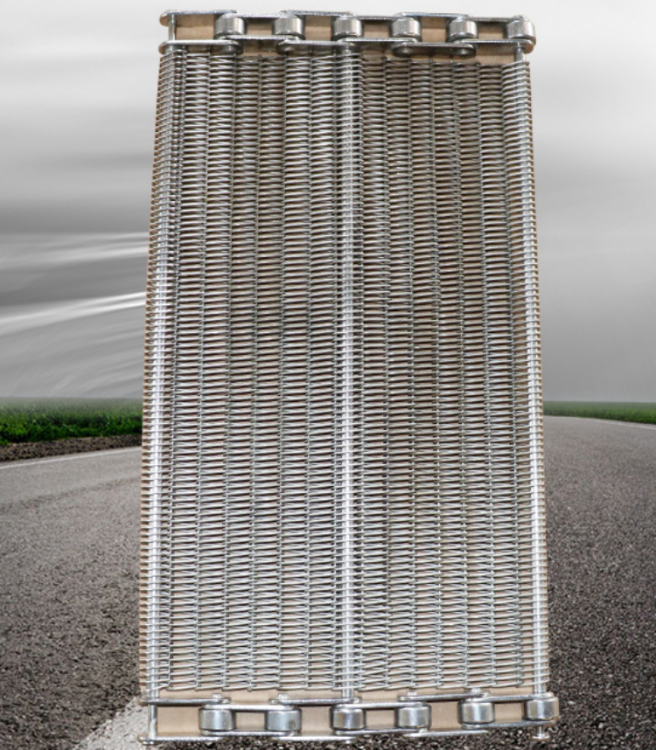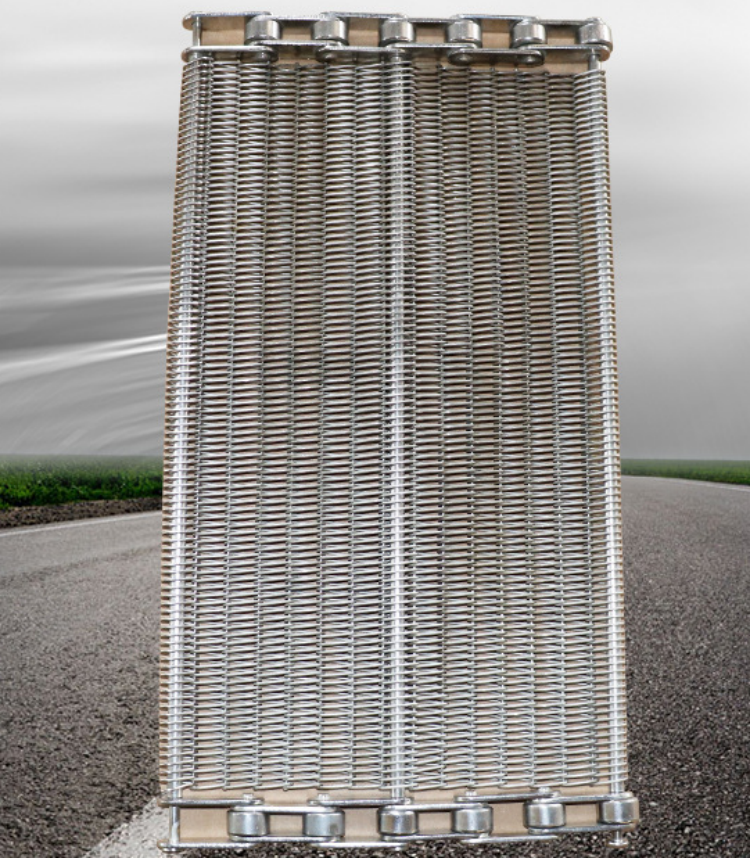
A standard Wire Mesh Conveyor Belt is notorious for these traps. Product crumbs get wedged into the loops and bake onto the rods. If you just hit it with a standard hose, you push water into the joint but leave the organic matter behind.
To sanitize without dismantling, start with a pre-rinse to remove loose debris. Then, use a low-pressure foam cleaner. The foam clings to the vertical surfaces and penetrates the mesh gaps, breaking down oils and proteins. Let it dwell for the required time, then rinse with a fan spray angled diagonally—not straight down. Angling the water pushes debris out of the hinges rather than driving it deeper.
The same rules apply to a tightly woven Wire Belt. The tight weave requires good chemical penetration. For heavier, continuous sheets like a solid Honeycomb Belt, you need to focus on even chemical coverage and watch for moisture trapped under the product.
Finally, look at your hardware. Upgrading to self-cleaning sprockets and quick-release joining links makes a massive difference. If the belt can be split and opened slightly in minutes, sanitation crews can access the drive components without a full teardown. The right cleaning routine and the right belt design save hours of downtime and keep the audit green.