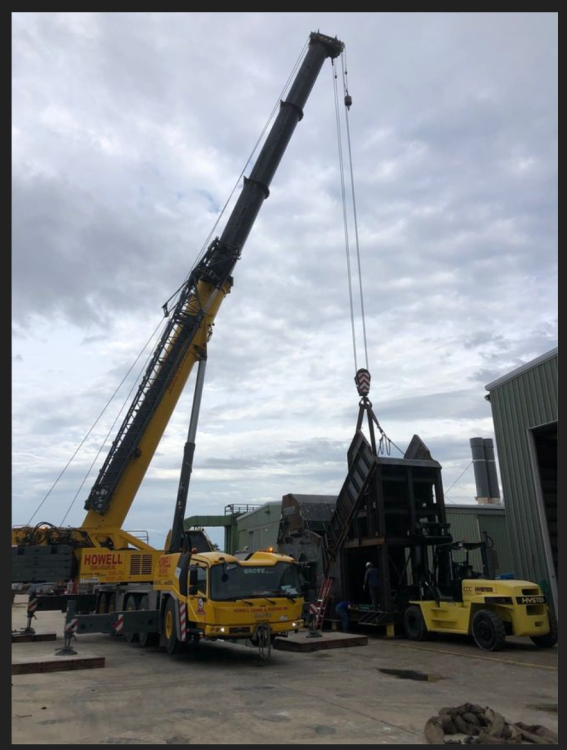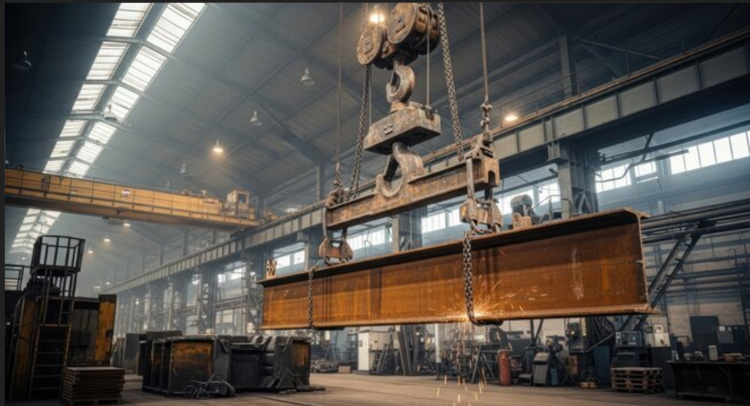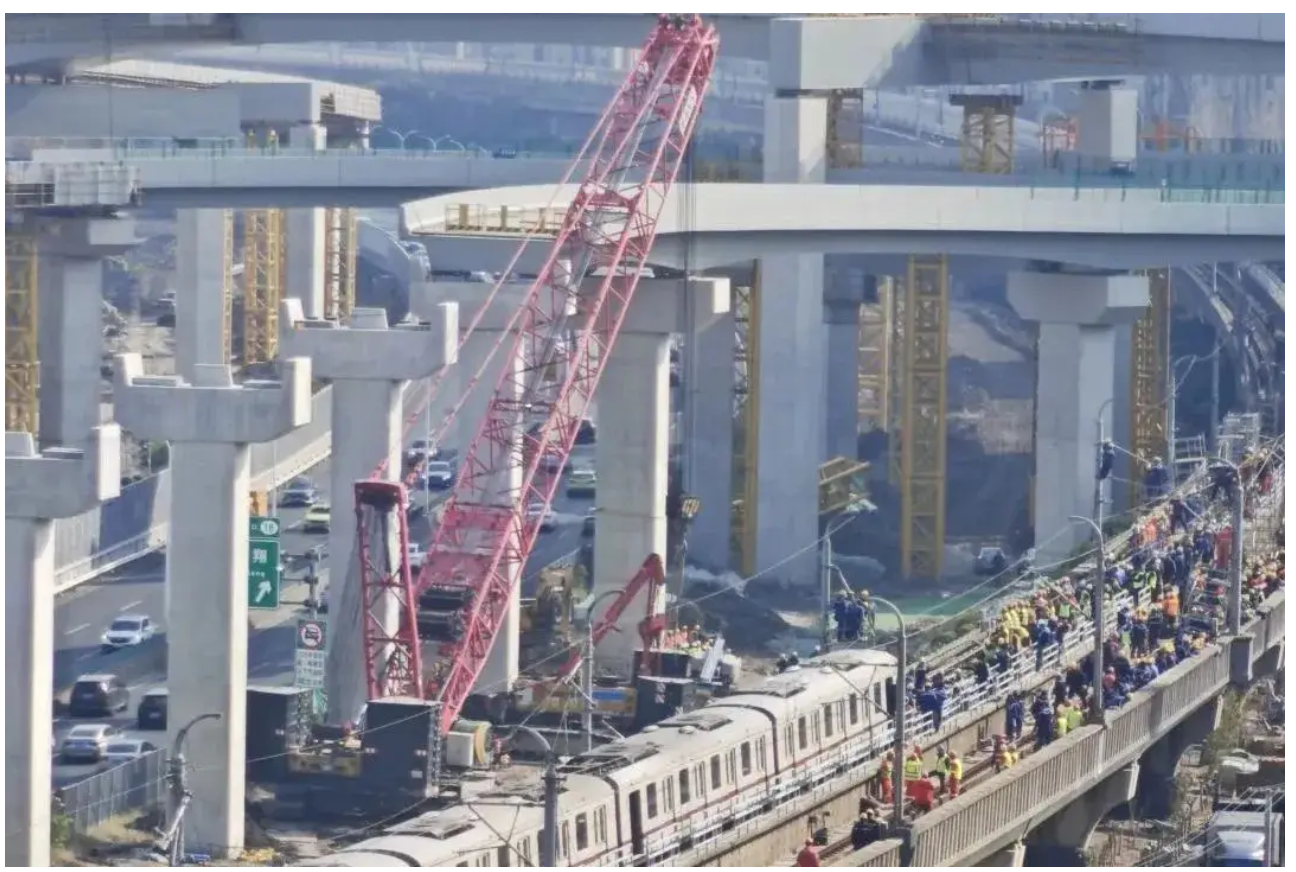
The hoisting accident on the Shanghai-Hujia Expressway connection line offers profound lessons for the industry. A 260-ton crawler crane suffered a 33.8-ton drop in its actual load capacity due to improper selection and uneven ground. Combined with excessive lateral force, its boom collapsed into the metro line, causing tens of millions of yuan in losses and a full shutdown of the project. The mobile crane accident on the Langchuan Expressway in Chengdu also serves as a warning. Unstable outrigger support and foundation settlement directly reduced the crane’s overturning resistance. Even when the lifted weight did not exceed the rated load on the nameplate, the crane still tipped over and trapped personnel. Five quay cranes at Qingdao Port once overturned due to sudden gusts of wind, resulting in nearly 200 million yuan in losses. The root cause was insufficient stability margin reserved for strong wind conditions at the port.
These accidents reveal a common industry pain point: many buyers, when selecting Heavy Working Class Crane Equipment, Industrial Crane and Jib Crane, only focus on the rated load marked on the nameplate. They ignore hidden load reduction and stability degradation caused by severe working conditions such as high temperature, dust, sea breeze corrosion, uneven ground, eccentric loading and gusts. Some manufacturers cut quotations by adopting low-grade materials and simplified structures. Their nameplate parameters look attractive, yet in harsh environments including metallurgical workshops, ports and open-air construction sites, steel fatigue, seal failure and transmission loss accelerate rapidly. The crane’s resistance to overturning and lateral movement keeps declining, and its actual load capacity shrinks. Many customers only realize that the purchased Heavy Working Class Crane Equipment cannot consistently reach its rated load when alarms trigger and the machine shakes with overturning risks, leading to project delays and successive safety incidents.
We hold a clear viewpoint: for qualified Heavy Working Class Crane Equipment, the rated load shall not only apply to ideal laboratory conditions. It shall maintain stable load capacity under severe working conditions. Stability is not merely a safety bottom line against overturning; it is also a core prerequisite for long-term service and coordinated operation with other equipment of an Industrial Crane. Insufficient stability generates continuous extra impact. Repeated shaking loosens bolts, cracks welds, and accelerates wear of gearboxes and bearings. In the short term, it manifests as abnormal noise and vibration. In the long run, it speeds up aging of Industrial Crane and Jib Crane, greatly shortening service life and raising maintenance and replacement costs.
In scenarios such as assembly lines, storage yards and prefabricated component plants, Heavy Working Class Crane Equipment and Jib Crane, which fall into the category of Industrial Crane, often work alongside forklifts, conveyor lines, positioners and other lifting equipment. Once the crane vibrates during operation and load fluctuates, the rhythm of the whole process will be disrupted. Misalignment and poor docking accuracy may scratch workpieces and damage supporting equipment in minor cases, or trigger cascading collision accidents in serious cases. Stable lifting output lays the foundation for precise coordination of the whole linked process.
Load capacity is not a static figure on paper, and stability is not an optional feature. Both are fundamental guarantees for safe operation, long-term service and multi-machine coordination of Heavy Working Class Crane Equipment and Industrial Crane under harsh working conditions. At the design stage, redundancy calculation shall be carried out for working conditions including temperature variation, corrosion, continuous impact, eccentric loading and gusts. High-toughness steel structures are adopted, while transmission, braking, windproof and outrigger protection systems are upgraded for harsh environments. Complete load monitoring and moment protection devices are equipped to avoid inconsistency between nameplate load capacity and actual load capacity.
When purchasing and selecting equipment, buyers should not compare prices blindly. They shall first verify the manufacturer’s working condition adaptation plan, distinguish the rated load under ideal conditions from the continuous allowable load under severe conditions, and focus on checking the design margin for overturning and lateral resistance. Meanwhile, evaluate the running stability of Heavy Working Class Crane Equipment and Jib Crane in linked processes. Its real value is reflected in dusty, high-temperature, windy, uneven ground and continuous-operation scenarios: consistent load capacity, stable operation without deviation, secured safety, smooth project progress, reduced structural wear, extended service life, and precise coordination between Industrial Crane and surrounding equipment.
Maintaining stable load capacity does not mean allowing overload. It means reserving sufficient stability margin in advance, so that Heavy Working Class Crane Equipment, Jib Crane and other types of Industrial Crane can operate safely, durably and compatibly in linked production under the harshest site conditions.