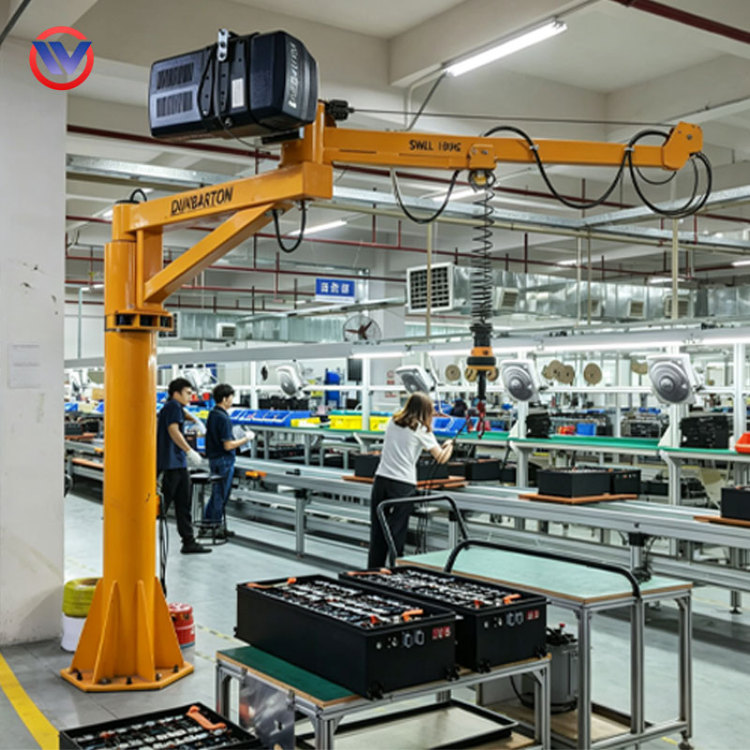
1. Which checks separate a real heavy duty lifting solution from a renamed standard one?
Seven, and the first two do most of the damage when skipped. Any supplier can print "heavy duty" on a drawing; these are the checks that verify it:
- Duty class written into the contract. A3/M3 is a maintenance-bay rating; a two-shift assembly station needs A5/M5 at minimum, and the class must appear in the purchase contract, not the brochure. Count your lifts per hour honestly — an A3 hoist doing A5 work is the single most common premature-failure cause in the category, and the A5-to-A6 step adds 30–40% to price precisely because the hardware genuinely changes.
- Headroom stack calculation, done before ordering. Add suspension bracket, hoist body, hook block, sling and part height, then compare against available height. If the standard body does not fit, a compact Rigid Chain Hoist recovers 112–376 mm depending on capacity — but at 3 t the recovery is only 112 mm, so check the dimensional drawing for your tonnage rather than assuming.
- Structural review with the worst case, not the average. Suspended systems put a 1.25 dynamic factor on the single hanger above a fully loaded bridge; free-standing columns need a slab of at least 150 mm and anchors checked for overturning. Roof drawings and slab thickness should be requested at quotation, not discovered at installation.
- Hoist certifications in the shipment. CE declaration where required, chain certificate, load test report, and an overload slipping clutch with upper and lower limit switches. The chain certificate matters more than the brochure photo — chain is the component that actually wears.
- Controls matched to the work. 8/2 m/min dual speed for fast transfer plus final positioning, 24 V or 48 V low-voltage control, and the supply voltage your plant runs — 380, 415 or 480 V. Single-speed hoists overshoot, and operators correct overshoot by hand, every cycle.
- Expansion provision on anything over 40 m. Steel moves about 12 µm per metre per °C; a 100 m runway facing a 30 °C swing travels 36 mm. Ask where it goes — expansion joints or slotted anchor holes, or nowhere.
- Spares and service committed in writing. Chain, hook and contactor sets either stocked locally or shipped within a stated window. A crane that waits three weeks for a chain is not a production asset.
✅ Bottom line: Duty class in the contract and a headroom calculation on paper are the two checks that prevent the expensive surprises; the other five prevent the slow ones.
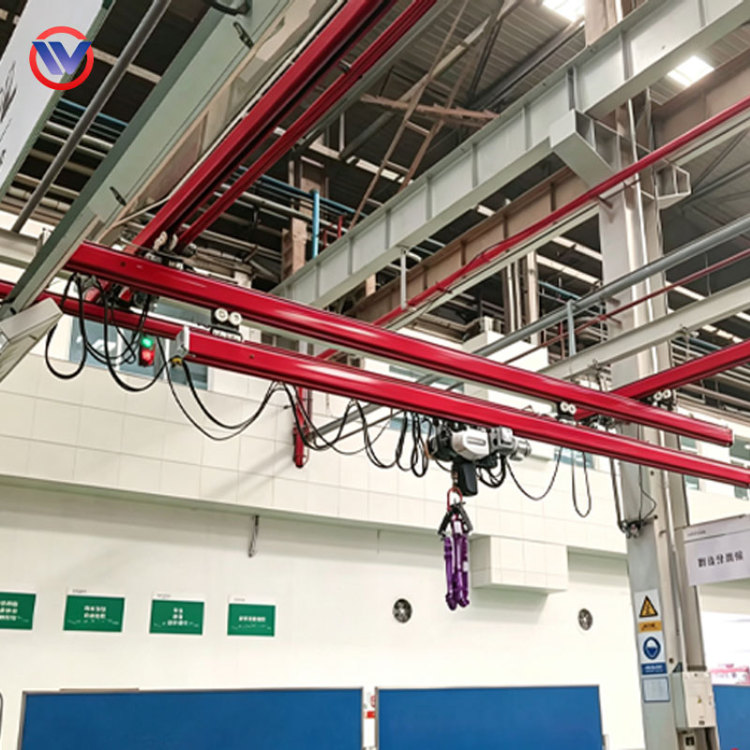
2. What does an industrial overhead crane quote actually hide?
The equipment price is roughly 70–85% of the real cost — the rest is in layers most first-time buyers do not line up. On a 5 t single-girder Industrial Overhead Crane budgeted at $5,000–12,000 ex-works, the installed total typically lands 1.7–2.4 times the crane price once everything underneath is counted:
|
Cost layer |
Typical share |
Notes |
|
Crane equipment, ex-works |
Baseline |
Structure, hoist, controls, standard safety devices |
|
Runway steel and rail |
$45/m enclosed track |
Switches ~520 each, curve sections ~280 |
|
Installation and commissioning |
15–30% of equipment value |
Includes deflection test — insist it is measured, not assumed |
|
Freight, insurance, customs |
Varies by Incoterm |
EXW quotes exclude all of it |
|
Training and documentation |
Small but contractual |
Wiring diagrams, spare parts lists, load test report |
Three habits keep the quote honest. First, force like-for-like: ask every supplier to price the same span, duty class and voltage, because a cheaper quote at A3 against one at A5 is not cheaper — and the same applies to the hoist family, where a Rigid Chain Hoist quote and a standard-body quote are different machines wearing the same tonnage. Second, ask what the warranty actually covers — hours or cycles — and who pays freight on a replacement hoist in month fourteen. Third, compare the supplier's role: a factory-direct China manufacturer quotes ex-works with the commissioning deflection figures included, while a distributor layers margin on top of the same hardware; neither is automatically wrong, but the cost stack above should appear in both.
Where white-label supply fits: distributors and system integrators buying for their own markets should ask for branded track, custom paint and project-specific span drawings at quotation time — retrofitting branding after production starts costs schedule, not just money. WEIXU quotes both routes from the same factory, which is also the fastest way to see what the middle layer actually costs.
✅ Bottom line: Budget 1.7–2.4 times the crane price for the installed system, and make duty class, headroom and spares contractual before the deposit moves.
FAQ
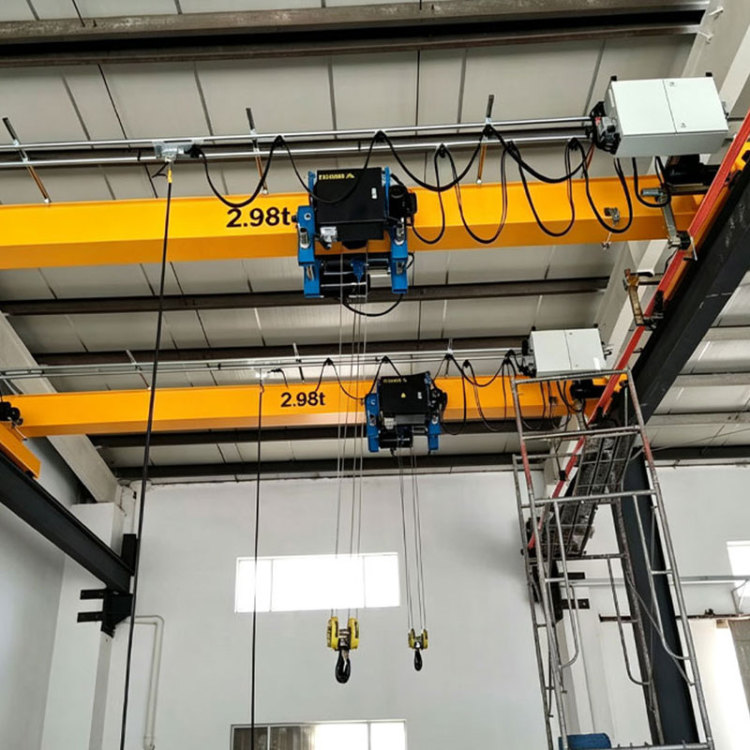
Q: Can one supplier cover the hoist, the track and the Industrial Overhead Crane together? A: Yes, and it removes the classic gap where the track vendor and the hoist vendor each blame the other for a deflection problem. WEIXU supplies BRIMA chain hoists, KBK rigid and flexible track, and single-girder cranes from one factory, so the interface dimensions are matched before anything ships.
Q: What documents should arrive with a Rigid Chain Hoist on delivery? A: Load test report, chain certificate, CE declaration where required, wiring diagram matching the supplied voltage, and a spare parts list. WEIXU ships these as standard on export orders — if a supplier cannot produce the chain certificate, walk away from that quote.
Q: Is OEM branding available for distributors? A: Yes. Shandong Weixu Heavy Industry Machinery Co., Ltd. runs OEM and ODM supply with branded track, custom paint schemes and project-specific drawings, holding ISO 9001, ISO 14001 and OHSMS certification, shipping factory-direct worldwide with 380/415/480 V builds.
CTA: Put the seven checks on one page
Send WEIXU your lifts per hour, part and fixture weights, available height and voltage. You get back a specification sheet with duty class, headroom stack, hanger or column loads, installed cost and the spares commitment — all seven checks pre-answered, typically within two working days. Factory-direct pricing and OEM options are quoted on the same sheet, so nothing hides between layers.