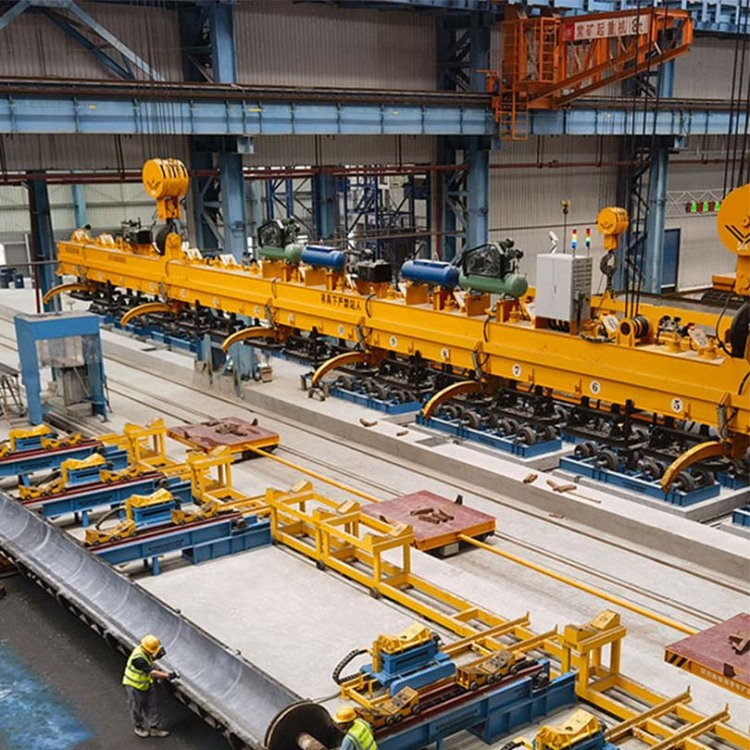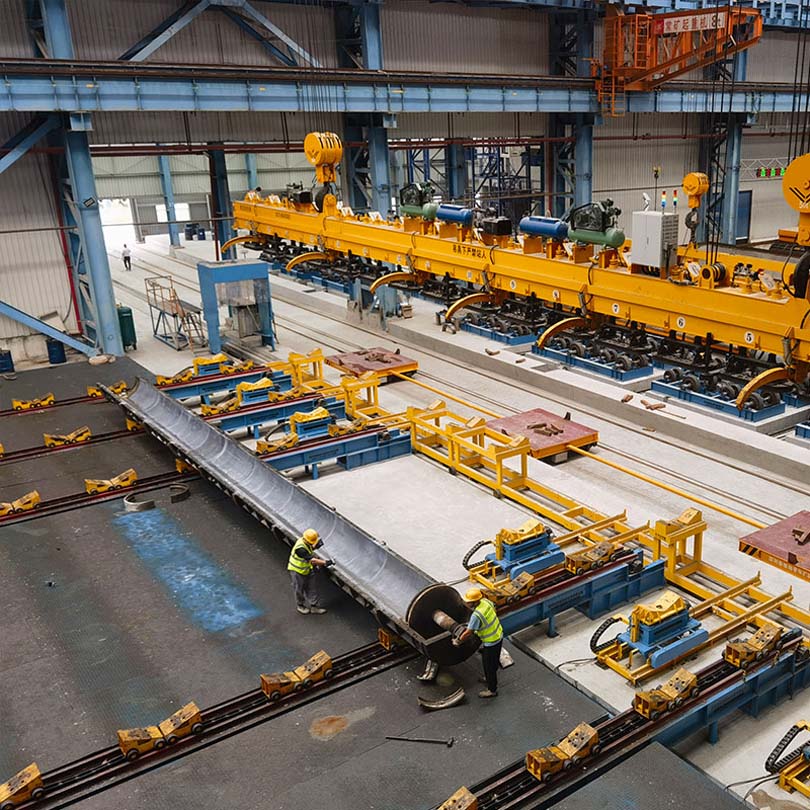
That shift has a cost argument behind it. Retrofitting a yard with grip-based handling typically returns the investment in 9–14 months through cycle-time recovery alone, before any safety or mould-damage savings are counted. Quzhou Xinyang Machinery Manufacturing Co., Ltd. builds these attachments as standard products for lines running in Vietnam, Cambodia, Malaysia, Indonesia and Thailand, and the failure patterns are consistent across all of them.
1. What Makes Heavy Duty Lifting of Steel Formwork Different From Ordinary Crane Work?
Because a pile mould has no rated lifting point, is 12–15 m long, and is often wet with release agent, every lift is a friction lift — and friction is the one thing a crane rating does not account for.
Four properties separate this from general industrial lifting:
- No lifting eyes. Moulds are welded steel boxes with flanges. There is nowhere to shackle to, so the load is carried by slings bearing on the outside of the mould body.
- Long and flexible. A 13 m mould deflects visibly between pick points. Off-centre pick points twist the mould and misalign the flanges that seal the concrete.
- Low, shifting centre of gravity. Wet concrete inside a bottom mould moves the CoG as the mould travels, and a load that was balanced at pick-up is not balanced at set-down.
- Surface condition. Release agent is designed to stop concrete sticking — and it does the same to slings and to operator gloves.
Add thermal load. A mould leaving the curing chamber at 60–80 °C expands slightly and cannot be touched without gloves, which slows every manual rigging step and pushes operators toward shortcuts. Under a 7.5 m rail, there is also no headroom to lift high and re-sling safely.
Where the incidents actually come from
- Load slipping inside a sling during a traverse, usually on a wet or oil-contaminated mould
- Hands between mould flange and sling during tensioning
- Side-pull on the hook when a mould is dragged instead of lifted vertically
- Mould dropped at the stripping station because the sling was seated on a dented flange
None of these are crane failures. They are attachment failures, which is why replacing the attachment is the cheaper fix.
✅ Bottom line: Pile moulds cannot be rigged to a rated point, so sling friction carries the full load — the risk sits in the attachment, not the crane.
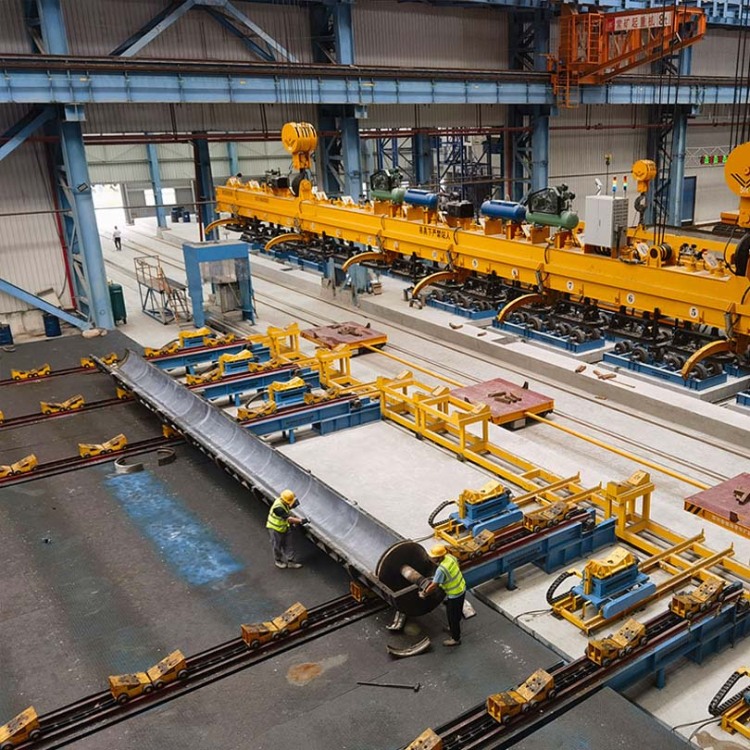
2. Which Lifting Equipment and Construction Tools Cut Cycle Time From Casting Bed to Pile Yard?
Switching from chains to a pneumatic mould gripper saves 2–3 minutes per lift and one to three riggers per shift, which on a 300-lift day returns 10–15 operating hours without adding a single crane.
The comparison is not close once you count the labour — and every minute a Steel Formwork set waits for a rigger is a minute the crane is not lifting.
|
Per lift |
Chain slings |
Pneumatic mould gripper |
|
Crew on the hook |
3–4 riggers plus a spotter |
1 operator |
|
Time per lift |
3–5 minutes |
40–60 seconds |
|
Lifts per shift, per crane |
~25 |
45–50 |
|
Load behaviour |
Swings, guided by hand |
Travels square, no swing |
|
Attachment point |
None rated — friction on the mould body |
Jaws seat on the flange under mechanical lock |
|
Mould wear |
Flange impact damage over time |
Hardened pads, face not scored |
|
Typical failure |
Load slips on a wet or oiled mould |
Seal wear if the air supply is wet |
In a two-crane yard, the same headcount produces 30–40% more mould turns — and the riggers released from the hook move to stripping and cleaning, which is where the next bottleneck usually sits.
Specifying the attachment correctly
- Rated capacity at 1.5× your heaviest wet mould set — a 12 m bottom mould plus concrete is the number that matters, not the empty weight.
- Dual-use versus single-use jaws — dual-use grippers cover cover moulds and bottom moulds with one tool, which halves the number of attachments hanging on the crane.
- Air consumption at 0.6–0.8 MPa with a filter-regulator at each drop point; wet air is the main cause of gripper seal failure in tropical plants.
- Hardened jaw pads so the mould face is gripped, not scored.
- Tool dead weight deducted from crane capacity on every single lift.
The construction tools around the lift matter as much
Heavy duty lifting never happens in isolation. Cycle time is set by the whole sequence, and the small items are where yards lose minutes:
- Mould cleaning machines — a rotary cleaner takes 60–90 seconds per mould face against 4–6 minutes by hand, and a clean face is what lets the gripper seat evenly.
- Release agent sprayers — controlled film thickness reduces both stripping force and sling slip.
- Roller pile transfer conveyors — move the stripped pile out of the crane's working zone so the crane returns to lifting instead of waiting.
- Pile clamps and hydraulic breakers at site — the same attachment logic applies to unloading and cutting; a rated clamp beats a chain choked around a 400 mm pile every time.
For buyers specifying a full package, XinYang supplies the handling Lifting Equipment, conveyors and cleaning tools as one matched set, which avoids the usual mismatch where a 5 t gripper is paired with a crane derated to 4.2 t by its own tooling.
✅ Bottom line: Grip-based attachments and matched cleaning tools cut 3–5 minutes per mould turn; the crane is rarely what limits a pile yard.
FAQ
Q: Can a pneumatic gripper handle both cover and bottom moulds? A: Dual-use grippers do, with a jaw range covering typical 300–600 mm pile moulds. Single-use cover mould grippers are lighter and faster where a yard runs a fixed mould set — XinYang supplies both and will recommend based on your mould schedule.
Q: How often do gripper jaws and seals need replacing? A: Jaw pads typically last 8–14 months in two-shift operation depending on mould condition; seals last longer if the air supply is dried and filtered. Keep one spare jaw set and one seal kit per gripper on site.
Q: Do you provide OEM or custom attachments for non-standard moulds? A: Yes. Send mould drawings or flange dimensions and Quzhou Xinyang Machinery Manufacturing Co., Ltd. will produce a custom jaw configuration, with OEM branding available for distributors and wholesale pricing on multi-unit orders. The same engineering team also builds complete Pipe Pile Equipment lines, so attachments are matched to the line rather than bought around it.
CTA
Send us your mould dimensions, heaviest wet mould weight and lifts per shift, and XinYang will return a gripper specification, expected cycle-time saving and payback estimate — free, and usually within two working days. Our engineers have commissioned over 100 automated lines and can quote factory-direct for a single attachment or a full Pipe Pile Equipment package.