
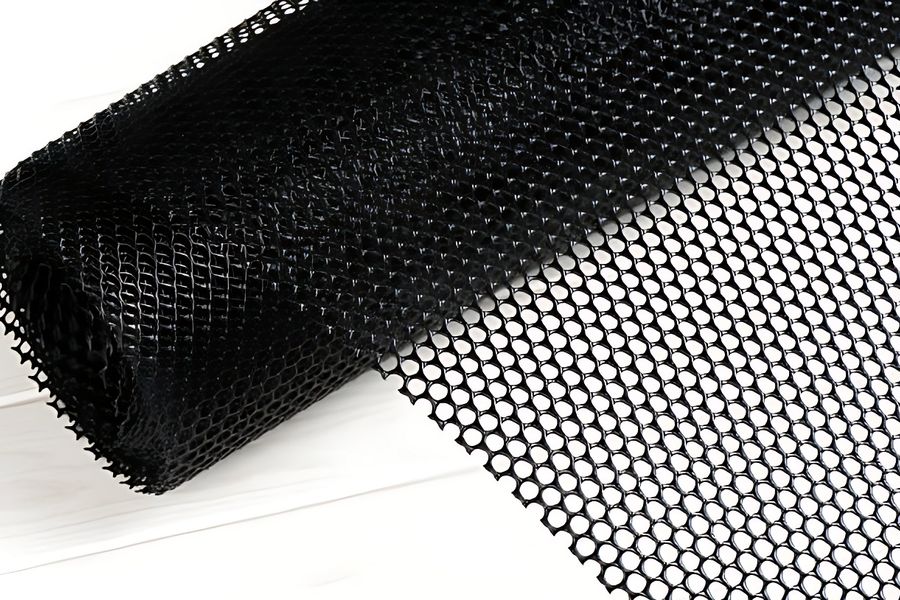
You can judge whether a gabion shipment meets the standard within 30 minutes of opening the container — without a lab. Start with a gabion mesh arrival inspection checklist covering three checks: wire diameter with calipers, zinc coating by stripping and weighing, and double-twist integrity by hand. If any one fails, flag the batch before it reaches the site — once gabions are filled with stone, defects become invisible and unfixable.
1.Which three checks expose 90% of substandard gabion shipments?
The three checks are: caliper measurement of wire diameter, zinc coating verification by stripping and weighing, and a manual double-twist pull test. These cover the defects that matter most in service life: thin wire, thin zinc, and loose weave.
Check 1 — Wire diameter. Measure three points on at least five randomly selected panels. Measure mesh wire and edge wire separately, with a caliper that distinguishes coating from bare wire. A common trick is labeling 2.7mm when the bare wire is 2.5mm. ✅ If edge wire diameter equals or is smaller than mesh wire, stop: the basket frame will deform under stone load.
Check 2 — Zinc coating. The reliable field method is stripping coating from a known length of wire and weighing the loss. To verify gabion mesh zinc coating on delivery, compare the measured value against the MTC — a double-sided total of 260g/m² means roughly 130g/m² per side. If measured coating is more than 15% below the MTC value, the batch does not match its paperwork.
Check 3 — Double-twist integrity. Grab two adjacent wires at a twist and pull firmly. A proper hexagonal mesh resists without the twist opening. Loose twists mean the mesh relaxes after stone filling and the structure loses constraint.
One-sentence summary: Caliper, stripping scale, and a hand pull — 30 minutes, and you know whether the shipment matches its certificate.
2.How do you turn these checks into a repeatable receiving process?
Build a one-page checklist any warehouse staff member can follow, and attach it to the packing list before the container is unloaded. The goal is not to replace lab testing — it is to catch obvious mismatches before they become site problems.
Step 1 — Prepare the kit. Calipers, a stripping-and-weighing kit, gloves, and a printed copy of the MTC. ✅ Without the MTC, measurements have no benchmark.
Step 2 — Sample correctly. From a 40HQ container, pull at least five panels from different bundle positions. Defects cluster by production batch.
Step 3 — Record and compare. Fill measured values next to MTC values. For a proper gabion mesh EN 10223-3 compliance check, confirm the MTC cites the standard, lists measured (not just nominal) values, and carries a batch number matching your packing list.
Step 4 — Decide before unloading. If a critical parameter fails, notify the supplier before the container is empty. Once goods are mixed into your warehouse, proving which batch was defective becomes much harder.
One-sentence summary: A receiving checklist with MTC values pre-filled turns a subjective "looks fine" into an objective pass/fail decision.
FAQ
Q1: The zinc coating measures lower than the MTC, but the supplier says field testing is inaccurate. Who is right?
Both can be partly right. Field stripping-and-weighing has error margins, but a deviation of more than 15% below the MTC is beyond normal field error and warrants a third-party retest. This is exactly why a gabion mesh arrival inspection checklist should record measured values and photos, not just a pass/fail mark — the record is your evidence.
Q2: Some panels have loose twists but most look fine. Should I reject the whole container?
Not the whole container, but do not accept the loose panels. ✅ Count affected panels and photograph them with the bundle label visible. A reasonable supplier will replace them; one who calls it "normal" is telling you about their quality control.
Q3: How do I verify gabion mesh compliance with EN 10223-3 if I do not have a lab?
You cannot fully verify compliance without lab testing, but you can run a gabion mesh EN 10223-3 compliance check on documentation consistency and key physical parameters: MTC citing the standard, measured values for wire diameter, zinc coating and tensile strength, and a batch number matching your packing list. Then confirm the physical product matches those documented values.
Published: November 2026 | By Honglian Wire Mesh Engineering Team