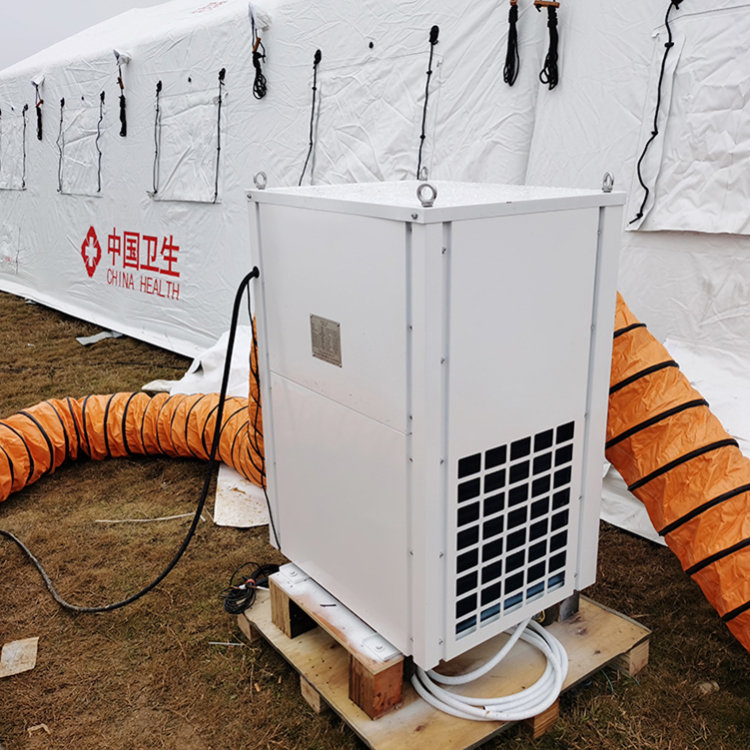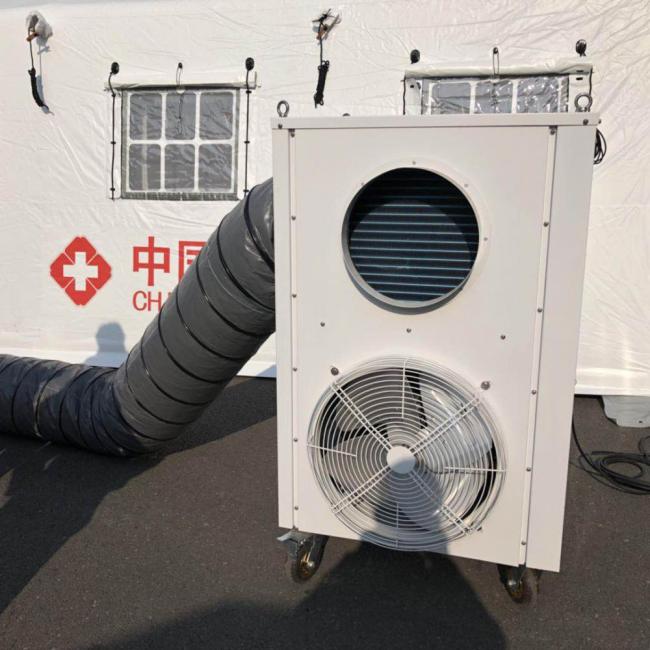
In extreme desert heat, the condenser struggles to reject heat because the ambient air is already hotter than the refrigerant. Compressors overheat and trip their internal protection. To survive this, a Mobile Field Hospital & Medical Air Conditioner must use oversized condensers, high-temperature refrigerant, and advanced thermal management for the control boards.
But the cold is just as brutal. When temperatures drop below freezing, standard AC units face refrigerant migration and oil thickening. If the compressor starts with thick oil, it will seize instantly. Medical units operating in the Arctic need crankcase heaters, low-ambient fan controllers, and heating elements for the drain pan to ensure the system can run in heating mode without freezing the coils.
This is where the distinction between consumer gear and tactical equipment becomes obvious. A standard Tent Air Conditioner is designed for mild three-season camping. It lacks the wide-temperature components required for a medical triage tent in winter. In contrast, a rugged Military Tent Air Conditoner is built with wide-temperature-rated compressors and components tested to MIL-STD-810H standards, ensuring rapid startup from -40°C to +55°C.
Before you procure units for a field hospital, don't just look at the BTU cooling capacity. Ask the supplier for the exact operating temperature range, the minimum operating voltage, and proof of thermal shock testing. The equipment must be engineered for the harshest climate, not just the ideal one.