
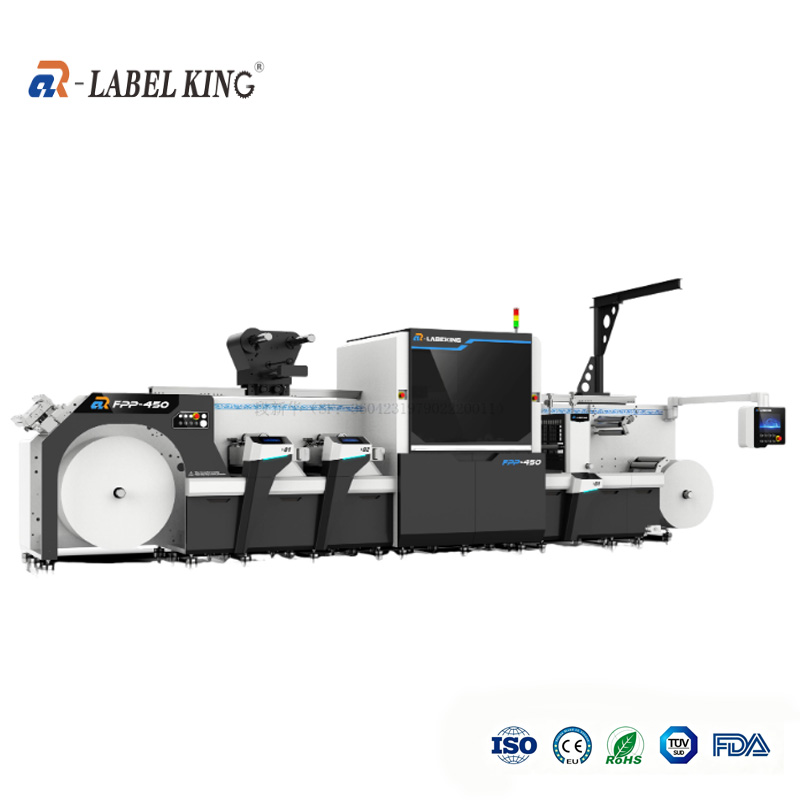
For label printing, there is no universal winner between flexography and digital printing. The better choice depends on order volume, number of versions, delivery time, material, color requirements, and production cost.
A practical rule is simple: flexo is usually better for long runs, while digital printing is more suitable for short runs, sampling, urgent orders, and variable data. The right decision should be based on total production cost and workflow efficiency, rather than the purchase price of the machine alone.
1. What Is Flexographic Label Printing?
Flexographic printing uses a flexible relief plate to transfer ink onto the label material. A typical flexographic printing machine uses an anilox roller to control ink volume and distribute ink evenly. The plate then transfers the ink to paper, film, foil, or other substrates.
A modern flexographic label printing machine may integrate several functions in one production line, including multi-color printing, varnishing, laminating, cold foil, die cutting, slitting, and inspection. This makes the flexographic printing press suitable for continuous industrial production.
A flexographic printer can also maintain stable color performance over long runs. Once the plates, inks, substrates, and press settings have been properly prepared, the same design can be reproduced consistently across a large quantity of labels.
2. What Is Digital Label Printing?
Digital label printing transfers an image directly from a digital file to the substrate. It does not require traditional printing plates, which makes the preparation process faster and more flexible.
Digital printing is useful when a customer needs a small quantity, many design versions, personalized labels, or variable information such as serial numbers, barcodes, names, and promotional messages. A file can usually be changed without producing a new plate.
The main limitation is operating cost. Digital ink or toner can be considerably more expensive than flexographic ink. Printheads and other consumable components may also require maintenance or replacement. As production volume increases, consumables can become the largest part of the cost.
3. Cost Comparison: Why Flexo Usually Wins on Large Orders
The biggest economic advantage of flexo printing comes from repeatability. The initial plate-making cost is higher, but the cost is spread across a large number of labels. Once the setup is complete, flexo ink consumption is usually lower than digital ink consumption for long production runs.
A flexo printing machine also operates efficiently at high speed. When the same design is printed in a large quantity, the unit cost can decrease significantly. This is why a flexo machine is often the more profitable choice for stable, high-volume orders.
A digital label printing machine has a different cost structure. It saves plate-making and setup time, but the cost per label can remain high because of ink, toner, and maintenance expenses. Digital is therefore attractive for short runs, but its profitability may decrease when used for very large volumes.
4. Speed and Productivity
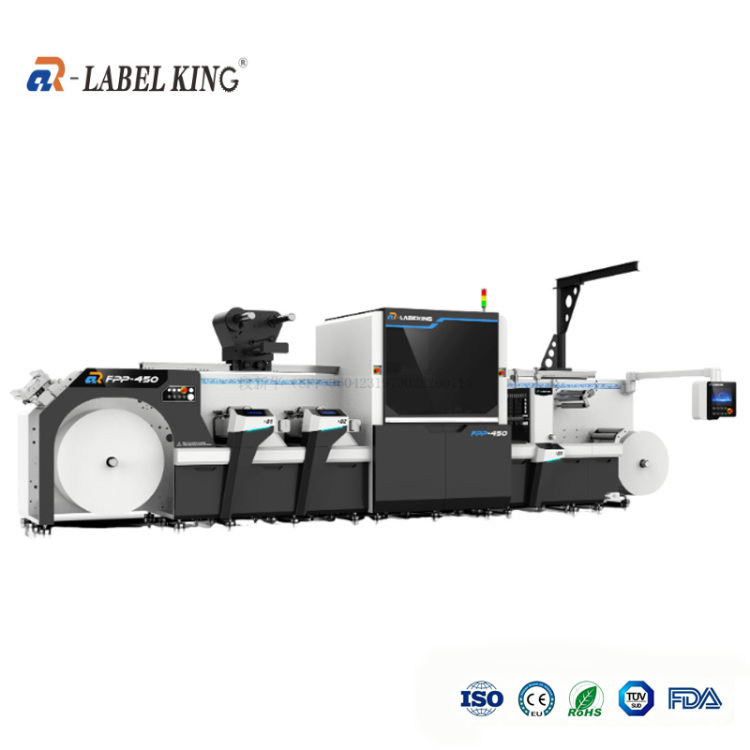
A flexographic printing press is designed for continuous production. After the machine is set up, it can maintain a high production speed for a long period. Multi-color printing and inline finishing can also reduce the need to move semi-finished materials between different machines.
This is particularly important for label converters that produce food labels, beverage labels, personal care labels, household product labels, and industrial labels in large quantities. A well-configured flexo label printing machine can reduce production interruptions and improve delivery reliability.
Digital printing has a shorter preparation process and can start a new job quickly. However, its overall productivity may be affected by print speed, color coverage, substrate type, and finishing requirements. It is fast from file to output, but not always the fastest option for mass production.
5. Print Quality and Color Stability
Flexographic printing performs well in solid areas, spot colors, brand colors, and long runs that require consistent reproduction. The anilox roller provides controlled ink transfer, while the press can be calibrated for a specific substrate and ink system.
Digital printing can produce smooth gradients, fine variable images, and detailed short-run designs. It is often convenient for prototypes and personalized products. However, some jobs may require careful control of banding, nozzle performance, color calibration, and substrate compatibility.
Neither process is automatically better in every quality category. The correct choice depends on the artwork. A large solid background and fixed brand color may favor flexo. A small personalized batch with complex images may favor digital printing.
6. How to Choose the Best Flexographic Printing Machine
The best flexographic printing machine is not necessarily the fastest or most expensive model. It should match the converter’s actual products and order structure.
Before purchasing, evaluate the following factors:
● Number of printing colors and required spot colors.
● Maximum web width and usable printing width.
● Supported substrates, including paper, film, foil, and adhesive materials.
● Printing speed under real production conditions.
● Registration accuracy and waste during setup.
● Availability of inline die cutting, laminating, varnishing, and inspection.
● Ease of job changeover and recipe management.
● Automation level and operator requirements.
● Local technical support, spare parts, and training.
● Total cost of ownership over the expected service life.
7. How to Evaluate Flexo Printing Machine Manufacturers
When comparing flexo printing machine manufacturers, ask for more than a product brochure. A reliable supplier should be able to explain how the machine performs with your actual materials, ink system, label structure, and target production volume.
Request a sample test using your artwork and substrate. Review color consistency, waste, setup time, registration, drying performance, and finishing quality. You should also confirm installation support, operator training, warranty terms, remote service, and spare-parts availability.
A supplier with strong engineering support can be more valuable than a supplier offering a lower initial price. In industrial printing, uptime and service response directly affect delivery performance and operating profit.
8. Can Flexo and Digital Printing Work Together?
Many label converters use both technologies instead of choosing only one. Digital printing can handle prototypes, urgent orders, seasonal campaigns, and personalized labels. Flexo printing can handle repeat orders, long runs, fixed designs, and large-volume production.
This hybrid strategy allows a company to match the printing process with the economic characteristics of each order. It can also reduce the risk of using digital printing for volumes that would be more profitable on a flexographic press.
9. Final Decision Guide
Choose flexographic printing when you have large and repeatable orders, stable designs, strict unit-cost targets, and a need for high production efficiency.
Choose digital printing when you have short runs, many versions, frequent artwork changes, variable data, urgent delivery requirements, or a strong need for customized labels.
In simple terms, digital printing is usually better for flexibility, while flexographic printing is usually better for scale and production economics. The most suitable solution is the one that delivers the required quality at the lowest total cost and within the required delivery time.